Das weltweite Magazin und der Marktplatz für Oldtimer-Enthusiasten – von Enthusiasten.
Das weltweite Magazin und der Marktplatz für Oldtimer-Enthusiasten – von Enthusiasten.


Filter
Auswahl treffen
- Autos
-
Marke >>
-
Baujahr >>
-
-
Kategorie >>
-
Länder >>
- Motorräder
-
Standort >>
- Teile
-
Automarke >>
-
Hersteller >>
-
Kategorie >>
- Fahrräder
-
Baujahr >>
-
Länder



Naschwerk auf Rädern: Herr von Schlechtleithner und die österreichische Bonbon-Karawane


Das Foto jenes beeindruckenden Campers, das hier kürzlich zu sehen war, erzählte eine großartige Geschichte. Es handelte sich um die Erfolgserzählung eines wohlhabenden amerikanischen Geschäftsmanns, der 1915 mit diesem Fahrzeug samt Familie und einigen Angestellten durch die Vereinigten Staaten reiste. Das Gefährt, das wir heute betrachten, scheint auf den ersten Blick in dieselbe Kategorie zu fallen – doch die Geschichte, die sich daran knüpft, soll eine völlig andere sein.
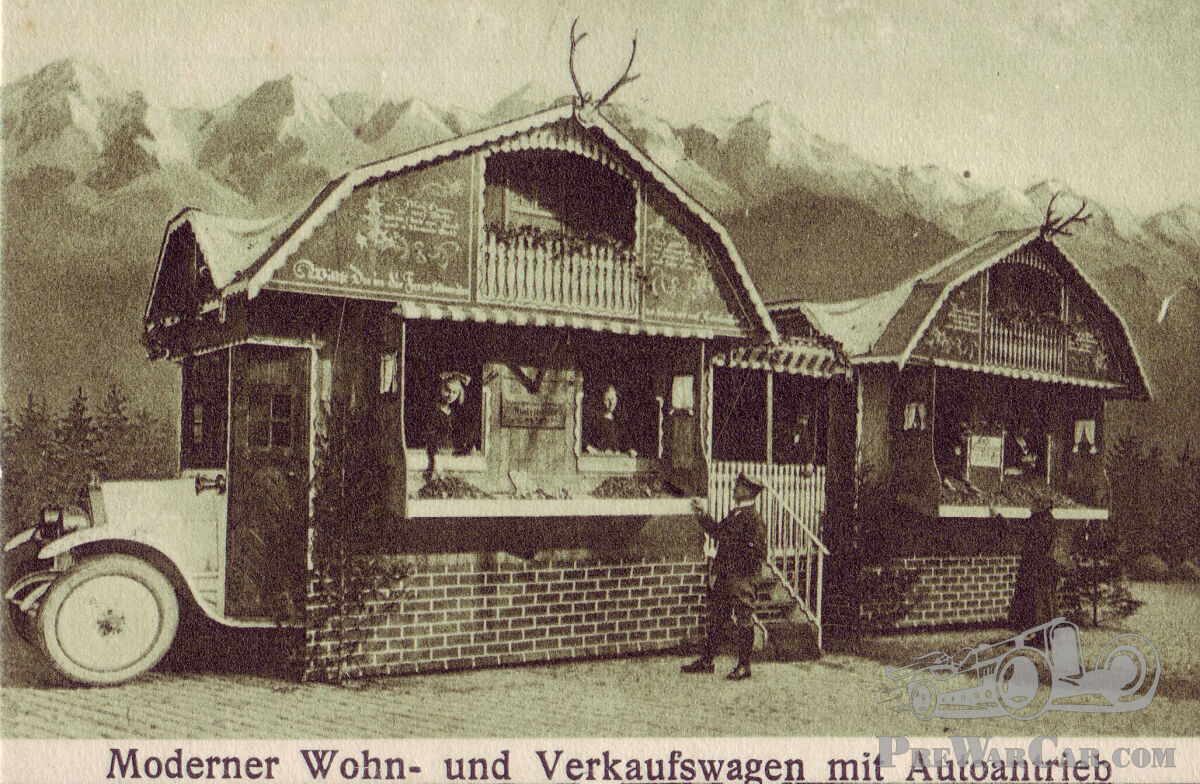
Denn nicht nur stammt dieses „Landjacht“-Modell aus Europa, genauer gesagt aus Österreich, es hat auch einen völlig gegensätzlichen Hintergrund — nicht Reichtum, sondern Armut steht im Mittelpunkt. Die Original-Bildunterschrift lautet: „Foto zeigt das fahrende Bonbongeschäft von Franz von Schlechtleithner, einem verarmten österreichischen Adeligen, der das Leben in seinem Heimatland nicht mehr ertrug und beschloss, für sich und seine dreiköpfige Familie dieses kleine Haus samt Laden zu bauen – fahrbar auf sechs Rädern. Er plant, mit dem Wagen durch Europa zu reisen und unterwegs Süßigkeiten zu verkaufen. Der Laden befindet sich im abnehmbaren Anhänger.“
Die Aufnahme soll von Schlechtleithner neben seinem Caravan-Bonbonladen zeigen und stammt aus dem Jahr 1922. Wie man merkt, sind wir mit unserem Urteil über die Glaubwürdigkeit der Anekdote noch vorsichtig. Der Grund dafür ist simpel: Wir konnten keinerlei weitere Informationen über die Familie von Schlechtleithner finden – weder mit noch ohne „von“, oder mit dem dritten „h“ im Nachnamen. Dennoch scheint dieses Bild eine Geschichte in sich zu tragen, die es wert ist, erzählt zu werden. Wer weiß?
Text: Jeroen Booij
Foto: Underwood & Underwood / Library of Congress
Publiziert:
Freitag März 28th, 2025
Facebook
LinkedIn
Twitter
WhatsApp
Email
Copy
Kommentare
David Grimstead
30 März 2025, 22:48


Laurent Zoller
28 März 2025, 21:14
I have just found some other interesting documents:
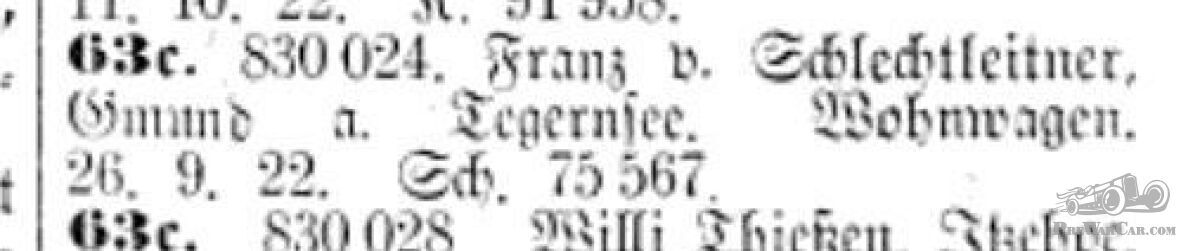
- a patent application by Schlechtleitner dated September 26th, 1922, concerning this vehicle
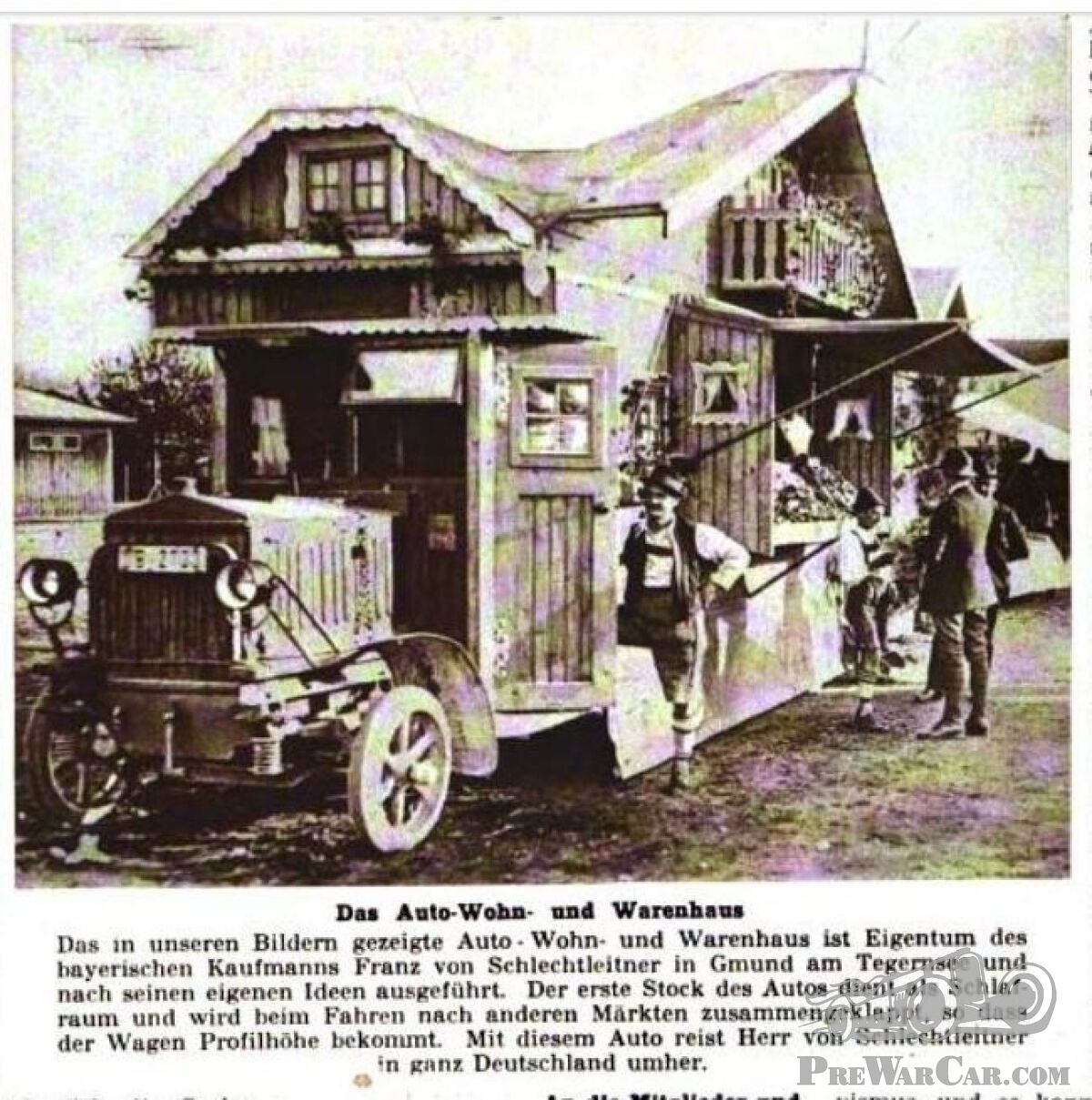
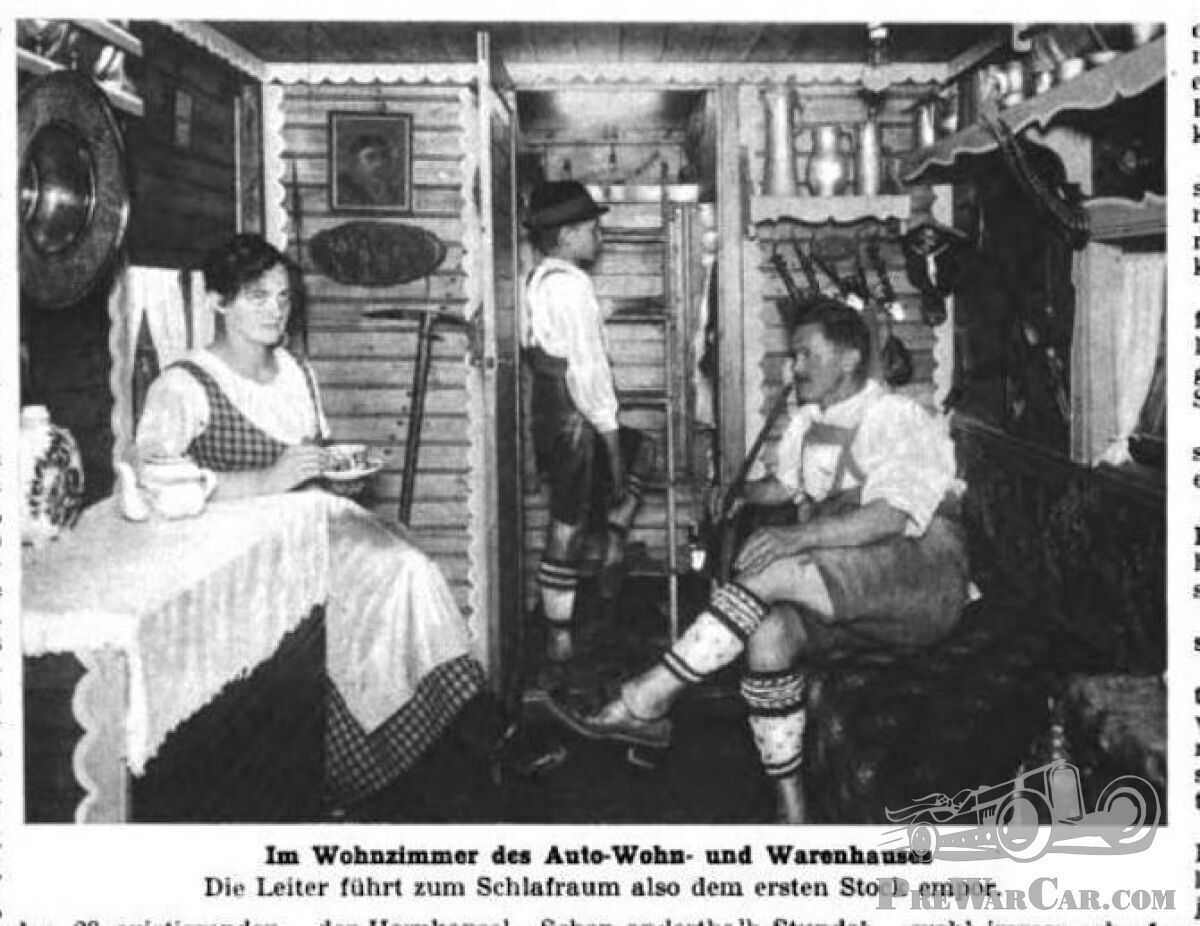
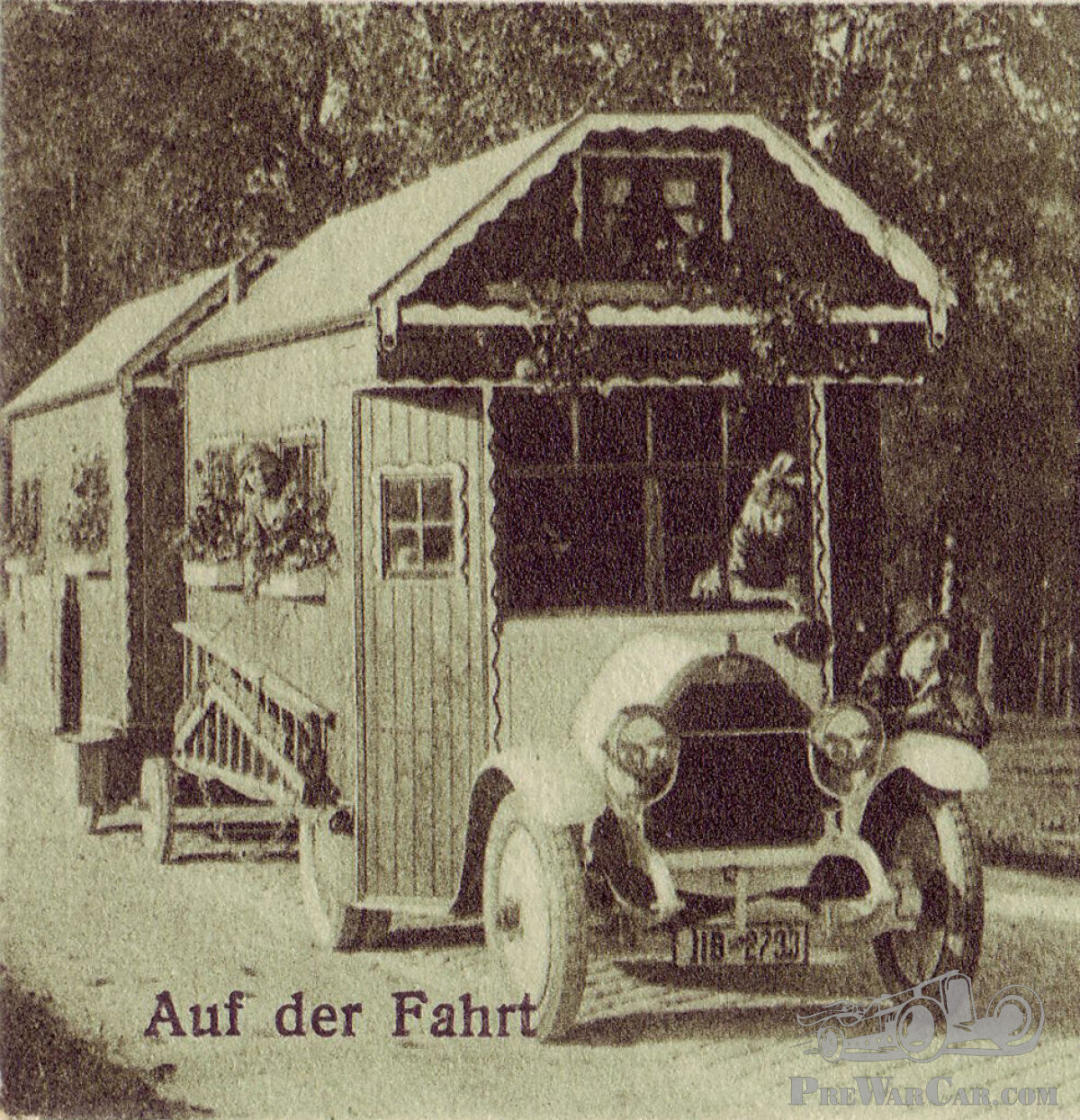
- two photos from the Deutsch Amerika magazine of October 21st, 1922. We learn that Franz von Schlechtleileitner is a trader in the town of Gmund am Tergernsee and that he goes from market to market with his vehicle .
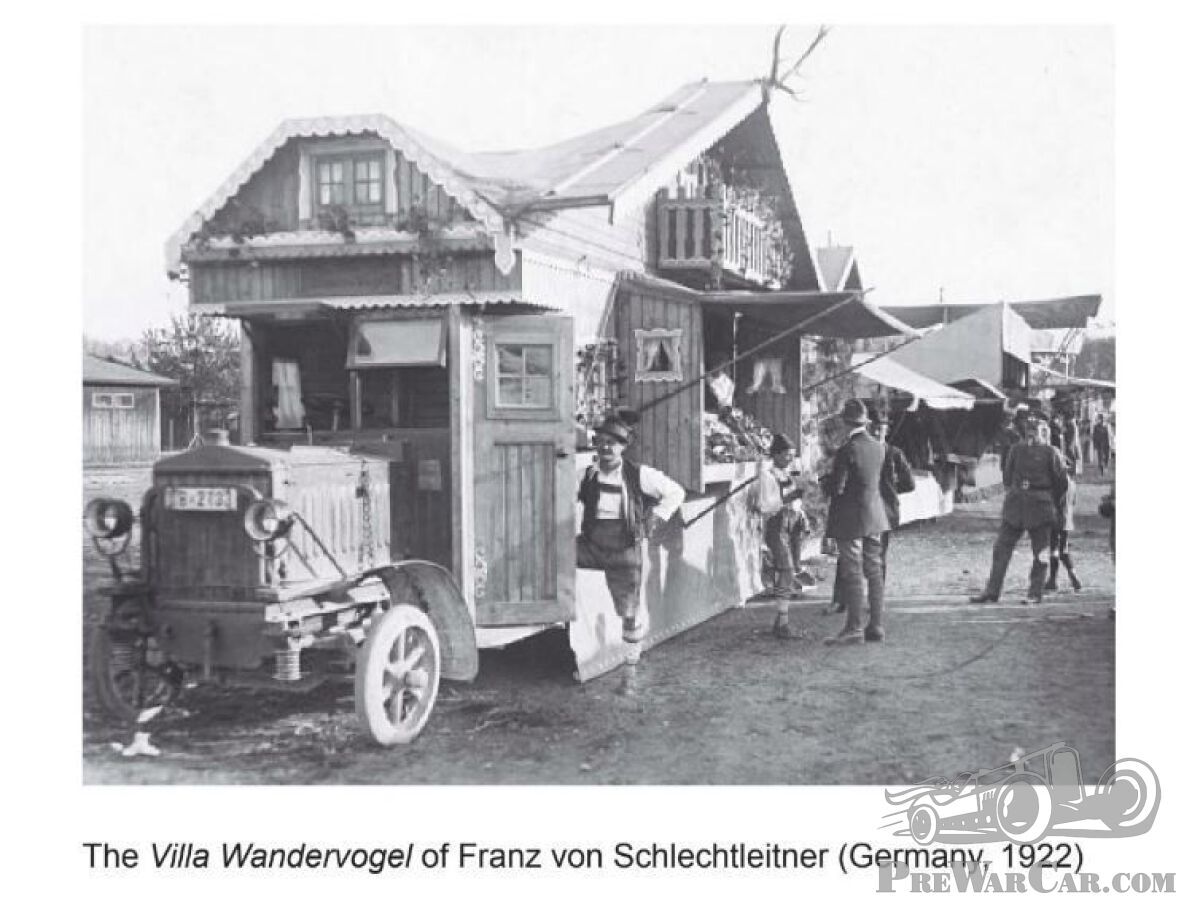
- a photo of the Wandervogel from 1922 (nickname of the vehicle) published in the book "Recreational vehicles."
-------------------------
Je viens de trouver d'autres documents intéressants
- un dépot de brevet de Schlechtleitner du 26 septembre 1922 concernant ce véhicule
- deux photos de la revue Deutsch Amerika du 21 octobre 1922. On apprend que Franz von Schlechtleileitner est commerçant dans la ville de Gmund am Tergernsee et qu'il va de marché en marché avec son véhicule .
-une photo du Wandervogel de 1922 (surnom du véhicule) parue dans le livre "recreational vehicles.
Weiter lesen
- a patent application by Schlechtleitner dated September 26th, 1922, concerning this vehicle
- two photos from the Deutsch Amerika magazine of October 21st, 1922. We learn that Franz von Schlechtleileitner is a trader in the town of Gmund am Tergernsee and that he goes from market to market with his vehicle .
- a photo of the Wandervogel from 1922 (nickname of the vehicle) published in the book "Recreational vehicles."
-------------------------
Je viens de trouver d'autres documents intéressants
- un dépot de brevet de Schlechtleitner du 26 septembre 1922 concernant ce véhicule
- deux photos de la revue Deutsch Amerika du 21 octobre 1922. On apprend que Franz von Schlechtleileitner est commerçant dans la ville de Gmund am Tergernsee et qu'il va de marché en marché avec son véhicule .
-une photo du Wandervogel de 1922 (surnom du véhicule) parue dans le livre "recreational vehicles.


Hergen Deuter
28 März 2025, 16:45
In fact, Franz von Schlechtleitner, apparently without a third h, seems to have left few traces except for a second sales van, also dated 1922, which is depicted on Kulturgut-Volksfest.de.
Weiter lesen


Laurent Zoller
28 März 2025, 14:16
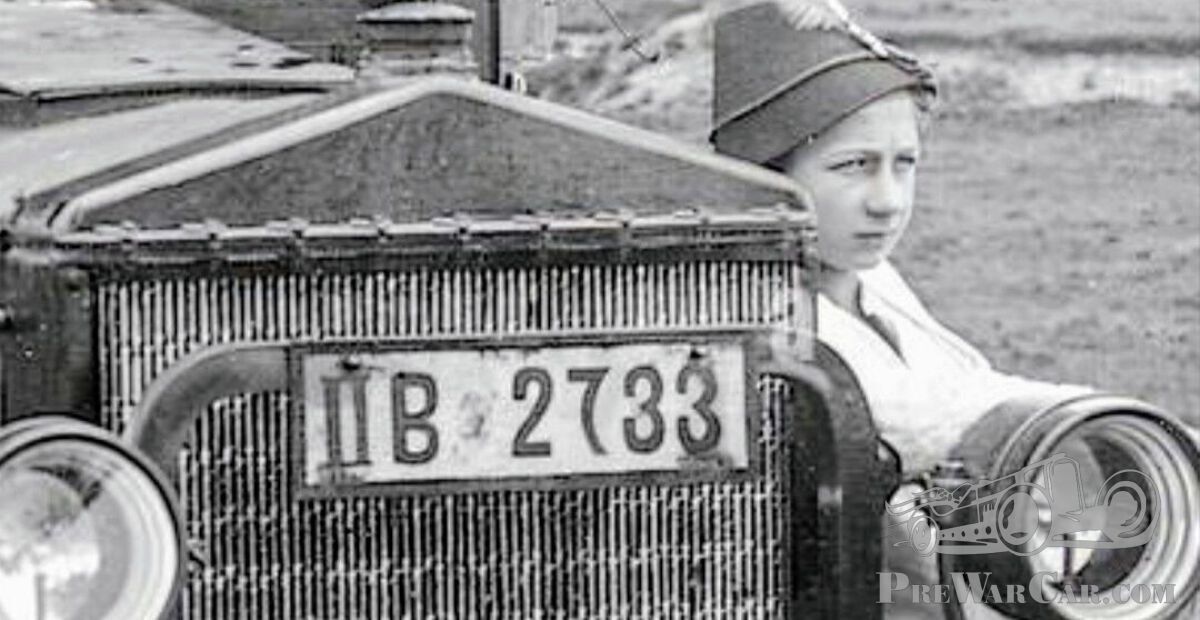
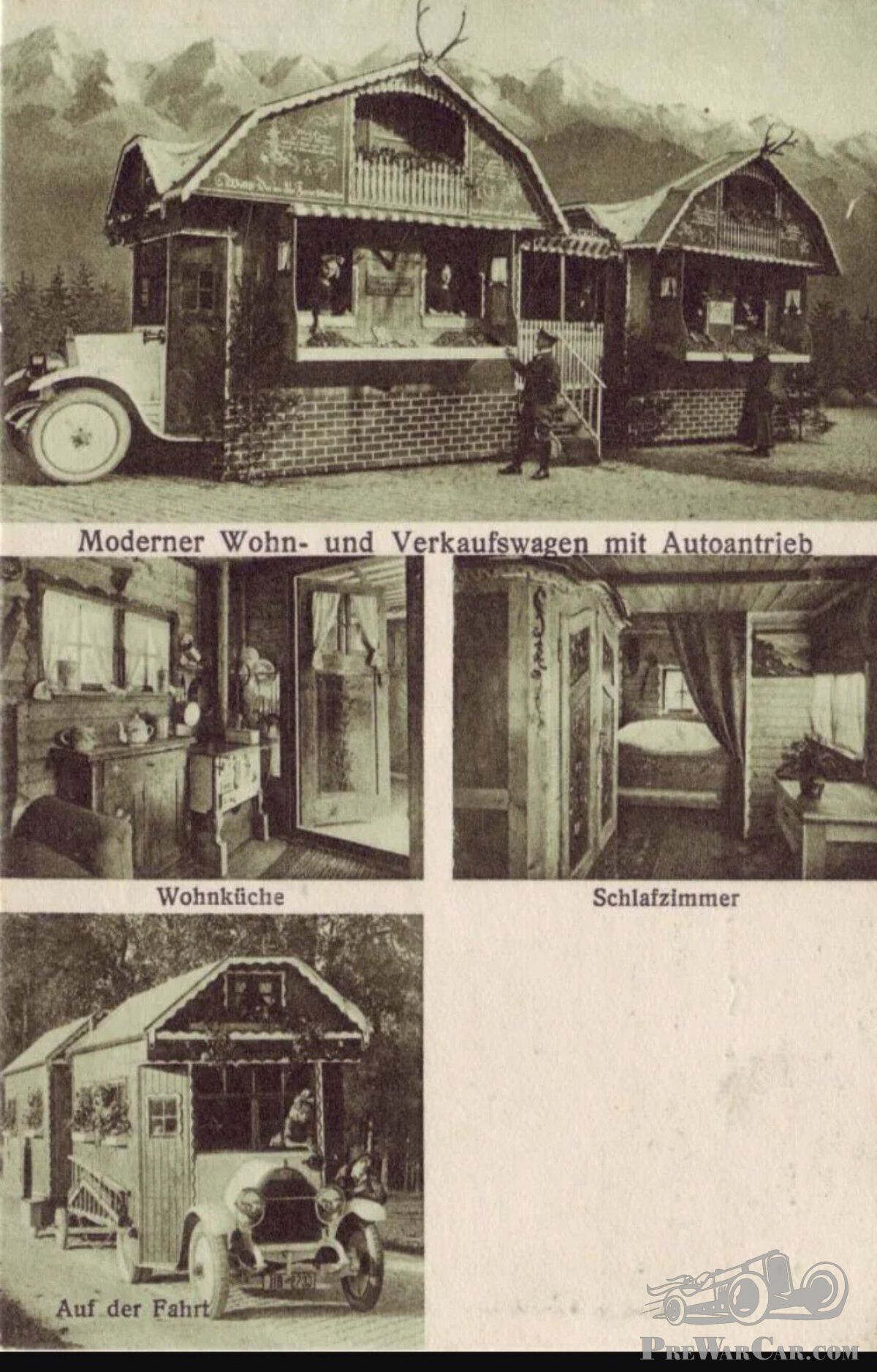
Here are two other documents dated 1922 concerning this vehicle. The larger one comes from the Munich Museum.
--------------------------------------------------------------
Voici deux autres documents datés de 1922 concernant ce véhicule . Le plus grand provient du musée de Munich.
Weiter lesen
--------------------------------------------------------------
Voici deux autres documents datés de 1922 concernant ce véhicule . Le plus grand provient du musée de Munich.
Michael Walz
28 März 2025, 12:44
The number-blade is from germany on the picture. IIB is for Kreis Oberbayern: https://de.wikipedia.org/wiki/Liste_der_deutschen_Kfz-Kennzeichen_(historisch)
Weiter lesen
Stanislav Kirilets
28 März 2025, 01:13
Austrian? I always thought this was a Büssing from and in Germany.
Weiter lesen
“The world’s only travelling candy store. Austrian Nobleman, Franz von Schlechtleitner of Innsbruck, unable to make a living in his own country, has started on a tour of Europe, under the most remarkable auspices. Being an expert automobilist, with the remnant of his family fortune, he has had a unique motor van built, taking as a model a picturesque Tyrolese cottage. There is a porch on the rear, curtains on the tiny windows and real flowers before them. The interior is divided in a parlor and kitchen, while the bedrooms are upstairs on the second floor. A small trailer attached holds the goods and provisions. By means of a few additional boards, carried on the sides and roof, the van is quickly converted into its real purpose, that of a candy shop, Herr Schlechtleitner and his wife making in the kitchen delicious sweet-meats. In this strange conveyance, accompanied by their three children, they are selling candy in the towns and villages they visit and making an excellent living.”
The story was still of interest in the U.S.A. in May, 1925, by when the Soda Fountain magazine claimed the truck was a Ford. Unlikely, but von Schlechtleitner’s family was reported to be still on the road in the December 3rd, 1927, edition of Deutsch-Amerika, when their candy-wagon was on that shorter chassis with disc wheels, pneumatic tyres and towing a four-wheel trailer. The picture was captioned: “The nobility of labour: Franz von Schlechtleitner, an Austrian nobleman in Innsbruck, who lost all his fortune due to the hardship after the war, had built a mobile confectionery stall and apartment and is now moving with this as a modern nomad from place to place. In this way he feeds himself, his wife, a son and two daughters.”
As to von Schlechtleitner patents, this is from the December 8th, 1931, Commercial Motor magazine of Great Britain: “A Coupling which Increases Road Grip: A coupling for trailers described in patent No. 359,557, by F. von Schlechtleitner, 23, Marktstrasse, Munich, is intended to produce a lifting effect of the front of the tractor, thus increasing the pressure of its rear wheels on the road and giving it greater tractive effect. The rear springs of the tractor are so formed that the stronger the pull on the drawbar, the greater the load on the rear wheels of the tractor. We should imagine that if this principle were carried too far it might result in the tractor rearing up and falling on its driver; cases of the kind have been known, and to avoid it the connection of the drawbar has been carried as low as possible.”