Das weltweite Magazin und der Marktplatz für Oldtimer-Enthusiasten – von Enthusiasten.
Das weltweite Magazin und der Marktplatz für Oldtimer-Enthusiasten – von Enthusiasten.


Filter
Auswahl treffen
- Autos
-
Marke >>
-
Baujahr >>
-
-
Kategorie >>
-
Länder >>
- Motorräder
- Teile
-
Automarke >>
-
Hersteller >>
-
Kategorie >>
- Fahrräder
-
Baujahr >>
-
Länder



Workshop question: An L. Dubrulle oiler

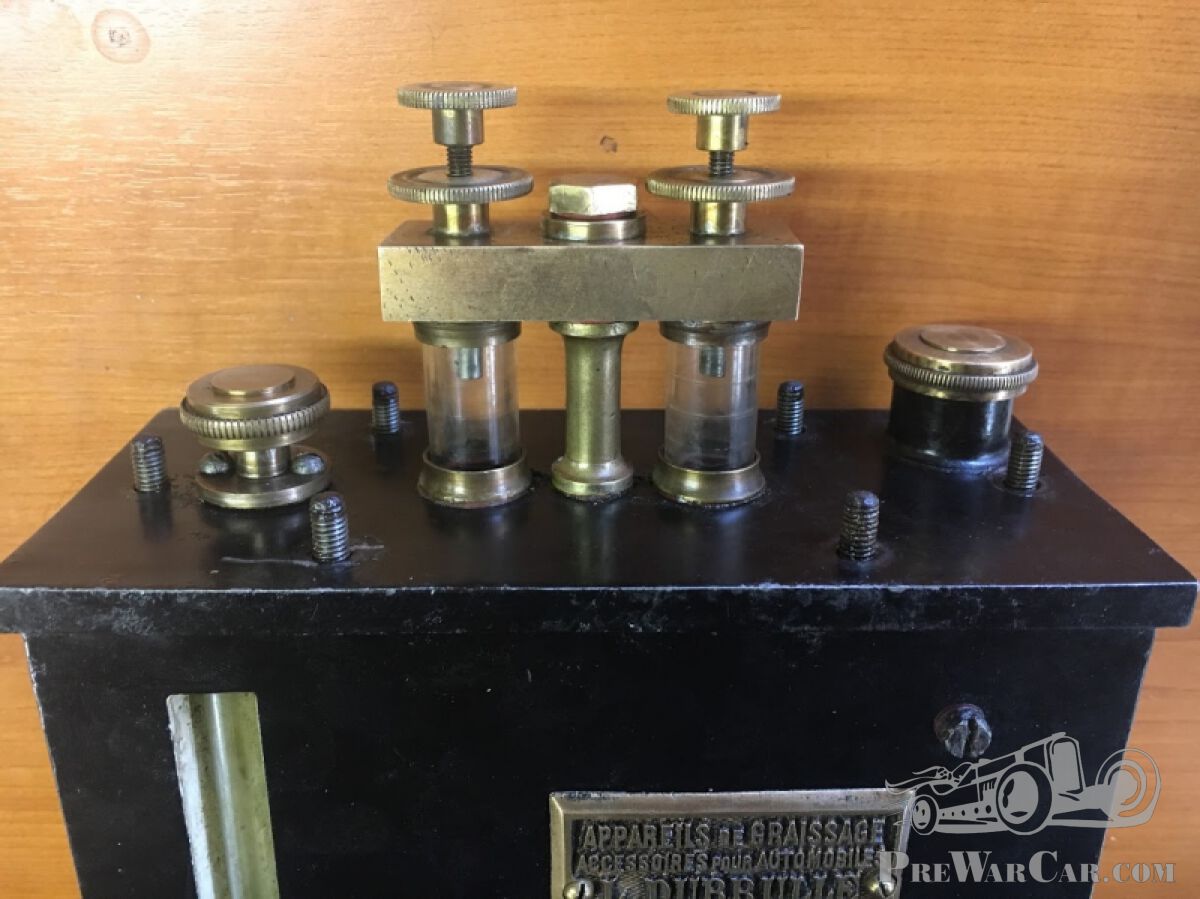



Normally on a Wednesday, Jos van Genugten will give you some technical advice and shows what he has done in his workshop. He is working on a 1899 Amedee Bollee and this time, he is asking you for advice;
In the workshop, there are often parts or systems that are incomplete, non-functional or not properly mounted. In those cases, we have to find out how something is supposed to work, why it doesn’t work now and how it should be mounted in order to work.
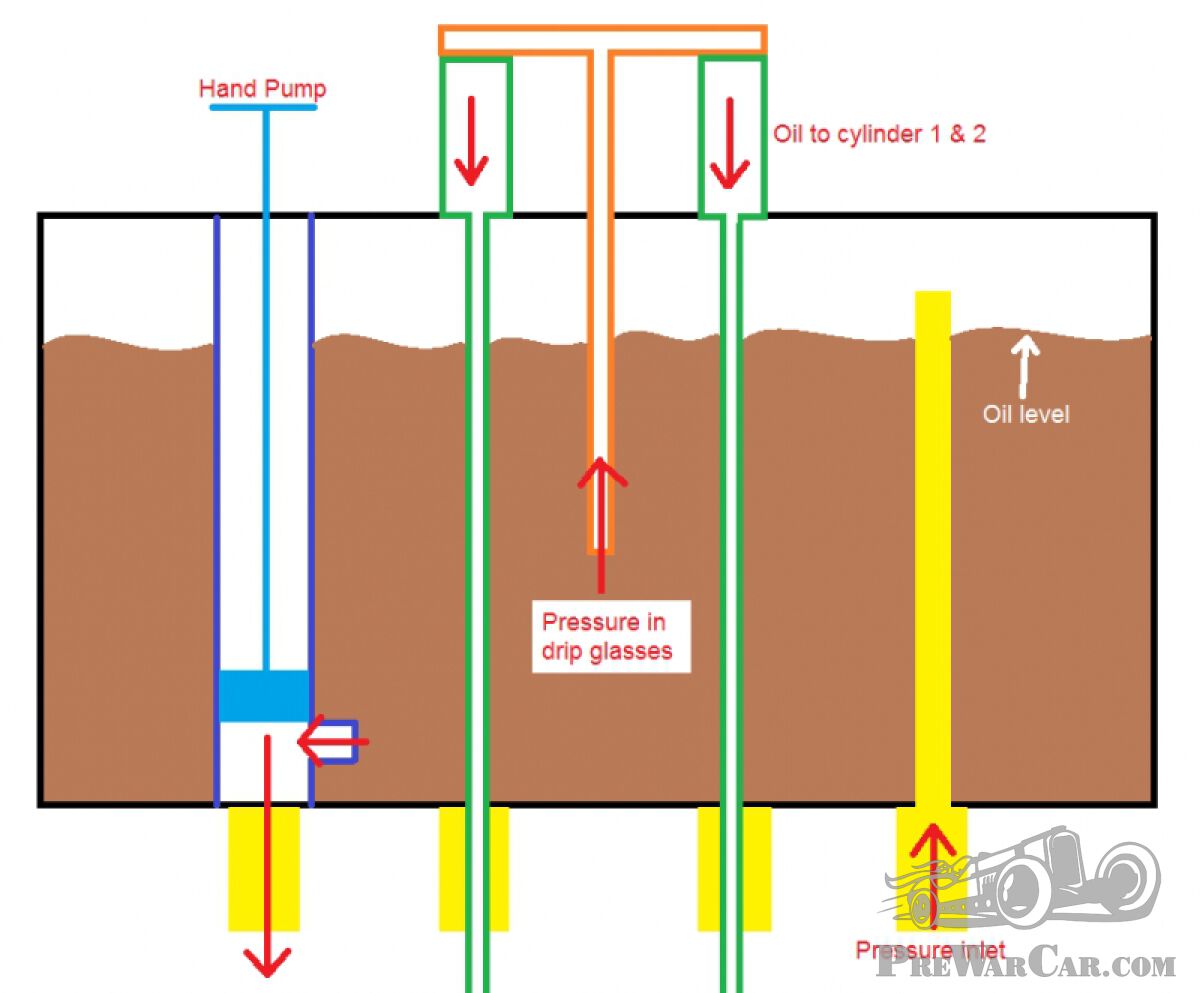
In today’s case I have a L. Dubrulle oiler. This is a system built from just before 1900 to just after, approximately. It’s a pressurized oil tank with 2 overhead dripping glasses, 2 outlets and a hand pump. The only question is, what are the functions?
It’s clear that the 2 outlets are for 2 cylinders, since the oiler belongs to a 2 cylinder Amedee Bollee engine. What is not clear is how it should operate. Where does it get pressure and where does the hand pump lead to?
The engine has a cover on the crankcase with 1 plug that could be used to hook up to the oiler. I think this could be the pressure source, since the engine has 2 pistons running simultaneously, when they make a downstroke, quite a lot of pressure is generated. This makes sense also, because the oiler has a one-way valve in the pressure inlet, so that if the pistons would go up again, they do not suck the pressure back out of the tank.
But then, there is the hand-pump. This could in my opinion also be connected to this 1 plug in the crankcase. The handpump sucks oil out of the oiler and pushes it in a copper line. This could be to pre-fill the crankcase with a little oil before starting. Since the crankcase is the only oiled component (gearbox is greased and it’s chain driven so no oiled rear axle), I cannot imagine where the oil should go other than in the crankcase.
Since there is no dipstick or any other way to check for oil level, and there is a drain valve on the bottom, common practice could be after driving to drain the oil and “give it 2/3/4 pumps”.
Who can enlighten me on this subject? Where should it get pressure and what does the pump do? I’ve attached a few pictures and also a schematic overview of the pump.
PreWar Workshop: A question to you.
In the workshop, there are often parts or systems that are incomplete, non-functional or not properly mounted. In those cases, we have to find out how something is supposed to work, why it doesn’t work now and how it should be mounted in order to work.
In today’s case I have a L. Dubrulle oiler. This is a system built from just before 1900 to just after, approximately. It’s a pressurized oil tank with 2 overhead dripping glasses, 2 outlets and a hand pump. The only question is, what are the functions?
It’s clear that the 2 outlets are for 2 cylinders, since the oiler belongs to a 2 cylinder Amedee Bollee engine. What is not clear is how it should operate. Where does it get pressure and where does the hand pump lead to?
The engine has a cover on the crankcase with 1 plug that could be used to hook up to the oiler. I think this could be the pressure source, since the engine has 2 pistons running simultaneously, when they make a downstroke, quite a lot of pressure is generated. This makes sense also, because the oiler has a one-way valve in the pressure inlet, so that if the pistons would go up again, they do not suck the pressure back out of the tank.
But then, there is the hand-pump. This could in my opinion also be connected to this 1 plug in the crankcase. The handpump sucks oil out of the oiler and pushes it in a copper line. This could be to pre-fill the crankcase with a little oil before starting. Since the crankcase is the only oiled component (gearbox is greased and it’s chain driven so no oiled rear axle), I cannot imagine where the oil should go other than in the crankcase.
Since there is no dipstick or any other way to check for oil level, and there is a drain valve on the bottom, common practice could be after driving to drain the oil and “give it 2/3/4 pumps”.
Who can enlighten me on this subject? Where should it get pressure and what does the pump do? I’ve attached a few pictures and also a schematic overview of the pump.
Normal 0 21 false false false NL X-NONE X-NONE /* Style Definitions */ table.MsoNormalTable {mso-style-name:Standaardtabel; mso-tstyle-rowband-size:0; mso-tstyle-colband-size:0; mso-style-noshow:yes; mso-style-priority:99; mso-style-parent:""; mso-padding-alt:0cm 5.4pt 0cm 5.4pt; mso-para-margin-top:0cm; mso-para-margin-right:0cm; mso-para-margin-bottom:8.0pt; mso-para-margin-left:0cm; line-height:107%; mso-pagination:widow-orphan; font-size:11.0pt; font-family:"Calibri",sans-serif; mso-ascii-font-family:Calibri; mso-ascii-theme-font:minor-latin; mso-hansi-font-family:Calibri; mso-hansi-theme-font:minor-latin; mso-fareast-language:EN-US;}
Publiziert:
Dienstag März 28th, 2017
Facebook
LinkedIn
Twitter
WhatsApp
Email
Copy
Kommentare
Unbekannt
10 April 2017, 14:36
Jos
29 März 2017, 19:28
Would anyone have an image of how the exhaust connection looks? From various other lubricator publications i've looked up after all your comments, I've found there should be some kind of reed-valve on the manifold. I wonder if someone has info or an image on that.
Weiter lesen
Unbekannt
29 März 2017, 18:38
A similar oiler by Dubrulle is described on p. 509 of the 1905 edition of "The Automobile" by Hasluck. The oil box was pressurised from the exhaust to around 20 g/cm^2. The hand pumps are described as "auxilliary hand pumps" (the oiler illustrated has two such pumps - one for oil, one for petrol). Hope this is helpful.
Weiter lesen
Unbekannt
29 März 2017, 14:01
Not sure if this helps, but L. Dubrille filed a US patent on a similar oiler that issued in 1908. It is US patent US900154 and can be obtained online through Google Patents.
Weiter lesen
Unbekannt
29 März 2017, 08:41
Druk komt uit de uitlaat en de hand pomp is om olie bij te vullen van de motor . Druppelaars worden aangesloten of op nokkenas lagers hoofdlagers of cilinder wand smering . Heb je een foto van de motor en de jou bekende aansluitpunten ?
Weiter lesen
Unbekannt
29 März 2017, 08:19
I did not think of that! I got via e-mail a message that also says it uses exhaust pressure. Then it makes sense that the hand pump feeds the crankcase. Would anyone have a sense of how this connection on the exhaust should look? I looked at the manifold and there is indeed a plugged connection outlet on there!
Weiter lesen
Unbekannt
29 März 2017, 07:48
Is it possible that it utilises exhaust back pressure?
Regards Reg
Weiter lesen
Regards Reg
Unbekannt
29 März 2017, 07:45
I made a similar oiler for a 1906 Darracq. I seem to recall the oil tank was pressurised from the exhaust and the hand pump fed the crankcase.
Weiter lesen
La pompe sert a graisser avant la mise en route.Pour la boite,il y a une pompe à graisse à part.