Das weltweite Magazin und der Marktplatz für Oldtimer-Enthusiasten – von Enthusiasten.
Das weltweite Magazin und der Marktplatz für Oldtimer-Enthusiasten – von Enthusiasten.


Filter
Auswahl treffen
- Autos
-
Marke >>
-
Baujahr >>
-
-
Kategorie >>
-
Länder >>
- Motorräder
- Teile
-
Automarke >>
-
Hersteller >>
-
Kategorie >>
- Fahrräder
-
Baujahr >>
-
Länder



What is it? Quiz #464
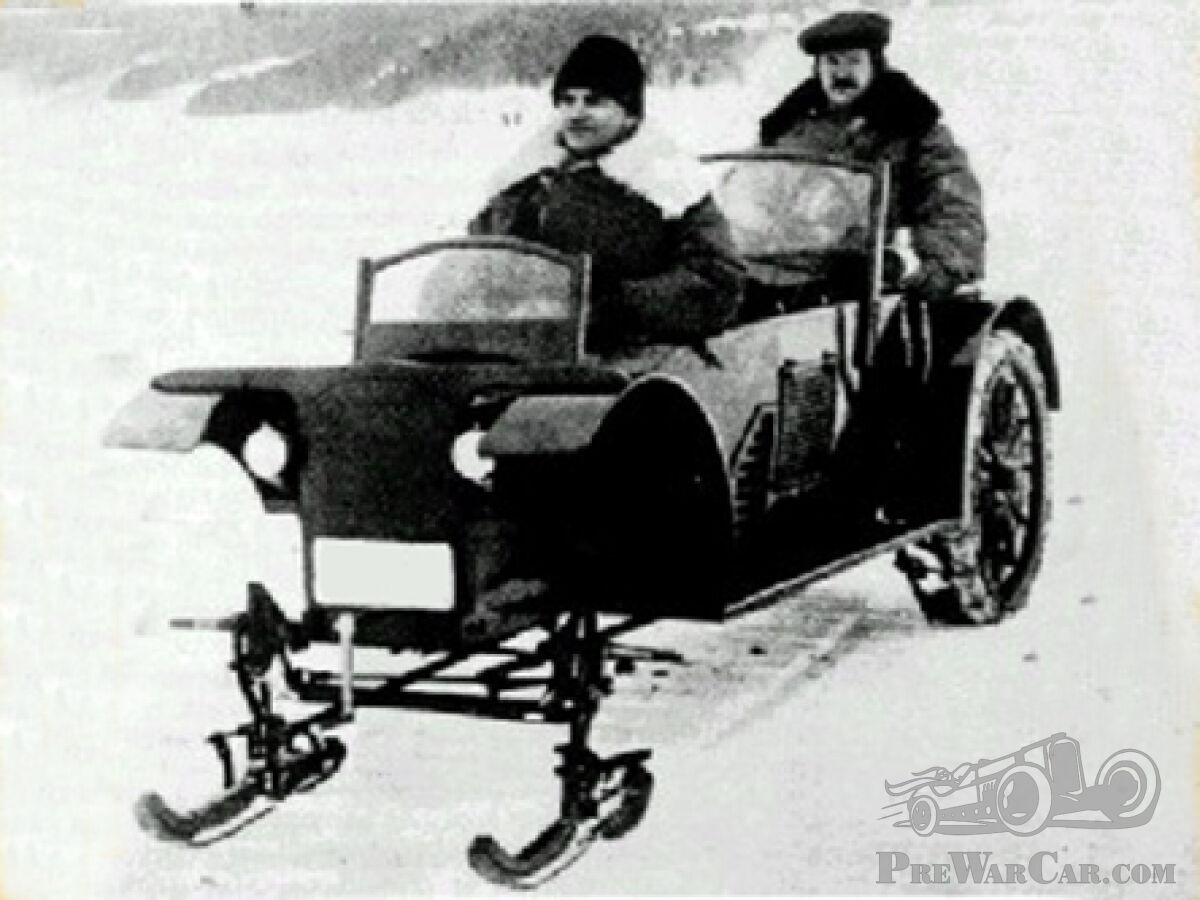

While we are writing this quiz, the Olympic winter games in Pyeongchang are on. Today's quiz is based on the event. We give you a few hints and we hope you know the car, the year and everything else that is of interest.
The first hint: the car finds its origin in the country with the most medals so far (24th of February 2018) and who won the most gold medals in the second Olympic Winter Games ever held. The second hint: in the year the car was built, no winter Olympics were held yet. The third hint: there are just as many of these cars built, as Finland won medals when Germany was the first time host of the event. The last hint: in the town, this car was made, an Olympic Hall is built.
Good luck and enjoy the winter games.
Send your answer in a comment with no more than 100 words and see next week if you win a gold medal!
Publiziert:
Samstag Februar 24th, 2018
Facebook
LinkedIn
Twitter
WhatsApp
Email
Copy
Kommentare
Gaute
28 Februar 2018, 16:22
Universal parts were often taken from other vehicles (new or used) As of the wheels. These seems to be taken from a Rugby (Durant)
Weiter lesen
Rolf Schau
26 Februar 2018, 13:59
How nice that Norway can be associated with other things than winter sports these days! Some of us here are getting more than our fill. I much prefer old cars.
The Bjering was built 1920-25 in the town of Gjøvik in two versions, the one here is the first with a 2 litre V4 engine and wooden body. Front wheels could be replaced with skis for winter conditions and a snow plough could also be attached in front. Only a metre wide, it was thought to be perfect for narrow Norwegian roads. Two seats with the driver at the rear. Alas no thundering success, only four were built. The second version was ordered by the Ministry of Defence, it had a a straight four engine and an aluminium body. But who would go to war in one of these? No more than two were built. I believe the National Technical Museum in Oslo has one of each.
Weiter lesen
The Bjering was built 1920-25 in the town of Gjøvik in two versions, the one here is the first with a 2 litre V4 engine and wooden body. Front wheels could be replaced with skis for winter conditions and a snow plough could also be attached in front. Only a metre wide, it was thought to be perfect for narrow Norwegian roads. Two seats with the driver at the rear. Alas no thundering success, only four were built. The second version was ordered by the Ministry of Defence, it had a a straight four engine and an aluminium body. But who would go to war in one of these? No more than two were built. I believe the National Technical Museum in Oslo has one of each.
fritz hegemann
26 Februar 2018, 03:08
Dear prewarcarteam
Sorry for the delay. For days I'm struck down by the real flu. Avoid to get this. Just woken up by a couhghing attack I got an intervallum lucidum and remembered...weekend ...ok..
Here my quick, wikibased solution in delay -surely must not be accepted.
Bjering 1918/1919 with mounted skeds - usually it had 4 wheels. But the Norwegians are so great in skiing, that they think, also their cars should learn this.
Constructed by Hans C. Bjering in Gjøvik, Norway. Two seater tandem with an air-cooled (air can not freeze.) V4-engine. Small width for driving in the narrow track left by the snow plough in the Norwegian roads during winter. Only six were built (four with the engine placed in the middle, and two with engine placed at the rear) between 1918 and 1920.
Best regards from the Nahe valley, stay healthy
Fritz
Weiter lesen
Sorry for the delay. For days I'm struck down by the real flu. Avoid to get this. Just woken up by a couhghing attack I got an intervallum lucidum and remembered...weekend ...ok..
Here my quick, wikibased solution in delay -surely must not be accepted.
Bjering 1918/1919 with mounted skeds - usually it had 4 wheels. But the Norwegians are so great in skiing, that they think, also their cars should learn this.
Constructed by Hans C. Bjering in Gjøvik, Norway. Two seater tandem with an air-cooled (air can not freeze.) V4-engine. Small width for driving in the narrow track left by the snow plough in the Norwegian roads during winter. Only six were built (four with the engine placed in the middle, and two with engine placed at the rear) between 1918 and 1920.
Best regards from the Nahe valley, stay healthy
Fritz
Henk Visscher
25 Februar 2018, 23:50
In 1917, Hans Christian Bjering of Gjøvik, Norway, established ‘Bjerings Slaamaskiner’ to produce patented mowing machines. Business was unsatifactory and, with a (US) Star dealership, Bjering moved into the automobile trade. He also constructed the prototype of a 1m-wide, mid-engined, wooden-bodied, tandem two-seater (picture), adapted to narrow snowy roads. Its air-cooled 2.1-litre V4-engine was based on Henderson motorcycle components. Front wheels could be replaced with snow-runners. In 1920 Bjering founded another company, ‘Autoslæde’, to produce the vehicle. But only three more were constructed. Two prototypes of an improved version (aluminium-bodied, rear in-line engine) were built in 1923-1925 by ‘Raufoss Patronfabrikk’.
Weiter lesen
LUC RYCKAERT
25 Februar 2018, 22:51
Bjering Car . Hans Christian Bjering (Gjorik Norway) mainly had winter roads in mind when he designed this car. It was only 1 meter wide, making it capable to drive in the narrow track left by the snow plough in the Norwegian roads during winter. The car had an unusual tandem arrangement of 2 seats with passenger in front and driver in the back. Engine was an aircooled V4, and front wheels could easily be switched for a pair of skis. Between 1918 and 1920, only 6 were built, 4 with the engine in the middle and 2 with the engine at the rear.
Weiter lesen
Hans Müßeler
25 Februar 2018, 19:40
Bjering ( 1918 – 1920 ) ( bis 1925 ? )
Ingenieur H.C. Bjering; Gjovik; Norwegen, konstruierte Kleinwagen in Tandembauweise; gebaut bei AS Raufoss Ammunisjonsfabrikker; Raufoss; Norwegen.
Stückzahkl 6: 4 mit Holzkarosserie und 4-Zyl.- Mittelmotor in V- Form; Antrieb auf differentiallose Hinterachse, 2 mit Metallkarosserie ( Alu ) und 4-Zyl.- Heckmotor in Reihe
( 2097 ccm, 20 PS ); alle Motoren luftgekühlt. Fahrer hinten und Motor im Heck hilft bei winterlichen Straßenverhältnissen ( Motorschlitten ).
Gesamtbreite der Fahrzeuge nur 1010 mm, Länge 3600 mm. Achsabstand 2260 mm, Gewicht 800 kg. Getriebe mit 3 Vorwärtsgängen und 1 Rückwärtsgang, Max. Geschwindigkeit 55-60 km/h.
Anmerkung: Einige Quellen geben 7 gebaute Exemplare an; 1991 wurde auf der IAA in Frankfurt / M. ein Modell aus dem Baujahr 1925 gezeigt !?
Weiter lesen
Ingenieur H.C. Bjering; Gjovik; Norwegen, konstruierte Kleinwagen in Tandembauweise; gebaut bei AS Raufoss Ammunisjonsfabrikker; Raufoss; Norwegen.
Stückzahkl 6: 4 mit Holzkarosserie und 4-Zyl.- Mittelmotor in V- Form; Antrieb auf differentiallose Hinterachse, 2 mit Metallkarosserie ( Alu ) und 4-Zyl.- Heckmotor in Reihe
( 2097 ccm, 20 PS ); alle Motoren luftgekühlt. Fahrer hinten und Motor im Heck hilft bei winterlichen Straßenverhältnissen ( Motorschlitten ).
Gesamtbreite der Fahrzeuge nur 1010 mm, Länge 3600 mm. Achsabstand 2260 mm, Gewicht 800 kg. Getriebe mit 3 Vorwärtsgängen und 1 Rückwärtsgang, Max. Geschwindigkeit 55-60 km/h.
Anmerkung: Einige Quellen geben 7 gebaute Exemplare an; 1991 wurde auf der IAA in Frankfurt / M. ein Modell aus dem Baujahr 1925 gezeigt !?
Chris Moony
25 Februar 2018, 14:18
Bjering Built 1918-20 by Hans Christian Bjering in Gjovik, Norway. Narrow (39.4cm) tanden bodied with driver in back seat. 6 built with 4 midengine and 2 rear engine (and aluminium bodied) V4 air cooled engines, The Motorsled Cars front wheels could be change to skis for winter use. A later model built c1925 for military use. A car (and your picture) is on display at Norsk Kjøretøyhistorisk Museum. A Bjering is on a 2017 Norge Innland Postage stamp.
Weiter lesen
Frank Sauerwald
25 Februar 2018, 13:58
A norwegian car built in 1918 by Hans Christian Bjering in Gjovik.
From this mid engined type only 4 were produced, a later type was produced rear engined (2 cars).
Production ended in 1920.
Weiter lesen
From this mid engined type only 4 were produced, a later type was produced rear engined (2 cars).
Production ended in 1920.
Fried Stol
25 Februar 2018, 12:43
In 1918, because of the small and narrow roads Hans C. Bjering came up with this tandem seat car. In between the front and backseat an air cooled 4 cylinder engine was placed which operated the rear axle without a differential. They were used by the norwegian police. Arrested men were placed in front to keep a close eye on them by the policeman at the back. In total six were built, the last two in 1920 at an ammunition plant in Raufoss and had the 4 in-line engine behind the rear axle. One is still in the Lillehammer Museum.
Weiter lesen
Alan Brookman
25 Februar 2018, 00:38
It's a Bjering, manufactured by Hans C. Bjering from 1918 to 1920 in Gjøvik, Norway. It had an air-cooled V-4 engine placed either in the rear or the middle of the car. Its tandem seat arrangement allowed the car to fit in the path plowed by Norwegian snow plows. Apparently only six were made.
Weiter lesen
Alan Spencer
24 Februar 2018, 20:13
Norwegian manufacturer of mowers, Hans Christian Bjering, turned to building cars in Gjøvik between 1918 and 1920. The quiz car, registered E510, was his second of six “motorsleds,” of which four were mid-engined, and two rear-engined. Since the cars were designed to be driven in winter on the snow-covered roads of Scandinavia (and potentially, Russia and Canada), they were narrow enough to be driven in the tracks of a snow plough, the driver was positioned behind the passenger to maximize traction, and the front wheels could be replaced by ski runners. Power came from a 2010 cc air-cooled V4 engine.
Weiter lesen
Ace Zenek
24 Februar 2018, 17:08
The Bjering, with tandem seat arrangement and air-cooled V4 (four mid-engined, two rear-engined), was created between 1918 and 1920 by Hans Christian Bjering in Gjøvik, Norway (Olympic Cavern Hall site 1994 Olympics). Skis could replace front wheels, while the one-meter width allowed it to pass other vehicles on narrow winter rows. The driver sat/steered from the rear, and the front passenger sat lower so that the driver could see forward better. Produced by A/S Raufoss Ammunisjonsfabrikkk, there was also a trailer for pulling two passengers. It has appeared on a Norwegian postage stamp, and at least two still exist.
Weiter lesen
Gerd Klioba
24 Februar 2018, 12:07
This is a 1920/1921 Bjering, built by Hans Christian Bjering's company A/S Autoslæde from Gjøvik, Norway. The wooden-bodied car had a tandem-arrangement with the driver sitting behind the passenger and the air-cooled V4 two-litre engine placed between the seats. Its 80 centimeter track width made the vehicle capable of driving in the narrow track left by the snow plough. The front wheels could be replaced by skis. Probably only four cars of this type were built, one of which survived together with one of two 1925 rear-engined Bjering cars built by Raufoss Patronfabrik.
Weiter lesen
Fёdor
24 Februar 2018, 09:12
This car was produced at the plant in Norway Hans Bjering AS Raufoss Ammunisjonsfabrikker in Gjovik with 1918 to 1920 as Bjering Tandem
Weiter lesen
Anders Svenfelt
24 Februar 2018, 06:46
Norwegian Bjering, built by Hans Christian Bjering's company A/S Autoslede in Gjövik 1920-1921. Tandem-seating, driver at the rear. Narrowness due to use on bad winter roads, but better snow ploughing dropped the demand for a combinied car/snowmobile. Air-cooled V-4 engine between the seats. In 1923-25 a couple of cars differing a bit from the orginal design was built at Rauforss Patronfabrik after a deal with the defence departement. Probably six cars were totally built, one from 1921 survives.
Weiter lesen