Das weltweite Magazin und der Marktplatz für Oldtimer-Enthusiasten – von Enthusiasten.
Das weltweite Magazin und der Marktplatz für Oldtimer-Enthusiasten – von Enthusiasten.


Filter
Auswahl treffen
- Autos
-
Marke >>
-
Baujahr >>
-
-
Kategorie >>
-
Länder >>
- Motorräder
-
Standort >>
- Teile
-
Automarke >>
-
Hersteller >>
-
Kategorie >>
- Fahrräder
-
Baujahr >>
-
Länder



Update: 1892 Bremer goes to Beaulieu
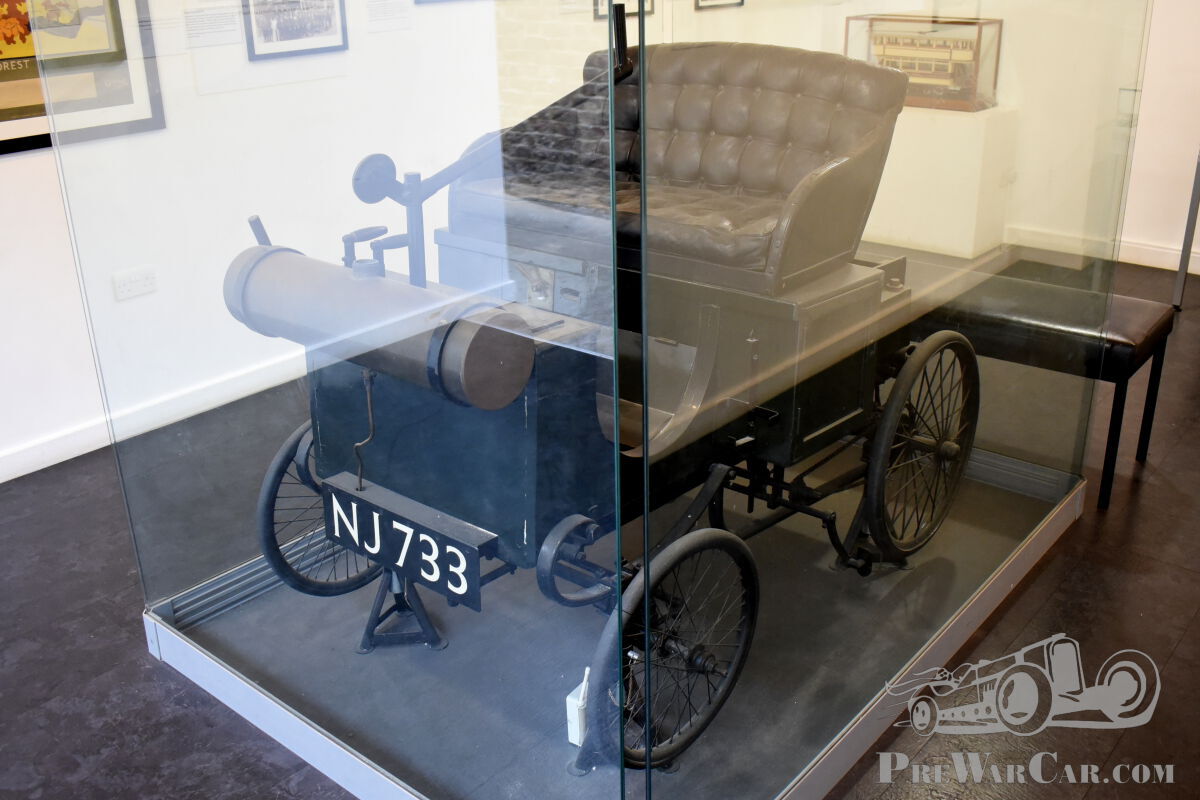


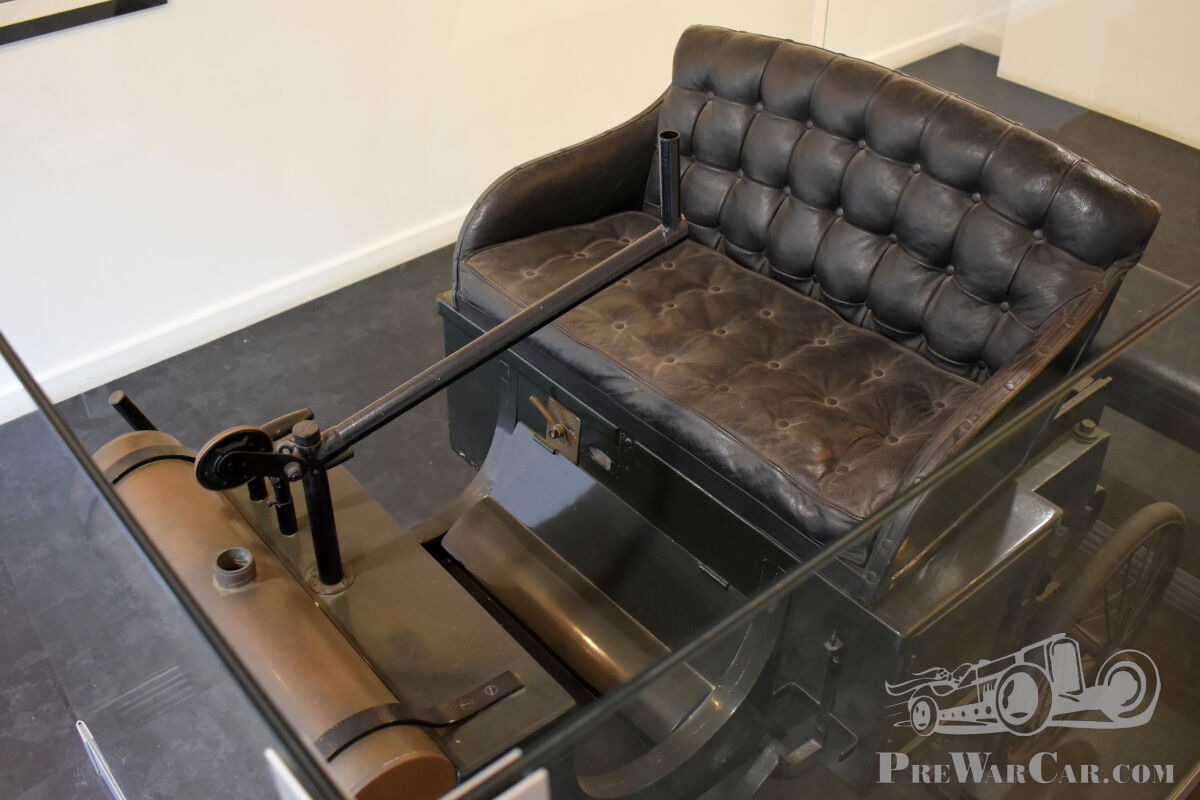


Further to my original article (below), I again entered into correspondence with the Vestry House Museum and was delighted to be informed that, while the museum closes for refurbishment, the Bremer will be put on temporary display at the National Motor Museum in Beaulieu. This is excellent news, which will allow it to be seen by thousands of people who have never heard of it before and will hopefully generate increased interest in the very early years of motoring in Britain.
Less pleasing was the reply to my recommendation that the Bremer be made to run again, which read: "It has been a very long time since the car was out on the road and neither our curators nor the team at Beaulieu would recommend that we attempt this again now!" While it would be a thrill to see the Bremer complete the London to Brighton again, I am not oblivious to the risks inherent in such an undertaking and therefore broadened my comments to suggest that it might at least be demonstrated at private events under off-road conditions. There is a large Tarmac arena next to the National Motor Museum which would be ideal for the purpose. It is a pity the Bremer's custodians apparently do not share my enthusiasm.
While I have the floor, I might venture to comment that we are performing our duty as preservationists very poorly if we simply conserve objects and leave it at that. A mere historian might deem it sufficient, but surely not an enthusiast. To have only objects affords us an incomplete understanding of the past; to better complete the picture, we have to sustain something quite intangible: an attitude and an atmosphere. That cannot be done by simpling looking at an object. We have to touch them, experience them, use them. No matter how many books a person reads or stories they hear about old cars, they cannot conceive of what it is really like to drive and maintain one until they have tried it for themselves, just as young iPhone photographers fail to appreciate the importance of properly composing a photograph, the excitement of waiting a week for film to be developed and the elation upon finding out that some of the pictures turned out really very nicely.
So it follows that we can try to imagine the thrills and fears of the Victorian Walthamstovians who were party or witness to the construction of the first internal-combustion vehicle to be constructed in Great Britain, and one of the first to travel under its own power on the Queen's highway, but we cannot feel them for ourselves. I believe, however, that if we were to see the Bremer running again for the first time in 59 years, we would be firstly as apprehensive, then as ecstatic, as Frederick Bremer must have been himself when he discovered his autocar really worked, and as Trott and Boorer must have been when they breathed life into it again when it had reached the grand age of 72.
What is centuries old may be as new as the latest thing. The Epic of Gilgamesh is more than three millennia old, but I have never read it. When I do, it will be as fresh to me as if it had been written yesterday. The Bremer may be 132 years old, but to generations raised solely on the slops of motoring, it would be no less new than an autonomous car. To some, it may even be epiphanic.
With anything ancient or unique, any use carries a risk of damage, but the Bremer is a simple car and I am sure with sympathetic use and preparation it should not be difficult to avoid catastrophe. Besides, it has been restored and had its crankshaft repaired once, so it is not as if it needs to be handled with kid gloves. The workshops of the National Motor Museum have done excellent work in recent years in making the Sunbeam 350hp record car live again, and they are now appreciably busy doing the same with the Sunbeam 1000hp. It will be the greatest shame if the Bremer does not receive the same favour while there is the opportunity.
Original article published December 14th, 2023:
The first self-propelled carriage, as opposed to a steam road locomotive, to be constructed in Great Britain was not one of the Daimlers which went into production in 1897. It wasn't the experimental vehicle constructed by John Henry Knight of Farnham in 1895, which may be seen today in the National Motor Museum, nor was it the 1894 Malvernia which Bonhams sold in 2017. Britain's first true autocar was the 1892 Bremer, built by 20-year-old engineer Frederick Bremer of Walthamstow, Essex, in a workshop behind his family home on Connaught Road.
Despite being dated as 1892, it did not make its first journey on the road until 1894, and its body was not completed until January, 1895. Still, it was an extraodinary pioneering effort by a young man of great talent, and its historical significance can scarcely be overstated. It is naturally very primitive, using a paraffin-fuelled, horizontal single-cylinder stationary engine of three to 3½ horse-power, which Bremer adapted to supply motive power. It was water-cooled, with the water intended to eventually boil away and be replaced as necessary. Drive was by crossed belts, with two speeds available. All the controls are by hand; the two small handles behind the petrol tank operate the belts, the large lever on the right of the car is for the throttle, and the slightly unwieldy steering tiller is adjustable for drivers of different heights. Each rear wheel has a spoon brake, and it is reckoned the Bremer's maximum safe operating speed was seven to eight miles per hour.
Although it was very soon outclassed by more sophisticated machines, Bremer retained his invention and loaned it for display in Britain's first ever motor museum, which opened on London's Oxford Street in 1912 but was dispersed in 1914. In 1931, the Municipal Borough of Walthamstow converted Vestry House, an 18th-century parish workhouse, into a local history museum, and Mr. Bremer donated his autocar for display. He died in 1941.
In 1961, Walthamstow Borough Council co-operated with two veteran car enthusiasts, John Trott and Tim Boorer, to restore the Bremer to running order and in 1964 it was entered on the London to Brighton Veteran Car Run, where it drove for seventeen miles before the crankshaft broke. It was repaired for the 1965 run, which it successfully completed in 7h. 55m.
Living in the shadows
Sadly, since then the Bremer appears not to have so much as turned a wheel. For many years now, it has been completely static and encased in shoulder-high glass, a slightly pathetic fate and one unbecoming such an important vehicle. About a year ago, the editor enquired of the museum, now managed by Waltham Forest London Borough Council, as to whether or not it would entertain the possibility of the Bremer being made to run again but received no reply.
Most likely, nothing exciting is going to happen to the Bremer in the foreseeable future because it was announced this week that the Vestry House Museum is to open for the last time on December 22nd, before it closes for "refurbishment" works, which we are told will take until early 2026. One hopes to see a genuinely improved history museum materialise at the appointed time, and to see the Bremer live again one day would be marvellous, but that all lies for the present in the hands of the council.
Anyone who wishes to see the Bremer in person before it is taken off public display will do well to visit Vestry House Museum by December 22nd. It is located on Vestry Road, Walthamstow, Essex, and is open from Wednesday to Sunday, ten o'clock to five o'clock.
Words and photographs: Zack Stiling
Publiziert:
Montag Januar 15th, 2024
Facebook
LinkedIn
Twitter
WhatsApp
Email
Copy
Kommentare
Graeme Miller
19 Dezember 2023, 10:29
It is worth mentioning that the museum is not open on Mondays and Tuesdays, so the only opportunity to see the car before the museum closes is from Wednesday the 20th to Friday the 22nd of December. I'll be going on Wednesday.
Weiter lesen
Fredric M. London
17 Dezember 2023, 01:53
I sincerely hope it is returned to running condition. Hopefully, the museum will allow it to be acquired by an individual or museum that would show it more respect.
Weiter lesen
Philip A (Phil) Tegtmeier
16 Dezember 2023, 23:13
Could there possibly be some known racing entity who would prepare the car to be driven in any events geared to a car of this nature who would take the responsibility to maintain and compete with it and return it to the museum or at an agreed time? Is the combination and the joy of driving dead?
It is so sad to see this automobile so highly underappreciated.
Weiter lesen
It is so sad to see this automobile so highly underappreciated.
Tony Press
14 Dezember 2023, 03:53
It would be good if the Bremer could be farmed out to one of the larger UK museums for the next two years.
Weiter lesen