Das weltweite Magazin und der Marktplatz für Oldtimer-Enthusiasten – von Enthusiasten.
Das weltweite Magazin und der Marktplatz für Oldtimer-Enthusiasten – von Enthusiasten.


Filter
Auswahl treffen
- Autos
-
Marke >>
-
Baujahr >>
-
-
Kategorie >>
-
Länder >>
- Motorräder
-
Standort >>
- Teile
-
Automarke >>
-
Hersteller >>
-
Kategorie >>
- Fahrräder
-
Baujahr >>
-
Länder



Sporty station wagon: solve this nifty roadster mystery from Leipzig
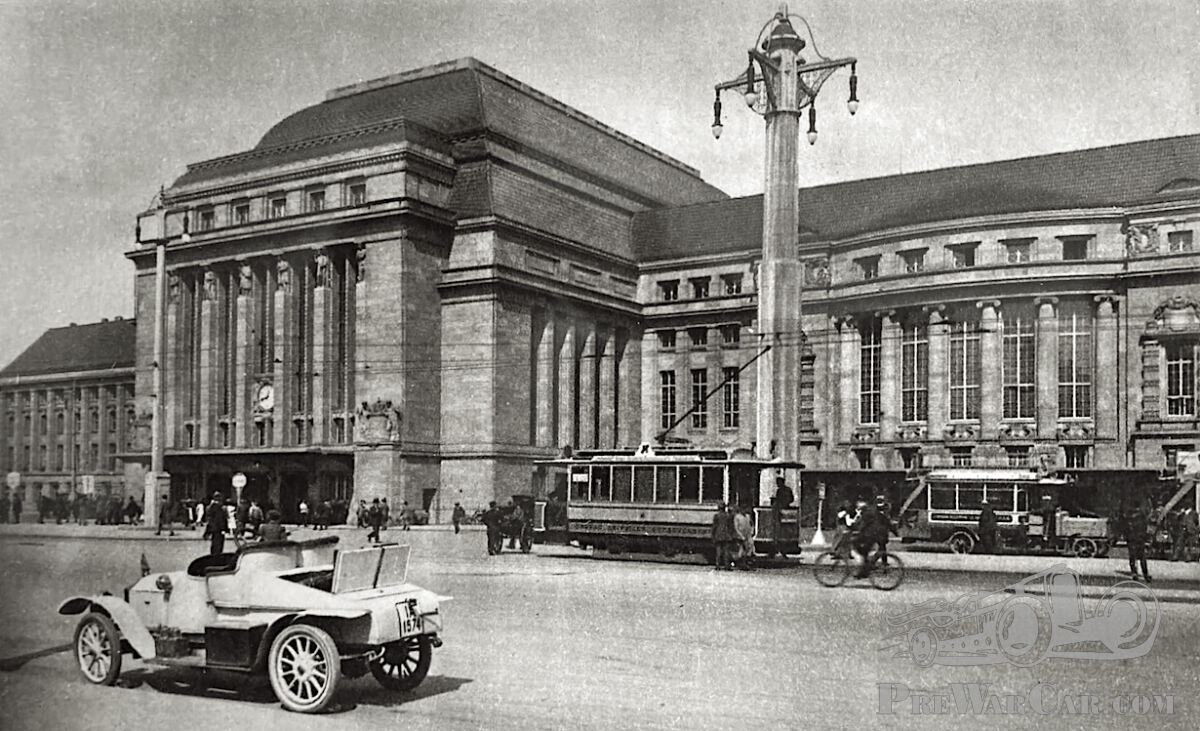

This is Leipzig’s Hauptbahnhof—the city’s main railway station—in its full splendour, and the picture likely dates back to the station’s earliest days. The 860,000 sq. ft. premises opened its doors in 1915 with three expansive floors, affording space for more than just train tracks and platforms. Note the colossal lamppost, too.
We’re not here to tell you about the architecture, or the boutique shops and restaurants which can still be found inside. We might be interested in steam trains, but it's not our purpose to write about them, either. There’s no train in sight anyway, but we do see a variety of transportation: a tram, an omnibus, a bike and, very prominently, a car. The thing we’d like to know is what is that natty runabout? The number plate IA 1574 suggests it was registered in Berlin, some 125 miles north of Leipzig. The dickey seat suggests it was used to carry more than one person to the station. At least parking was not quite so much of an issue!
After the Second World War, the heavily bombed station had to make do without a roof for the next ten years, but the building was later restored to its former glory. Look it up if you like. It seems you could still pretty much make a similar picture today.
Words: Jeroen Booij, Picture: source unknown
Publiziert:
Donnerstag Juli 25th, 2024
Facebook
LinkedIn
Twitter
WhatsApp
Email
Copy
Kommentare
Hergen Deuter
01 August 2024, 14:31
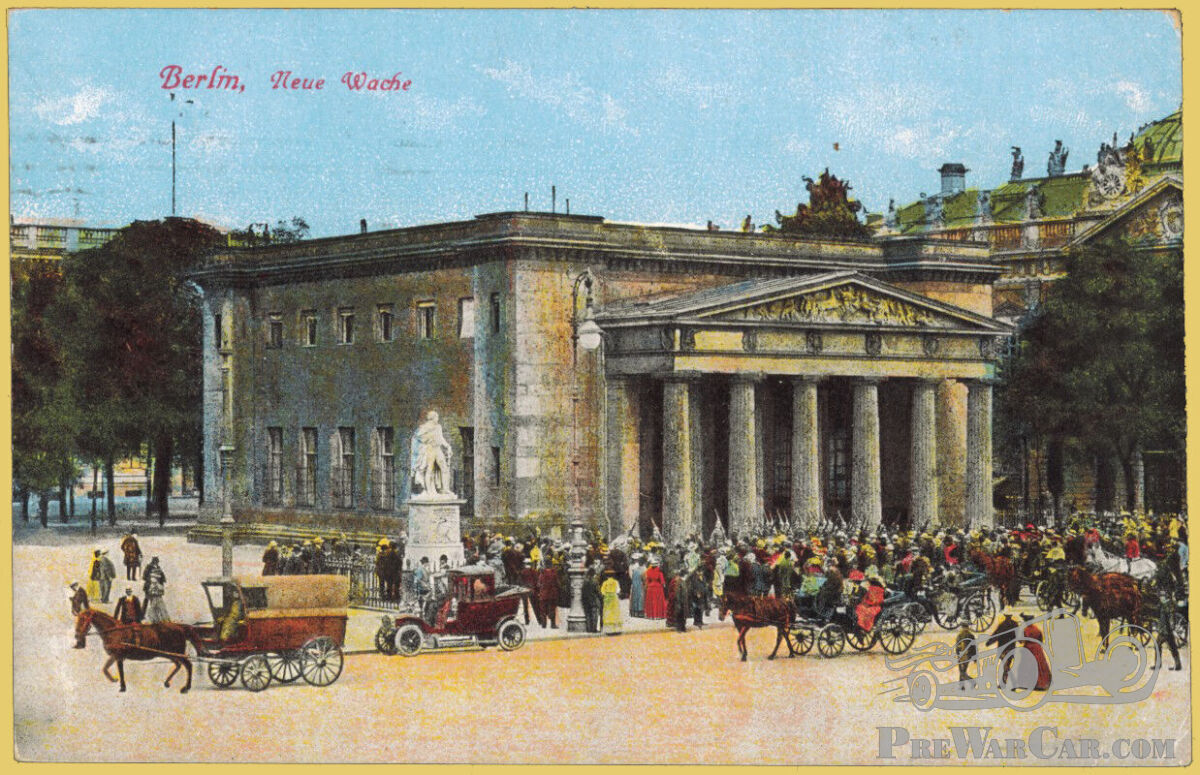
Here we see a contemporary postcard from the Neue Wache in Berlin, which in turn might lead us to ask what kind of car is depicted on it.
Weiter lesen
Dieckmann Hans
26 Juli 2024, 12:28
The vehicle owner was (Adolf?) Böcklin von Böcklinsau of Berlin, Unter den Linden 4/5.
--------------------------------------------------------------------
Fahrzeugeigentümer war (Adolf ?) Böcklin von Böcklinsau, Berlin, Unter den Linden 4/5.
Weiter lesen
--------------------------------------------------------------------
Fahrzeugeigentümer war (Adolf ?) Böcklin von Böcklinsau, Berlin, Unter den Linden 4/5.
Hergen Deuter
31 Juli 2024, 21:19
In Berlin's boulevard Unter den Linden 4 there was no residential building even around 1915, but the Neoclassical Neue Wache, built by Karl Friedrich Schinkel in 1818, was in those days used as the headquarters of the military command and is a memorial now. Adolf Böcklin von Böcklinsau was a lieutenant general, but probably should have been retired then, as he must have been already 77 years old.
Weiter lesen
Fredy Ley
29 Mai 2024, 11:45
Now that we have dealt with the rear dumb-irons, which were a copy of those used on horse-drawn vehicles, as well as right-handed knights (forget left-handed ones), I invite you to take a ride on the omnibus parked in front of the station. The Leipziger Allgemein Kraftomnibus A-G was equipped with Daimler, Dürkopp, and Büssing omnibuses. The photo shows a Büssing double-deck type Leipzig 35 PS omnibus from 1913.
Weiter lesen
Ivo Braeken
28 Mai 2024, 16:51
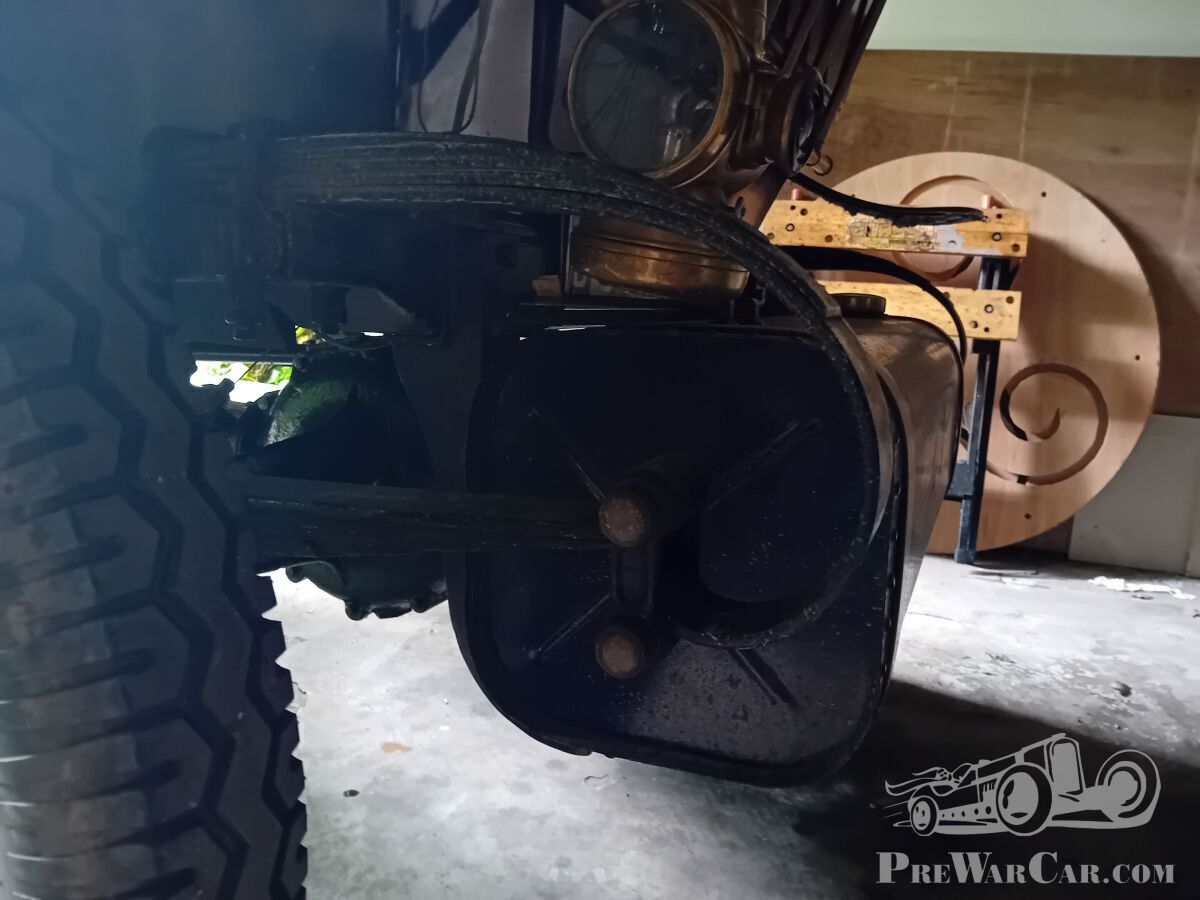
Another feature of Métallurgique is the lack of cooling fins in the bonnet and the wind tunnel under the car to suck warm air out. I include a photo of the dumb iron of a Métallurgique. I think it is a match.
Weiter lesen
Ariejan Bos
30 Mai 2024, 09:36
The spring system you show is the normal spring configuration of a Métallurgique during that period. The official name was "three-quarter elliptic spring with swan neck" (because of the downward curve at the end; in French: ressort demi-pincette à crosse). In rare cases you can observe half-elliptical springs with a transverse spring (e.g. in the case of the well-known 1911 Vanden Plas speedster in the Auburn-Cord-Duesenberg Museum in the US). The spring system on the Leipzig car has an outward curved dumb-iron, supporting the end of a half elliptic spring. For example Peugeot was a regular user of this system in these years, but I've never seen that on a Métallurgique.
Weiter lesen
Keith Kuehn
25 Mai 2024, 20:31
Okay, Ivo, you started this! It's a good question actually, as I bet a lot of folks that visit this website question a lot of early information and names. Now, I wonder how those parts got the name "dumb irons"!
I get asked a lot, "Why right hand drive?" I've always thought that was because ships had "port" and "starboard" or "Steering board", which is the right-hand side of the ship. Another reason I've heard is that is the side the coachman controlled the horses from... either explanation being good, of course.
Weiter lesen
I get asked a lot, "Why right hand drive?" I've always thought that was because ships had "port" and "starboard" or "Steering board", which is the right-hand side of the ship. Another reason I've heard is that is the side the coachman controlled the horses from... either explanation being good, of course.
Christoph Röhrs
26 Mai 2024, 21:49
Why right-hand drive? Another explanation for driving on the left-hand side of the road is that in earlier times knights also rode on the left-hand side, because then they had their right hand free for the sword towards the centre of the road in case of defence.
Weiter lesen
Keith Kuehn
24 Mai 2024, 20:01
Yes, Ariejan. Those dumb irons appear the same as my 1910 Alldays, and so does the radiator shape. I'm positive it is NOT an Alldays and Onions, though!
The motor car in the photo does appear to be a very sporty little fella though!
Weiter lesen
The motor car in the photo does appear to be a very sporty little fella though!

Fredy Ley
24 Mai 2024, 10:44
Going by the bonnet, I think this beautiful car is a Bergmann-Métallurgique "Victoria Coupé" 8/16hp with 1910 Van den Plas bodywork.
Weiter lesen
Ariejan Bos
24 Mai 2024, 13:41
I agree, though I have a bit of a problem finding a Métallurgique with similar rear dumb-irons.
Weiter lesen
Ariejan Bos
25 Mai 2024, 17:36
In French: main de ressort. In Dutch: veerhand.
Weiter lesen
Ariejan Bos
25 Mai 2024, 17:33
That is the cast-iron bracket holding the spring.
Weiter lesen