Das weltweite Magazin und der Marktplatz für Oldtimer-Enthusiasten – von Enthusiasten.
Das weltweite Magazin und der Marktplatz für Oldtimer-Enthusiasten – von Enthusiasten.


Filter
Auswahl treffen
- Autos
-
Marke >>
-
Baujahr >>
-
-
Kategorie >>
-
Länder >>
- Motorräder
-
Standort >>
- Teile
-
Automarke >>
-
Hersteller >>
-
Kategorie >>
- Fahrräder
-
Baujahr >>
-
Länder



The Panhard artist's Panhard
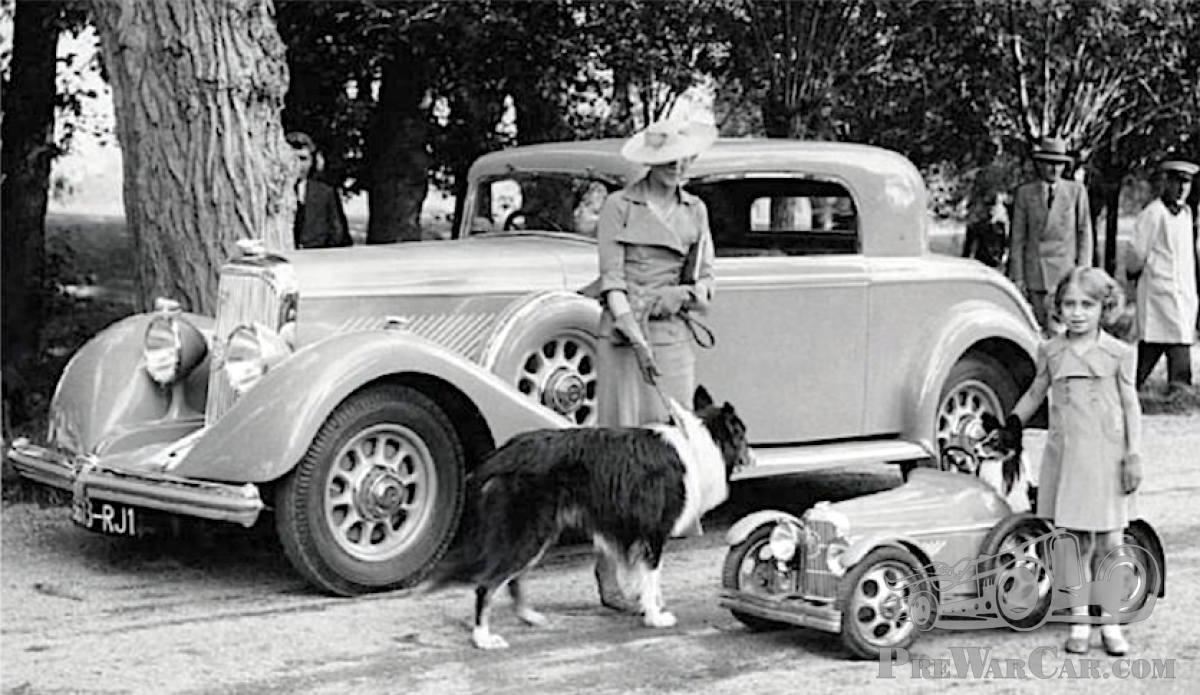
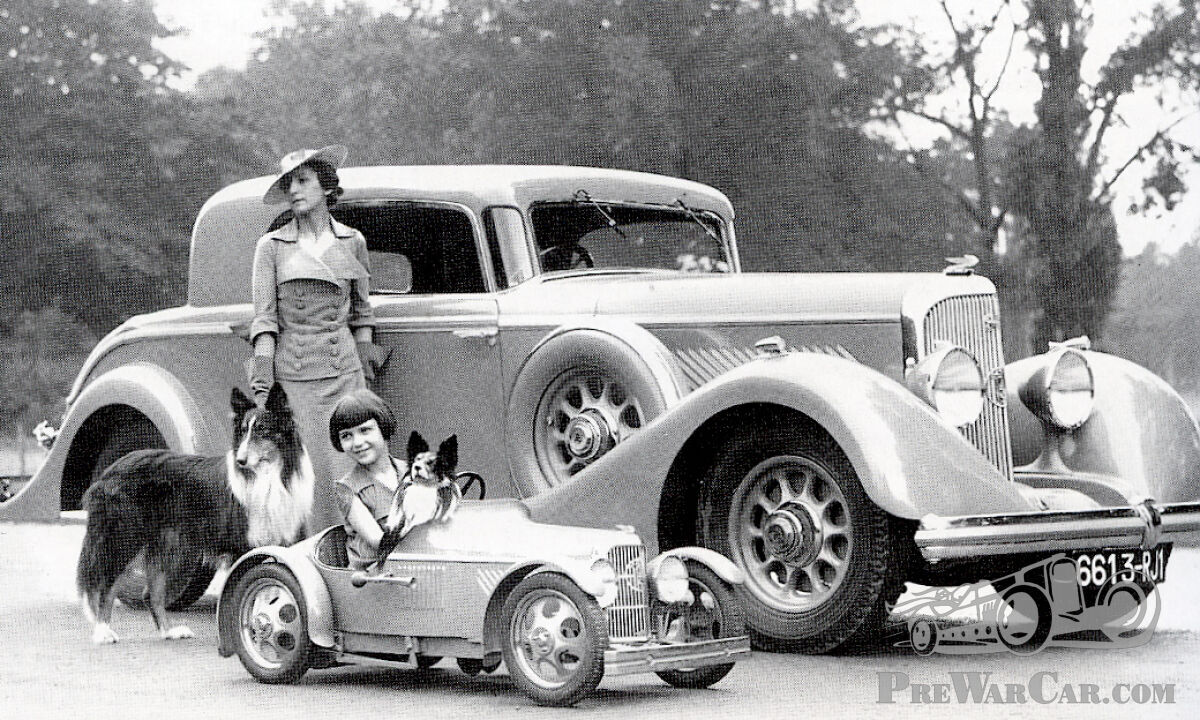
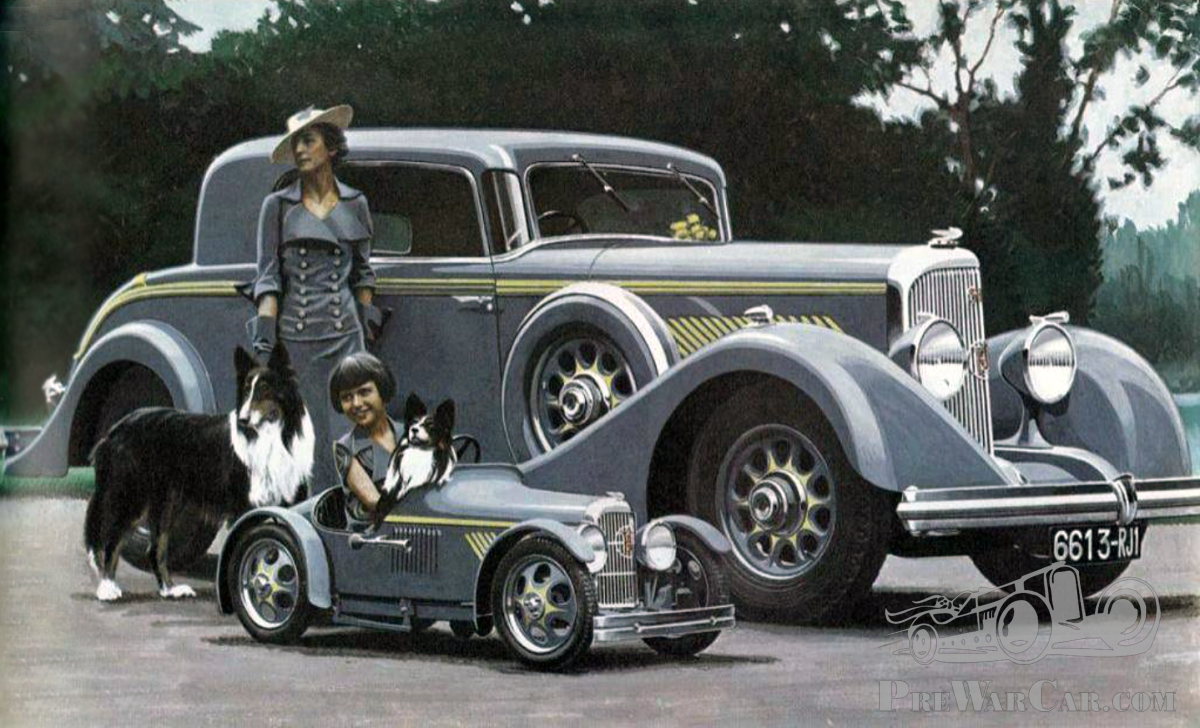


Now here’s a duo of Friday Ladies to charm us! These women are Madame Kow and an unknown girl. Mme. Kow was wife to Alexis Kojewnikow, better known as Alexis Kow, who made so many beautiful designs, drawings and advertisements for Panhard et Levassor and Hotchkiss in the 1920s and 1930s, mostly as a freelancer.
These pictures - the heavily retouched coloured version was publicized widely - date back to 1934 and were taken during the concours d’elegance at Bagatelle in France that year. We can only assume that the car was indeed blue with yellow accents as in the colourized variant. Note that Mme. Kow and the little girl are dressed in matching colours up to the shoes, gloves, corsage, handbag and supposedly even the dog's lead.
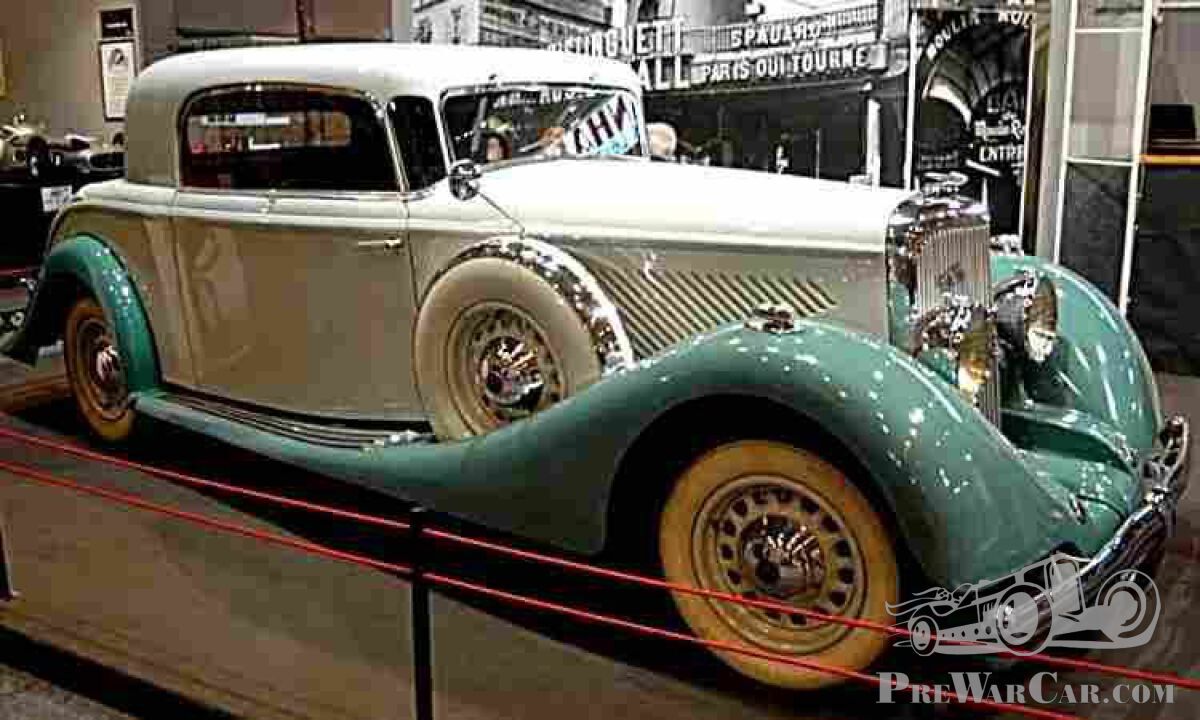
The car is described as a Panhard et Levassor 6CS RL-N Coupé X72 Belka, but we don’t know what ‘Belka’ denotes. A coachbuilder? If so it is one we have never heard of before. The Lane Motor Museum has a similarly styled coupe, which it describes as a ‘faux cabriolet (coupé) in ‘DERKA’ trim, which originally came with a 4.1-litre inline six-cylinder sleeve-valve engine’. It was sold new in 1933 to a Monsieur Lagouche.
The museum’s website says, ‘Perhaps Lagouche required more power than the standard car offered, because he sent the car back to the factory in December 1934 and had the engine replaced with the larger 4.8-litre inline six engine (now with taxable 27hp) from the X74.” Is Belka perhaps confused with Derka, or the other way round? Could it even be the same car?
Words: Jeroen Booij; picture: archive
Publiziert:
Freitag Januar 20th, 2023
Facebook
LinkedIn
Twitter
WhatsApp
Email
Copy
Kommentare
Herman van Oldeneel
25 Januar 2023, 07:48
Sujit Gupta
20 Januar 2023, 18:53
What about the dog? I think it's a Sheltie.
Weiter lesen
David Grimstead
20 Januar 2023, 14:30
According to “Priscilla in Paris” in a July 1934 edition of the posh Tatler magazine, this event was an oh, oh, so exasperating affair for the elegant ladies taking part but the blue Panhard, Mme. Kow and the young girl driver did get a mention:
“The Concours d'élégance feminine en automobile took place this year at the Jardin d' Acclimation of the Bois de Boulogne, and some three hundred beautiful cars, driven by exquisitely dressed women, snailed past a jury composed of famous artists, such as van Dongen, the arbiter elegantiarum of Paris; M. André de Fouquière, and other celebrities of le Tout Paris. One of the prettiest outfits was that of Mme. Vera Goullet, who was driving a dark-blue Renault, and Mlle. Blanche Montel, all in white, at the wheel of an all- white Delage, ran her a close second. An amusing couple were Mme. Kow in a blue Panhard, followed by tiny, seven-year-old Jacqueline Kami, in a miniature toy car that was the exact replica of the big one. One of the special mentions went to the great screen and stage star, Mlle. Gaby Morlay, who was in such a state of exasperation that, she vowed, she would have liked to drive right through the jurymen's bench. The competitors had been herded into line for the drive past at ten o'clock; at two p.m. they were still edging forwards, an inch at a time, and Gaby ought to have been on the lot at the Joinville studios before mid-day. Once in the line, hedged in by the spectators, it was impossible to get away, and a good deal of the language I heard was not at all en rapport with the dainty appearance of the competitors.”
It had been observed in 1931 that Panhards were generally dark blue and a report of the 1934 Paris motor show noted that the only new idea was Panhard’s clever design for the A-pillar: “… removal of the single upright altogether, and replacing it by two slender uprights separated by a four-inch glass panel... a safety-first feature of great value.”
Weiter lesen
“The Concours d'élégance feminine en automobile took place this year at the Jardin d' Acclimation of the Bois de Boulogne, and some three hundred beautiful cars, driven by exquisitely dressed women, snailed past a jury composed of famous artists, such as van Dongen, the arbiter elegantiarum of Paris; M. André de Fouquière, and other celebrities of le Tout Paris. One of the prettiest outfits was that of Mme. Vera Goullet, who was driving a dark-blue Renault, and Mlle. Blanche Montel, all in white, at the wheel of an all- white Delage, ran her a close second. An amusing couple were Mme. Kow in a blue Panhard, followed by tiny, seven-year-old Jacqueline Kami, in a miniature toy car that was the exact replica of the big one. One of the special mentions went to the great screen and stage star, Mlle. Gaby Morlay, who was in such a state of exasperation that, she vowed, she would have liked to drive right through the jurymen's bench. The competitors had been herded into line for the drive past at ten o'clock; at two p.m. they were still edging forwards, an inch at a time, and Gaby ought to have been on the lot at the Joinville studios before mid-day. Once in the line, hedged in by the spectators, it was impossible to get away, and a good deal of the language I heard was not at all en rapport with the dainty appearance of the competitors.”
It had been observed in 1931 that Panhards were generally dark blue and a report of the 1934 Paris motor show noted that the only new idea was Panhard’s clever design for the A-pillar: “… removal of the single upright altogether, and replacing it by two slender uprights separated by a four-inch glass panel... a safety-first feature of great value.”
Michael Schlenger
20 Januar 2023, 12:15
"BELKA" is simply the internal code for the specific type of car, its engine and body style. The underlying five-letter code was introduced in 1927 and enabled a precise identification of any works version. See: Bernard Vermeylen, Panhard & Levassor entre tradition e modernité, p.118
Weiter lesen
Sujit Gupta
20 Januar 2023, 07:21
The Museum car looks different. The A pillar styling and the front fenders are are not matching. I think this CS from 1934 is closer, may be the same car.
Weiter lesen
De 1933 auto uit het Lane Museum heeft enkel een platte voorruit.
Kow's 1934 Panhard has a three-piece panoramic windshield.
The 1933 car from the Lane Museum only has a flat windshield.