Das weltweite Magazin und der Marktplatz für Oldtimer-Enthusiasten – von Enthusiasten.
Das weltweite Magazin und der Marktplatz für Oldtimer-Enthusiasten – von Enthusiasten.


Filter
Auswahl treffen
- Autos
-
Marke >>
-
Kategorie >>
-
Länder >>
- Motorräder
-
Standort >>
- Teile
-
Automarke >>
-
Hersteller >>
-
Kategorie >>
- Fahrräder
-
Baujahr >>
-
Länder



The mystery of the radio-controlled American Wonder


Whether you call it self-driving mode, auto-pilot or radio-control, or use the more poetic ‘phantom auto’ or more prosaic ‘autonomous car’, the idea of the car that doesn’t need a driver is almost as old as the radio and automobile industry itself. This picture dates back to 1928 and was taken in Washington but comes with little further information. The original caption reads: ‘Photograph shows a man, standing in the street next to an automobile, holding presumably a remote control; a control box is on the running board of the car.’ Yes, this is believed to be a radio-controlled car.
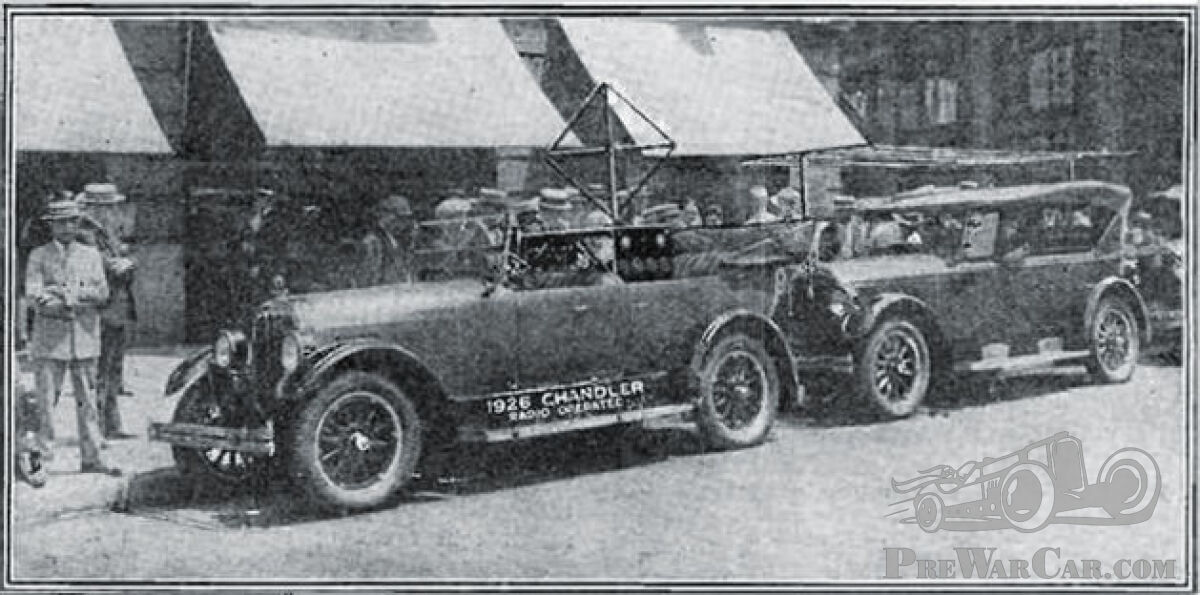
Isn’t it odd that there are no further facts to hand? We only found a little more about a man named Francis P. Houdina, a former U.S. Army electrical engineer who founded the Houdina Radio Control Co. in Wisconsin and built one such radio-controlled car a few years earlier, which was supposedly called the American Wonder: ‘He rigged a 1926 Chandler sedan with a transmitting antenna, and the radio signals it received operated small electric motors that controlled the vehicle’s speed and direction. A crew trailing closely behind in a second vehicle controlled the phantom Chandler.’
During a demonstration in New York in 1925, Houdina’s driverless car is said to have crashed into another vehicle parked at 47th Street and filled with photographers documenting the event. That didn’t stop Houdina from touring the country to demonstrate his Chandler, though. From one report: ‘The effect is uncanny and mystifying and the complete demonstration is one of the most spectacular street events possible.’
This car here is not a Chandler, but could the man be Francis Houdina with a later incarnation of his American Wonder?
Words: Jeroen Booij; picture: Library of Congress/Underwood & Underwood
Publiziert:
Donnerstag Dezember 28th, 2023
Facebook
LinkedIn
Twitter
WhatsApp
Email
Copy
Kommentare


Gerrit Houdina
18 April 2024, 03:44
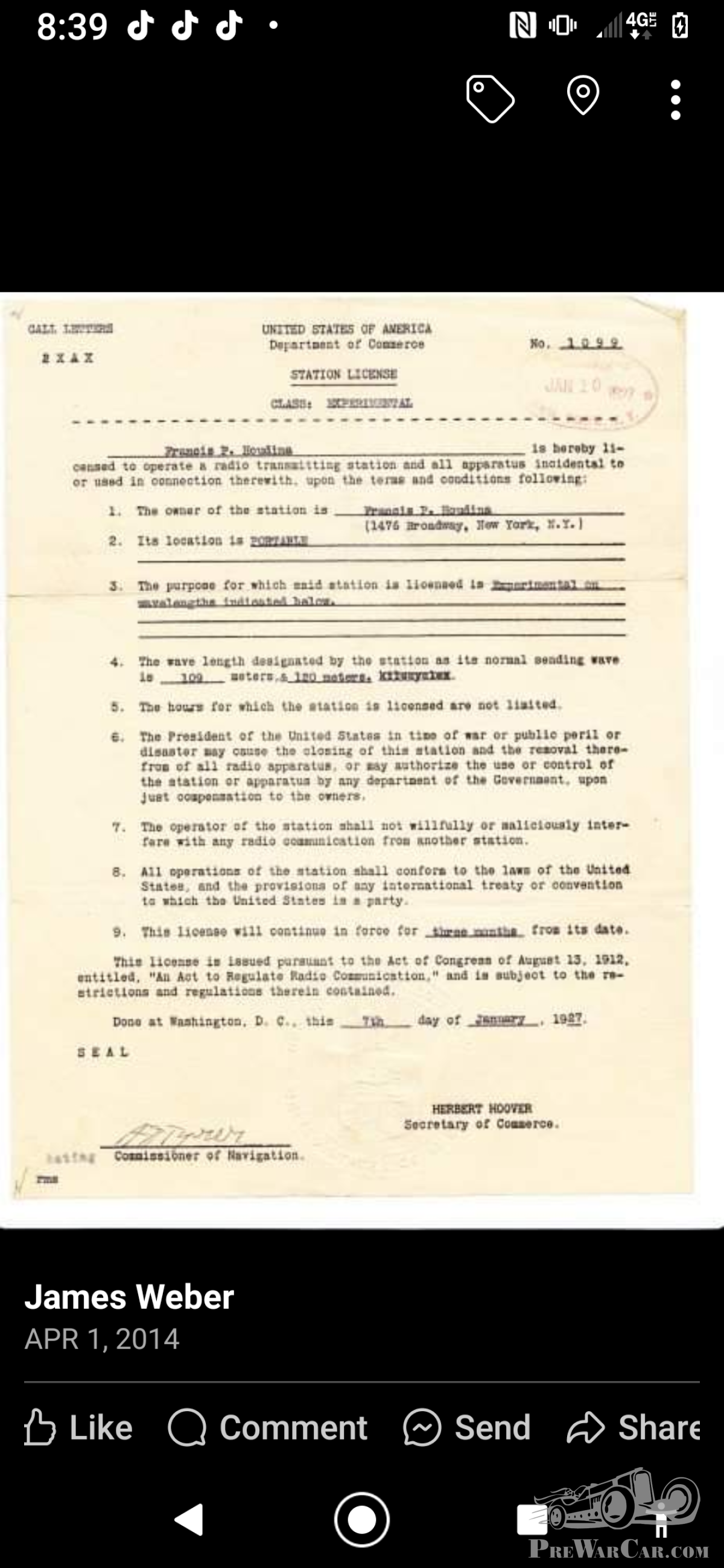
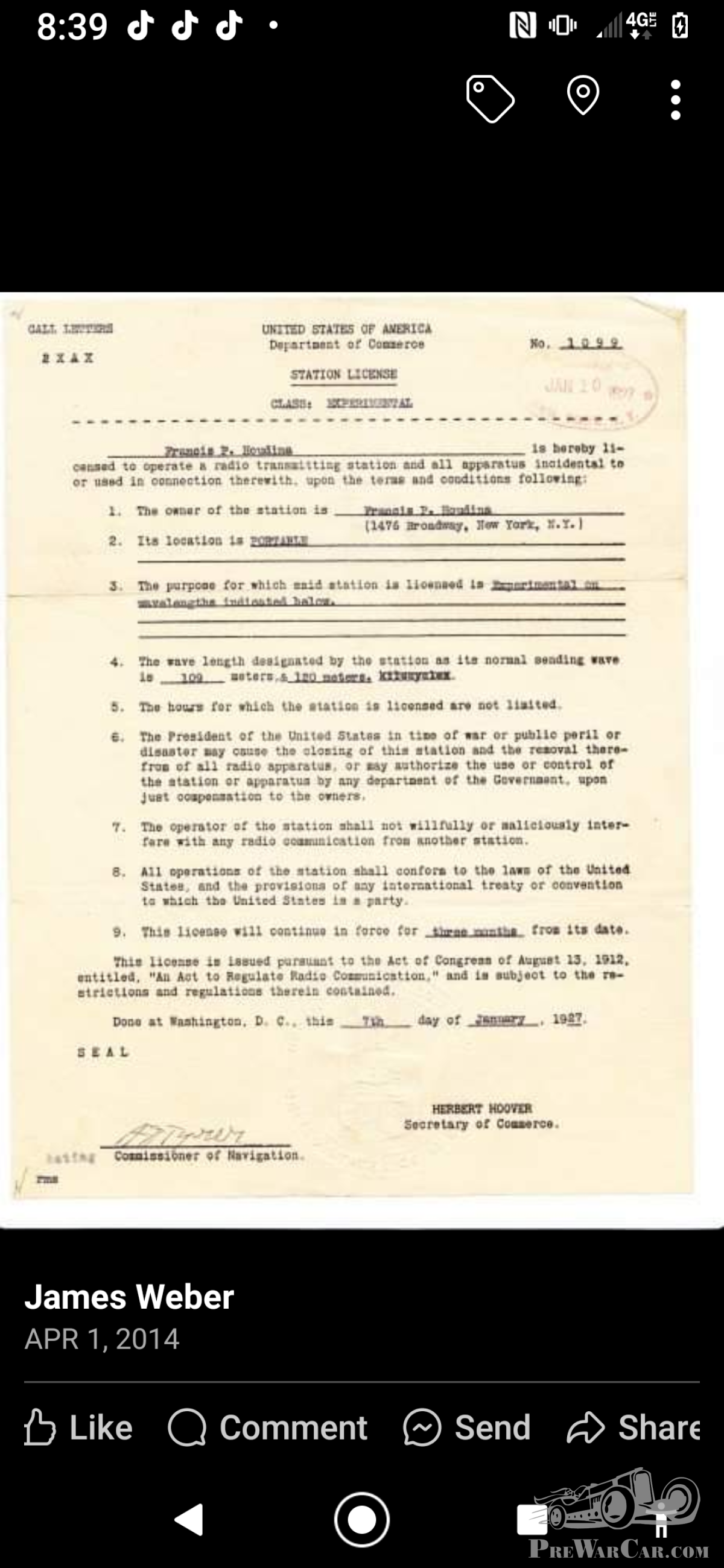
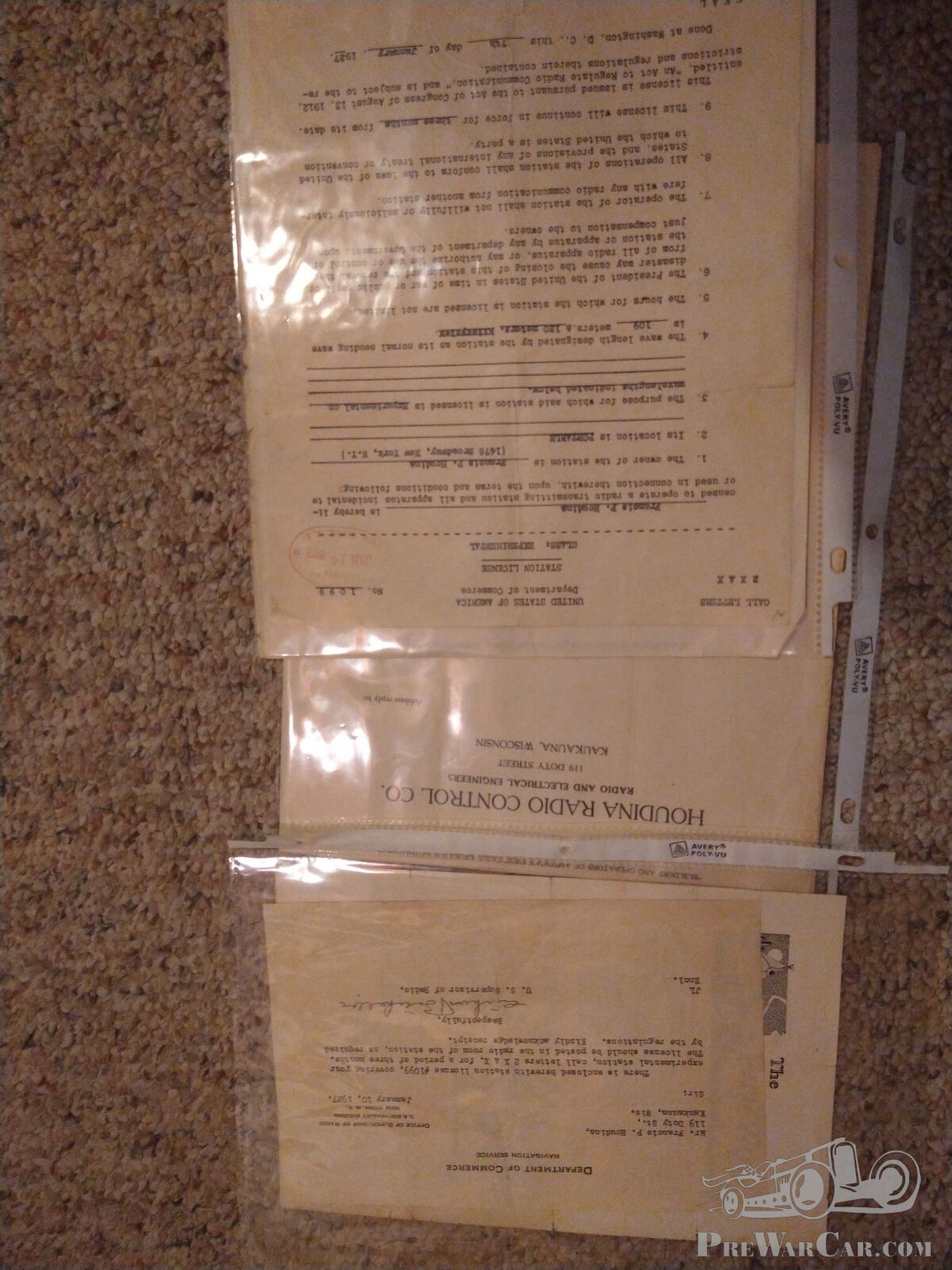
Perhaps the only real Francis P. Houdina had a licence with the correct information!
Weiter lesen
Gerrit Houdina
21 März 2024, 00:15
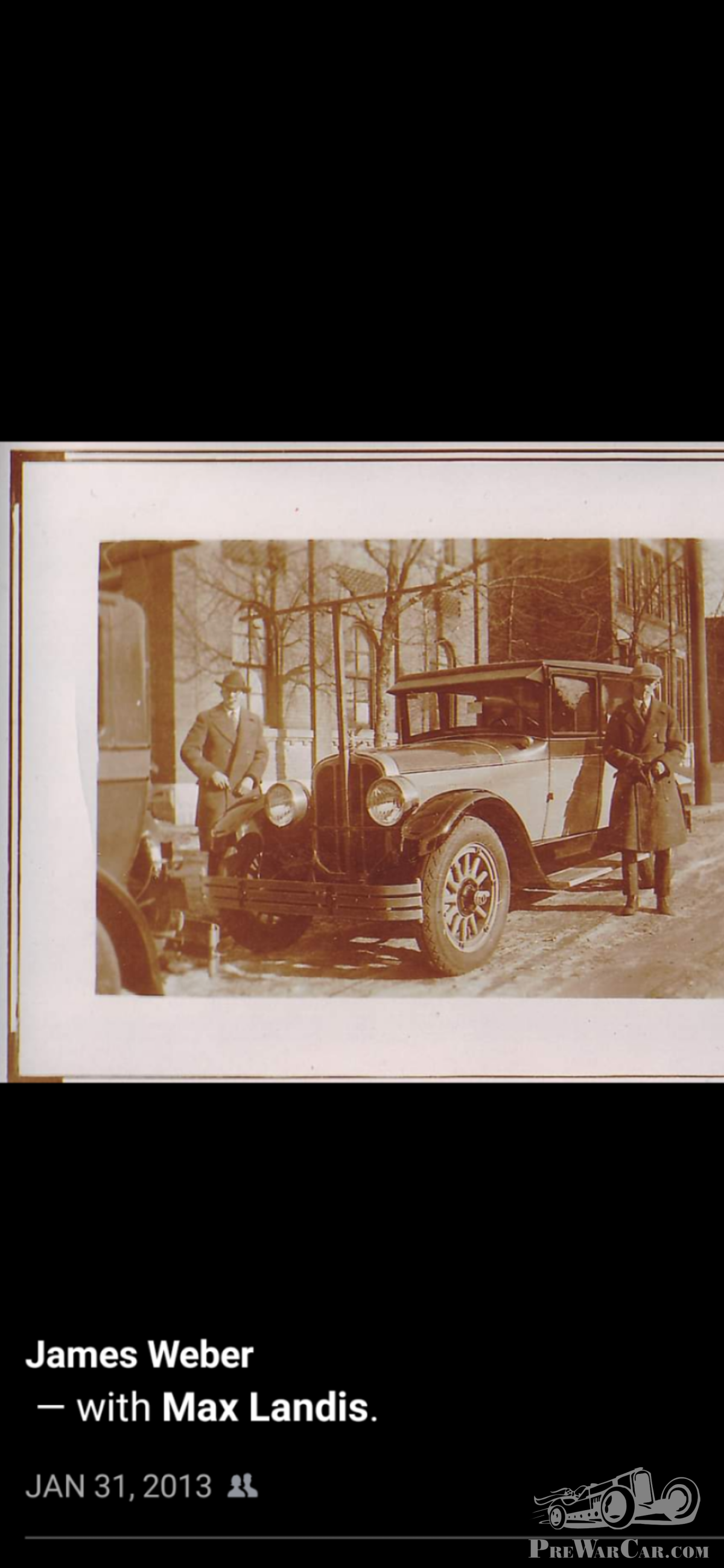
You see this is a 1925 Chandler! And you can see it has the dealer plate from Achen Motors! And neither one of these two young men were in the army! By the way, Francis P. Houdina was a fictitious name; his real last name was Weber. That's right, so if you read the story about Harry Houdini and Francis P. Houdina, you probably know Houdini's best friend was Lawrence Weber! Bet you all would like to know what really went on! And yes, my real name isn't Gerrit either!
Weiter lesen


Gerrit Houdina
15 März 2024, 03:52
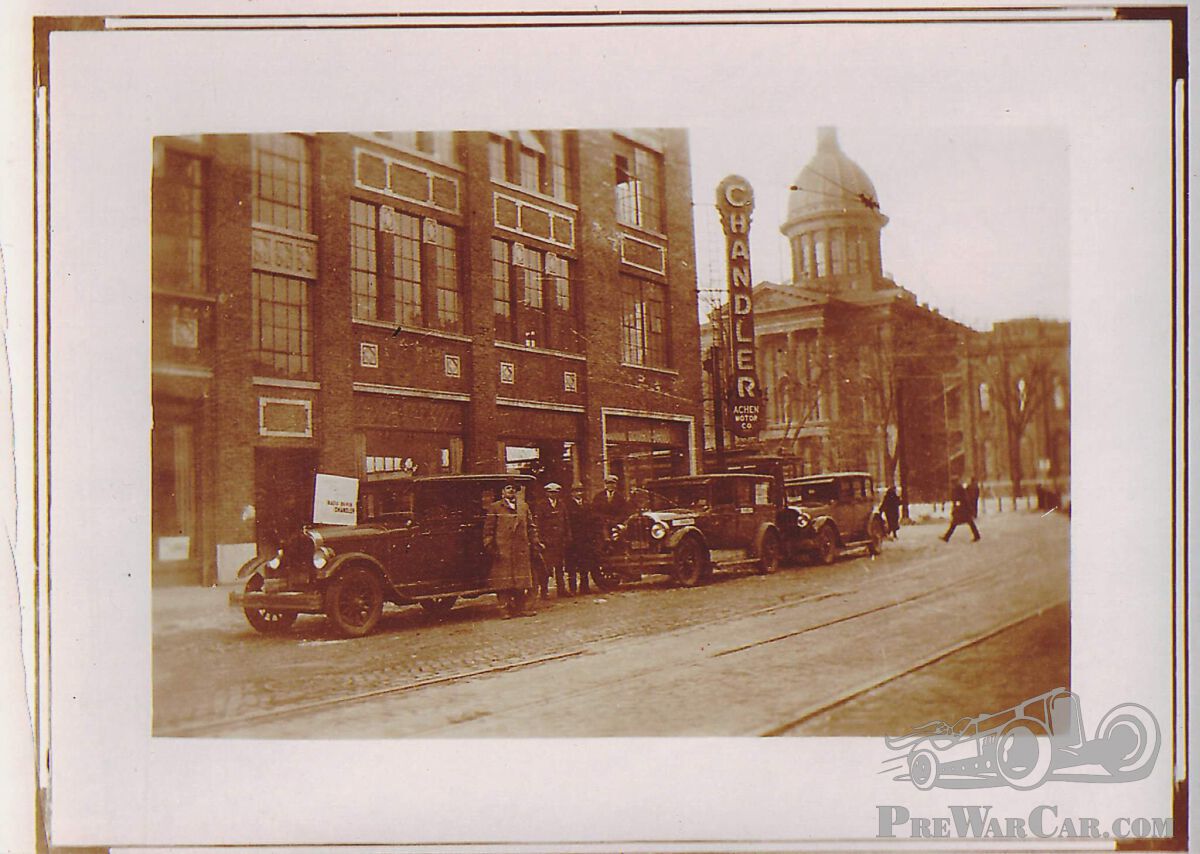
Not even close, the cars came from Achen Motors in Milwaukee, Wisconsin. In 1925 the dealer plate started with a star! Francis P. Houdina and George Young were from Kaukauna, Wisconsin.
Weiter lesen
Steve Gallichan
01 Januar 2024, 11:13
The original photograph was by Underwood & Underwood. A quick search of their archives online did not bring up any further details. Surely the original photograph must have been used in some sort of publication, either a newspaper, motoring or electrical journal?
Weiter lesen
Daniel Reuben
29 Dezember 2023, 22:34
This can't be the same scenario. Not only as mentioned are the cars back to back but the antennas are wrong. Houdina used two transmitters and two receivers for his initial demonstration with the Chandler. An article in Radio News Nov. 1925, Vol. 7, page 592, shows his set-up close-up as well as a schematic. He used 102 and 117 meters (transmitting at 10 watts) which is about 2 Mhz. The "automated car" had a square loop antenna to receive. If one looks closely in the photo by Hergen Dueter the piloted car has a horizontally strung antenna overhead of the roof (similar to what ocean liners had at much larger scale overhead of the smokestacks in the day). In order to match impedance the transmitting antenna needs to have a length as a multiple of the wavelength. A vertical whip antenna as in the later photograph looks to be 5 feet or 1.5 meters tall. Even if a 1/8th wavelength antenna was used this would make it 12.75 meters or ~42 feet tall. Now he could have changed frequency but it would still be unusual to use a whip antenna to receive with. Additionally the article I reference shows the entire backseat was taken up with equipment. An open car was used probably for two reasons: 1) it must have become very hot back there and 2) it would be difficult to stand over the equipment and get a good view in order to troubleshoot. By the way the execution was a horrible one. The first channel would close a relay to ratchet (in one direction only) a 12 position switch to then select what action he wanted. So if he selected "turn right" it would be another 11 keyed pulses to select "turn left". There was no mechanism to receive feedback to know where the selector was. Of course no wonder he crashed.
Weiter lesen
Gerrit Houdina
27 Februar 2025, 03:56
Crash? Who was in the car it hit? One was Lawrence Weber, Houdini's best friend, who helped Houdini make films! Just as staged as the incident in the office of Francis P. Houdina!
Weiter lesen
Gerrit Houdina
21 März 2024, 00:00
There were four cars, where are your documents!
Weiter lesen
Tim Hewitt
29 Dezember 2023, 18:08
Why are the cars parked rear to rear, rather than in the same direction? If you were using a "chase" car to remotely control the other vehicle surely you would follow it forwards?
Minor point also, wouldn't you put the aerial on the highest point, perhaps the roof, rather than hiding 75% of it behind the body by placing it on the running board? I'm no scientist/radio engineer, but isn't that an obvious possible problem. Surely you would want to give yourself the best possible chance of communicating with the vehicle, especially on such a public demonstration?
Weiter lesen
Minor point also, wouldn't you put the aerial on the highest point, perhaps the roof, rather than hiding 75% of it behind the body by placing it on the running board? I'm no scientist/radio engineer, but isn't that an obvious possible problem. Surely you would want to give yourself the best possible chance of communicating with the vehicle, especially on such a public demonstration?
Agosto
29 Dezember 2023, 11:31
Hello, Remember Department S in TV -- Who Plays the Dummy--
Weiter lesen
Hergen Deuter
29 Dezember 2023, 02:03
Your photo clearly shows an Essex Super Six. The attached photo of Houdina's radio controlled Chandler was first published in Radio News in November 1925, so this car is neither a sedan nor can it be from 1926 as was obviously later noted on it.
Weiter lesen
Rick Politi
28 Dezember 2023, 21:08
A most difficult photograph to "interpret".
NOT familiar with either Chandler (chandelier?), or Essex, I would opt for the Essex however?
Of course the right-angled arms bring foremost attention, that is, other than the balding forehead of the main character.
Along with the two-sided strict verticality of the louvers, I suggest a "deforestation" of a high plain area.
Rick Politi.
Weiter lesen
NOT familiar with either Chandler (chandelier?), or Essex, I would opt for the Essex however?
Of course the right-angled arms bring foremost attention, that is, other than the balding forehead of the main character.
Along with the two-sided strict verticality of the louvers, I suggest a "deforestation" of a high plain area.
Rick Politi.
Michael Schlenger
28 Dezember 2023, 09:21
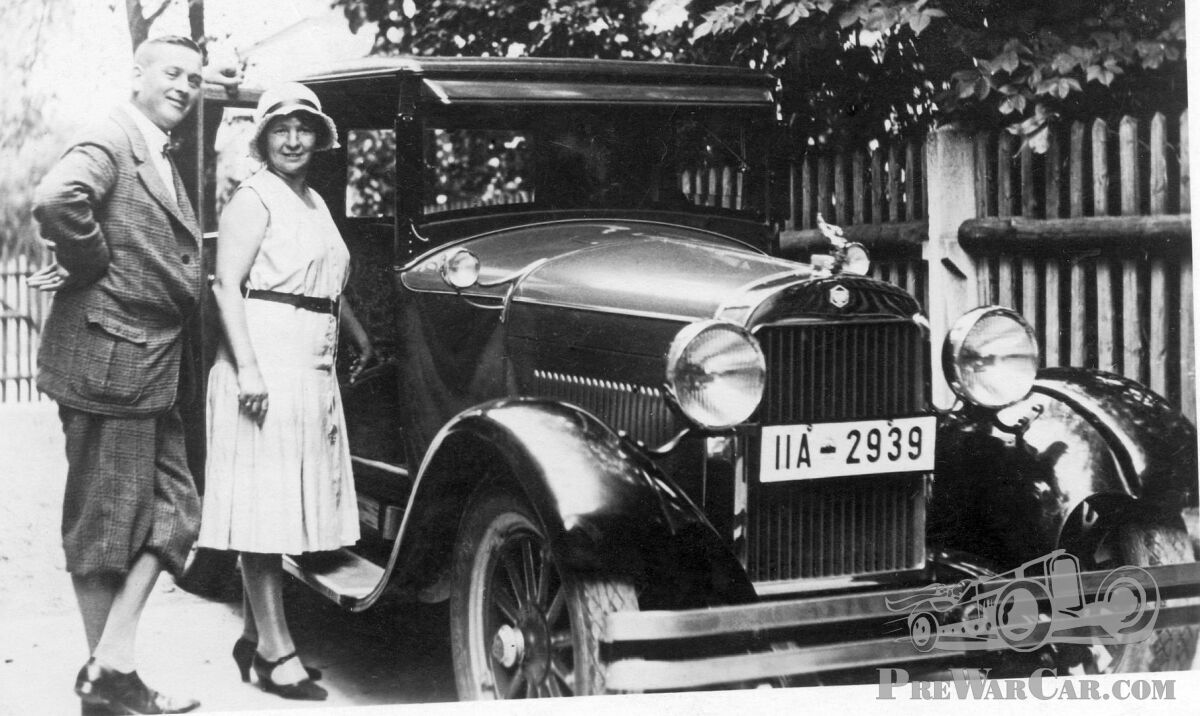
The depicted car appears to be a 1928 Essex "Super Six". For comparison see the attached photo (from my collection) showing one registered in Munich, Bavaria.
Weiter lesen