Das weltweite Magazin und der Marktplatz für Oldtimer-Enthusiasten – von Enthusiasten.
Das weltweite Magazin und der Marktplatz für Oldtimer-Enthusiasten – von Enthusiasten.


Filter
Auswahl treffen
- Autos
-
Marke >>
-
Baujahr >>
-
-
Kategorie >>
-
Länder >>
- Motorräder
- Teile
-
Automarke >>
-
Hersteller >>
-
Kategorie >>
- Fahrräder
-
Baujahr >>
-
Länder



The little Staiger


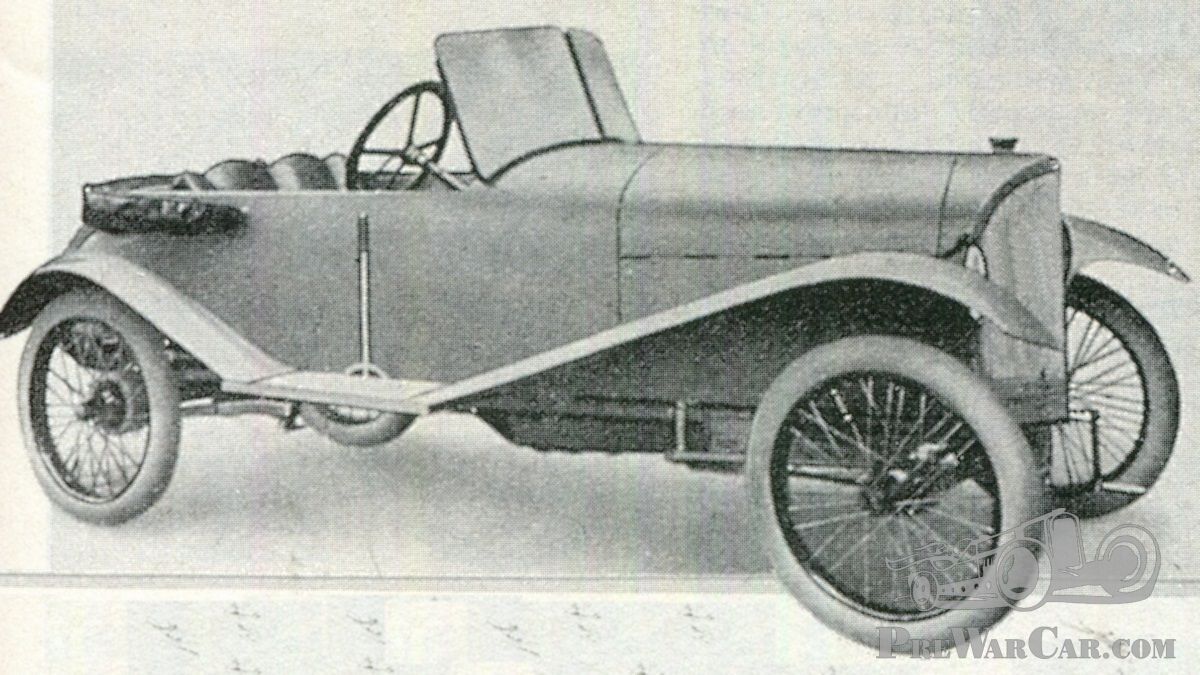
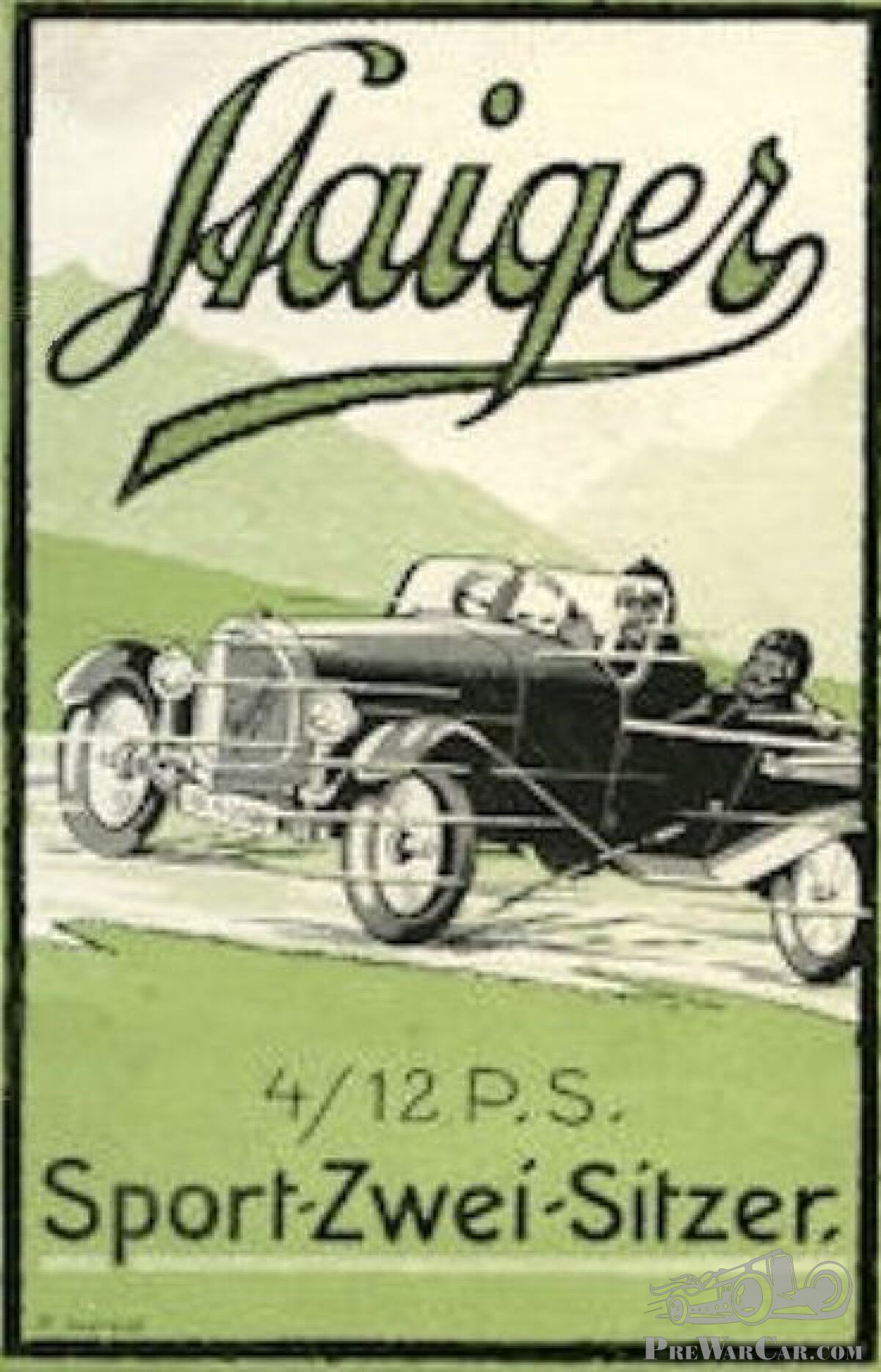


Some days ago, I once again thumbed through the Hans-Heinrich von Fersen book "Autos in Deutschland 1920-1939" and on one of the last pages, I found one short sentence about a car called “Staiger”. I know about the “Steiger” of course, so my first thought was, that it might be a spelling mistake. But it was no mistake at all, as I soon found out. Next to the “Steiger”, in the early 1920s, also a “Staiger” was built in Germany, just about 60 miles away from the Steiger-factory. So let me tell you about this really nice proportioned car with the “a” and its background:
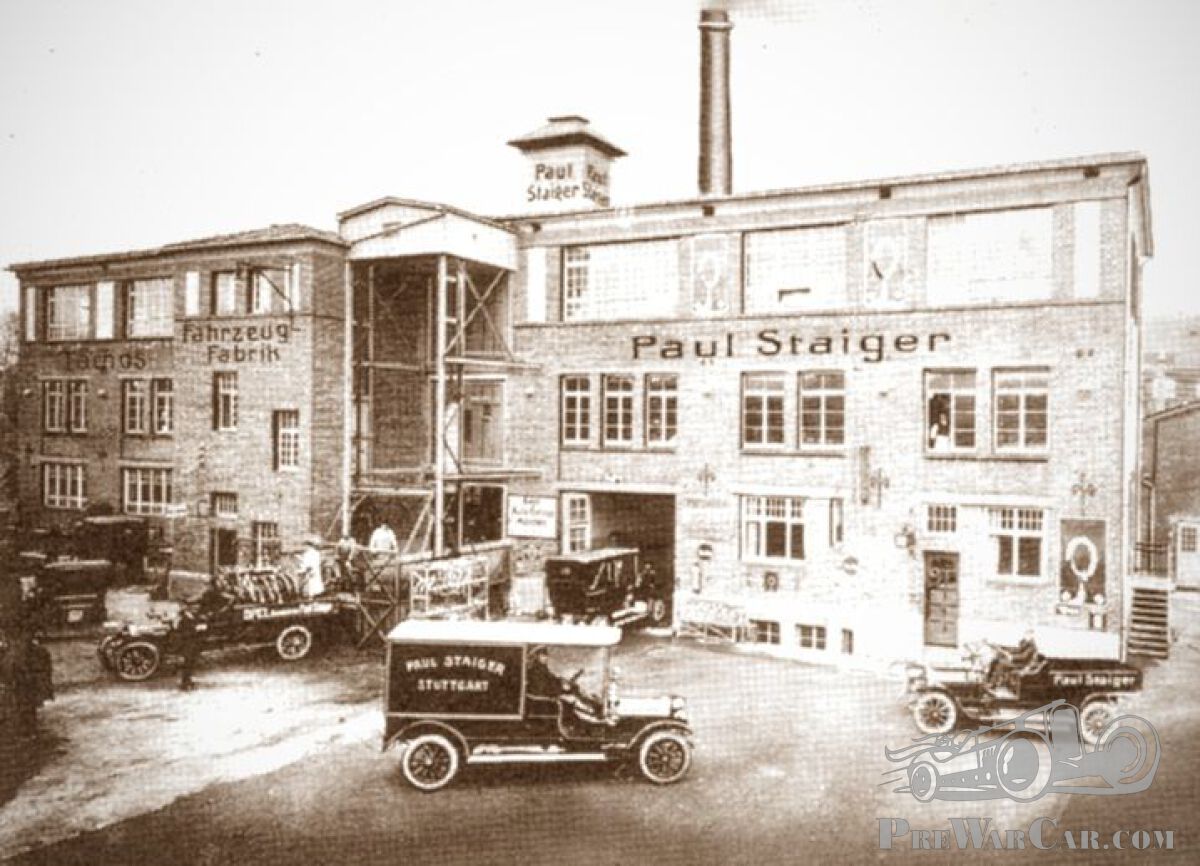
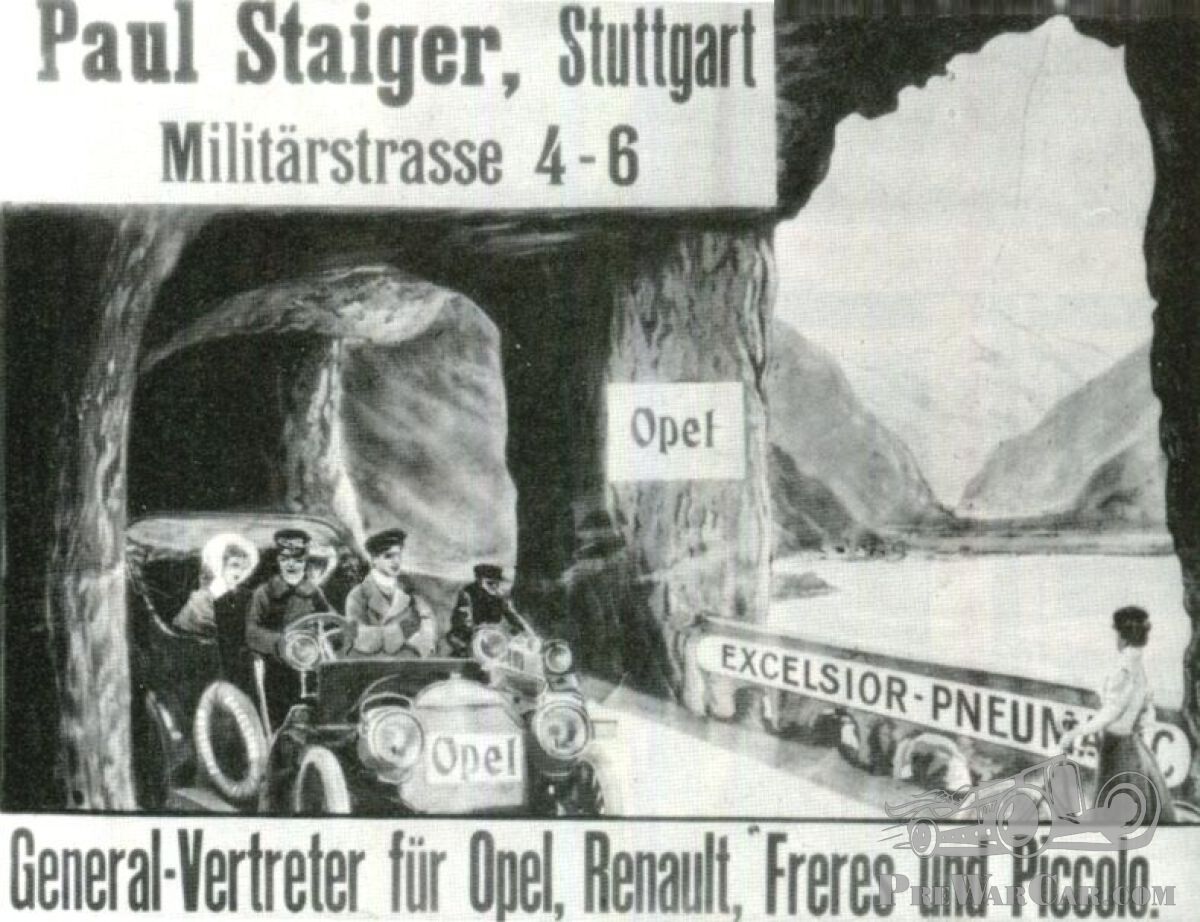
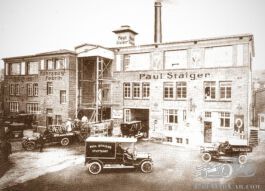
Young Paul Staiger (1877…1934) got interested in the new bicycle sports at the end of the 19th century. Bicycles were very expensive at that time and his father´s reaction to the question about buying one of those new vehicles was a slap in his face. But nevertheless, he bought a bicycle for young Paul. And Paul trained hard on his bike. He competed in his first race at the age of 17 and in the same year, he rode it to five victories. Ten victories followed one year later, which made him the cycle-champion of Wurttemberg. The legend tells us, that it was him, who taught the King of Wurttemberg, how to ride a bike. He soon recognized that parallel to the beginning of motorization in Germany, a large two-wheeler market was born. So in 1898, he opened a bicycle shop in Tübinger Strasse / Stuttgart. The acquisition of a bicycle and accessories wholesaler followed one year later and during the same year, he also started his automobile-dealership career. He started dealing with Renault and one year later, he also took over the general agency of Opel vehicles in Württemberg. In 1901, new and larger rooms were needed and Staiger moved into the Militärstrasse / Stuttgart. The car trade came to a halt during the Great War, and Staiger focused on repairing military vehicles, while the business with bicycles and accessories continued, but was hived in 1920. As Opel was only able to deliver very few cars after the Great War, Paul Staiger had the idea to start with an own automobile production. In 1922 he presented the “Staiger 4/12 HP”, a small lightweight cyclecar.
An old catalogue is telling us, that “the small Staiger two-seater is a classy, stylish and fast little car, not only conform to the sports man´s fastidious standards, but also heavily recommended for business calls of craftspersons, industrialists, travelers and doctors because of the very low consumption of rubber- and other operating supplies. Because of its clearly arranged and simple construction and the resulting very easy handling, the car is the favoured vehicle of the self-driving gentleman.”
Sadly not much is known about the technical data. I was able to find out, that it featured a long u-profile chassis with solid crossbars, carrying a four-cylinder engine. The engine had a cast iron monobloc and a crankcase made of alloy, housing a triple bearing crankshaft. Furthermore, an ad tells us, that it featured “amply measured valves, all located on one side and operated via dustproof capsuled, easily adjustable pushrods.” I couldn´t find anything more, but the name of the car “4/12 HP” tells us, that the engine must have had a capacity of ca. 1 Liter with an output of 12 HP.
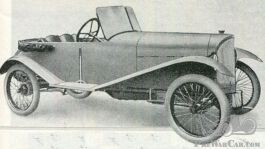
The small car was ready for a top speed of 70 km/h and even competed in several races. The Staiger appeared at the Solitude and at the 1924 Burrenwald-Rennen, Paul Staiger himself finished second in class with a time of about eight minutes for the 9 km run, only beaten by Wilhelm Diez in his Gridi.
The 4/12 HP remained the only model offered by Staiger. In 1924, Opel presented the cheap assembly line produced “Laubfrosch”, officially also called the 4/12 HP model; we all know it as the Citroen C3 copy. Soon after, Paul Staiger realized, that he sold more Opel 4/12 HP than his own Staiger 4/12 HP and luckily he was aware, that he had no construction to compete against the giants. So he stopped the production of his own cars, again focused on the Opel sales and distribution and added Buick and Chevrolet to his portfolio. Today, “Auto-Staiger”, since 120 years, is still one of the biggest Opel dealers in the south of Germany and Staiger bicycles, now part of the Winora-Group, are still in production, too. But sadly none of the 500 little cars seems to have survived.
Words and photographs by Hubertus Hansmann.
Publiziert:
Mittwoch September 26th, 2018
Facebook
LinkedIn
Twitter
WhatsApp
Email
Copy
Kommentare
Michael Schlenger
26 September 2018, 00:31
Well done, Hubertus! Excellent account of one of the countless German prewar car manufacturers who haven't been properly researched to date. As it happens, my first racing cycle was manufactured by Staiger and I am also fond of the powerful Steiger sports cars you mentioned (German-speaking readers please refer to the unique Steiger website: http://www.steiger-burgrieden.de). Let's hope there will be an updated version of the terribly outdated (yet still indispensable) books on obscure German prewar marques one day!
Weiter lesen