Das weltweite Magazin und der Marktplatz für Oldtimer-Enthusiasten – von Enthusiasten.
Das weltweite Magazin und der Marktplatz für Oldtimer-Enthusiasten – von Enthusiasten.


Filter
Auswahl treffen
- Autos
-
Marke >>
-
Baujahr >>
-
-
Kategorie >>
-
Länder >>
- Motorräder
- Teile
-
Automarke >>
-
Hersteller >>
-
Kategorie >>
- Fahrräder
-
Baujahr >>
-
Länder



PWC Workshop: installing an electonic ignition


Last week we published an article about electronic ignitions. It was clear that not everybody was a huge fan of making some modern adjustments to their beloved classic car. But there were also people who thought it was neccessary and not a problem to change a part like the ignition.
In today's PreWarCar.com Workshop, we would like to show you how to install an electric ignition, as for sale in our parts section.
Changing your current system to an electronic system is quite simple. The system we used consist of 3 parts; The sensor, a small ignition box and a vane.
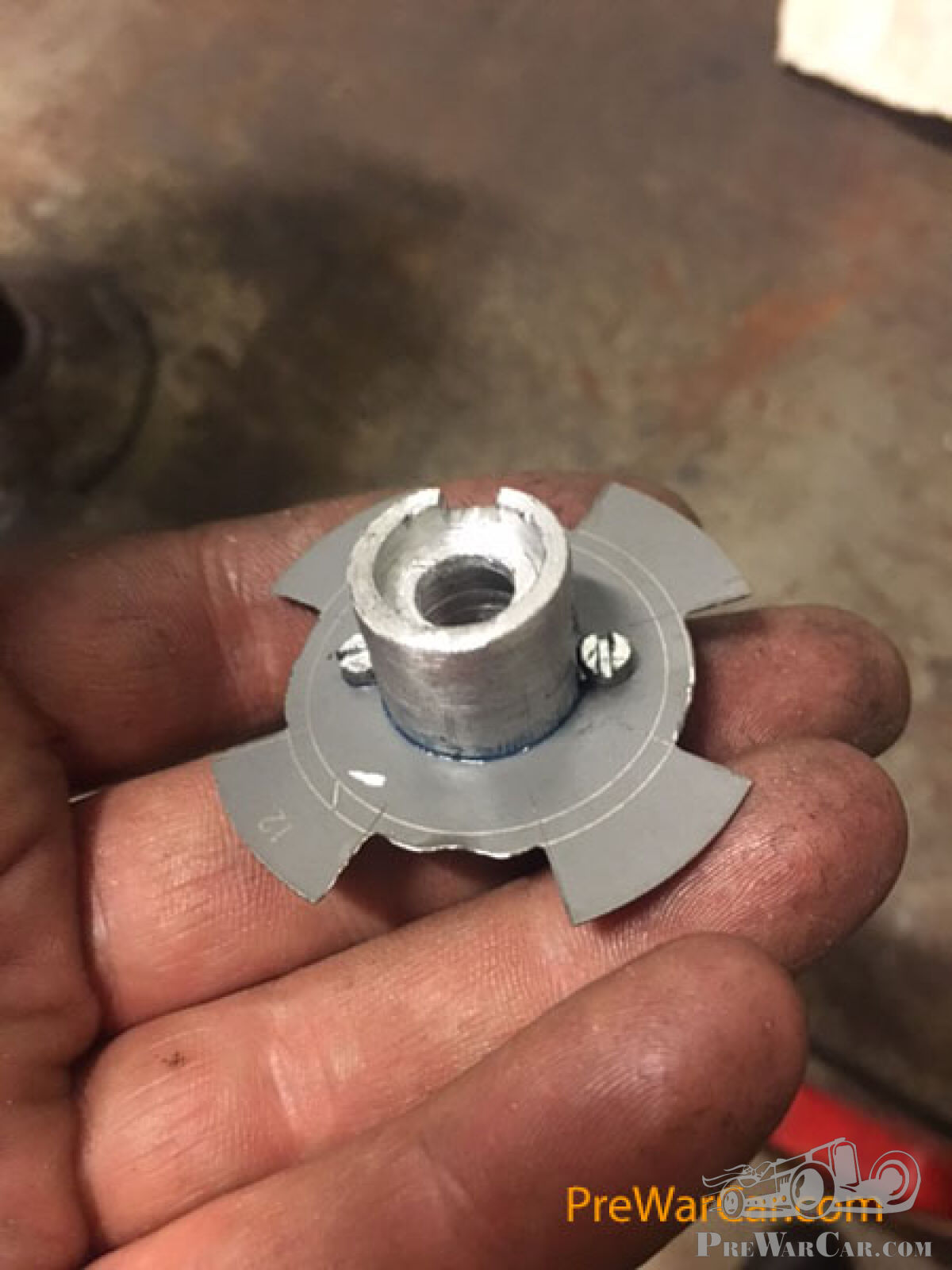
Lets start with the vane. We received this part already prepared for a 4 cylinder engine. The idea is that everytime the blade of the vane passes the sensor, the sparkplug gives a spark. Very simple and very reliable.
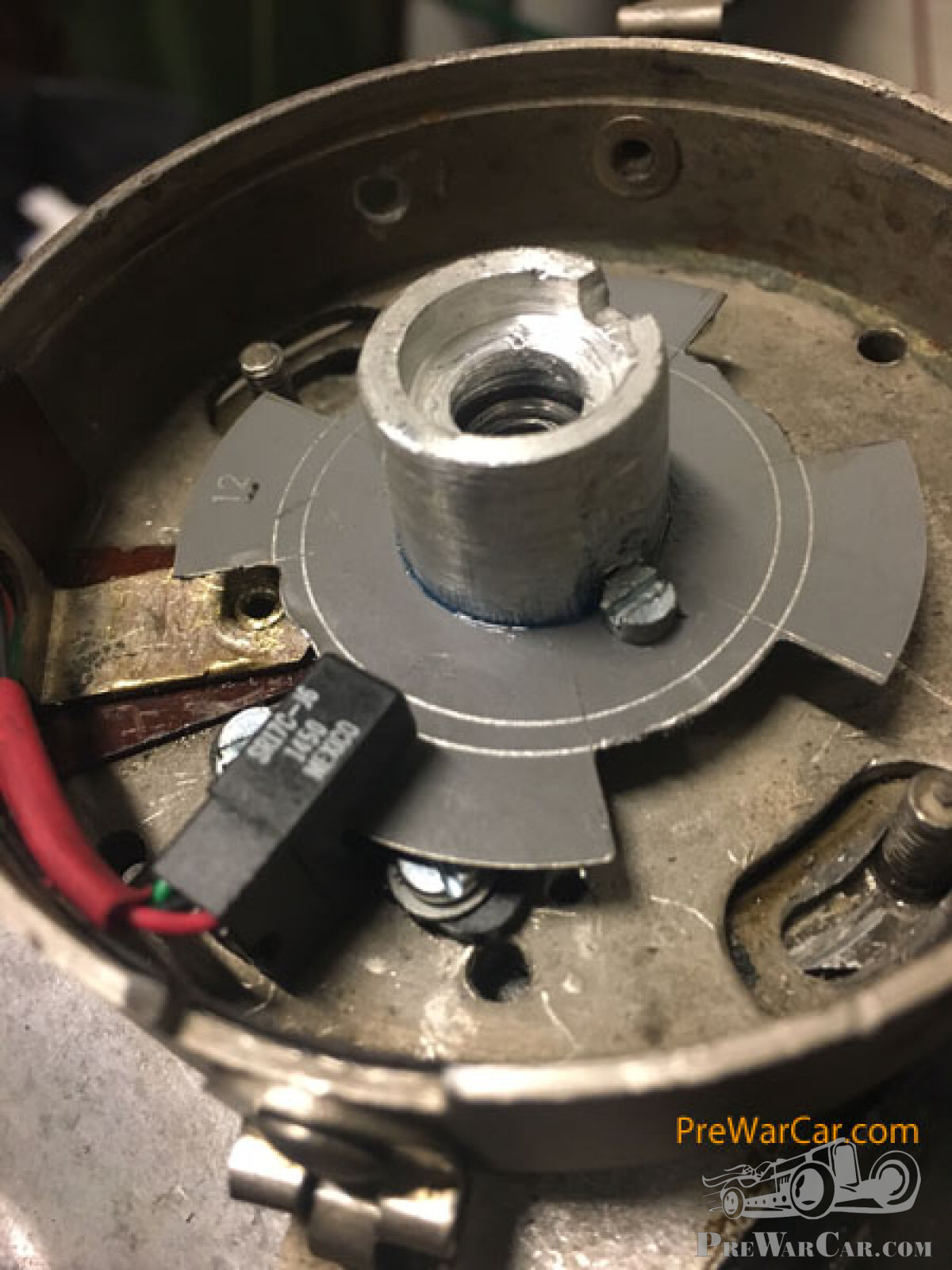
The hardest part when you install the electronic system is the height of the vane. I made an alumium holder partly on the lathe and a bit by hand. It fitted perfectly and the rotor still fitted on top.
After that, place the sensor. Make sure the vane goes through the sensor without touching it. There are marks on the vane to see how deep it needs to go in.
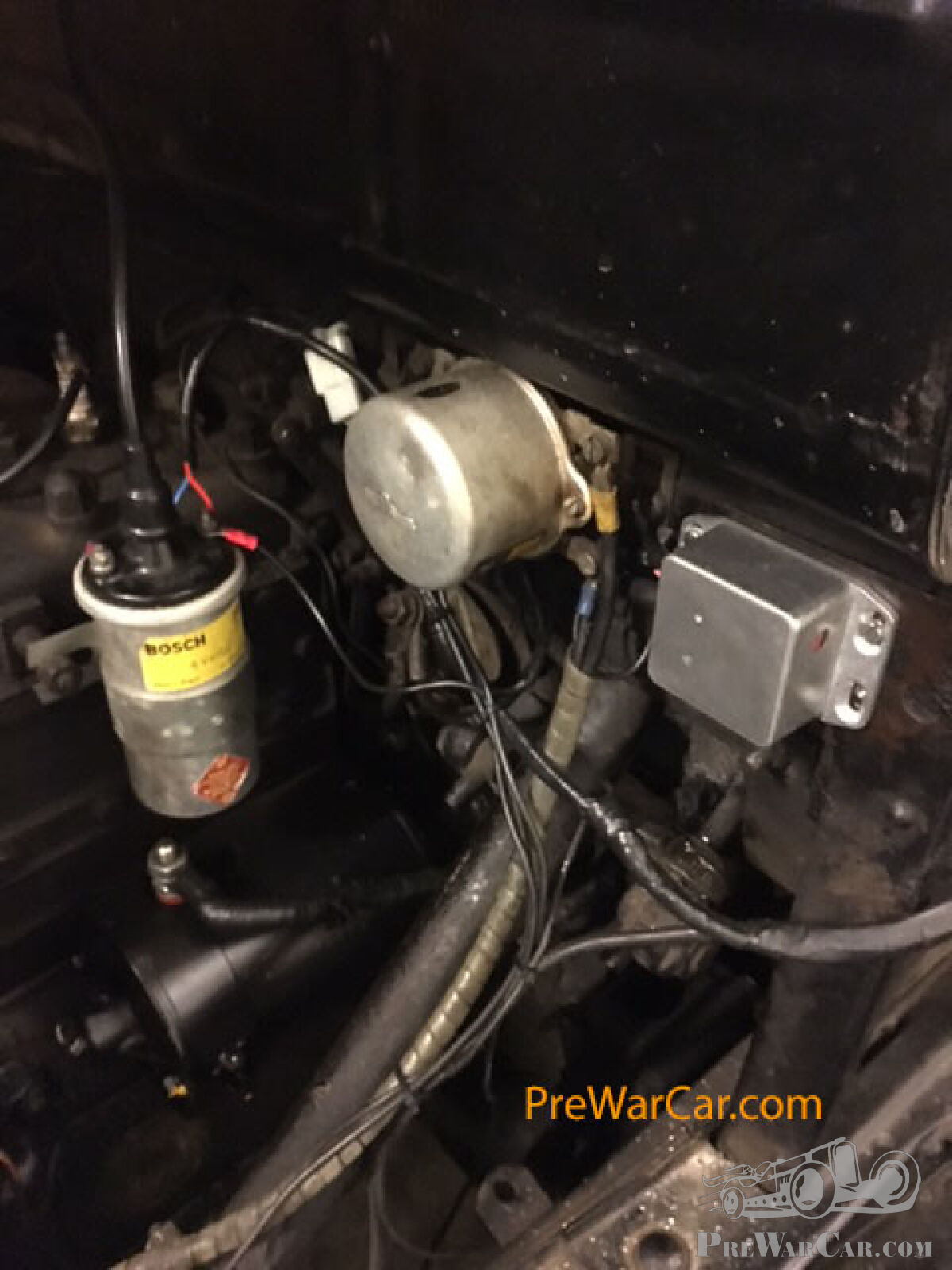
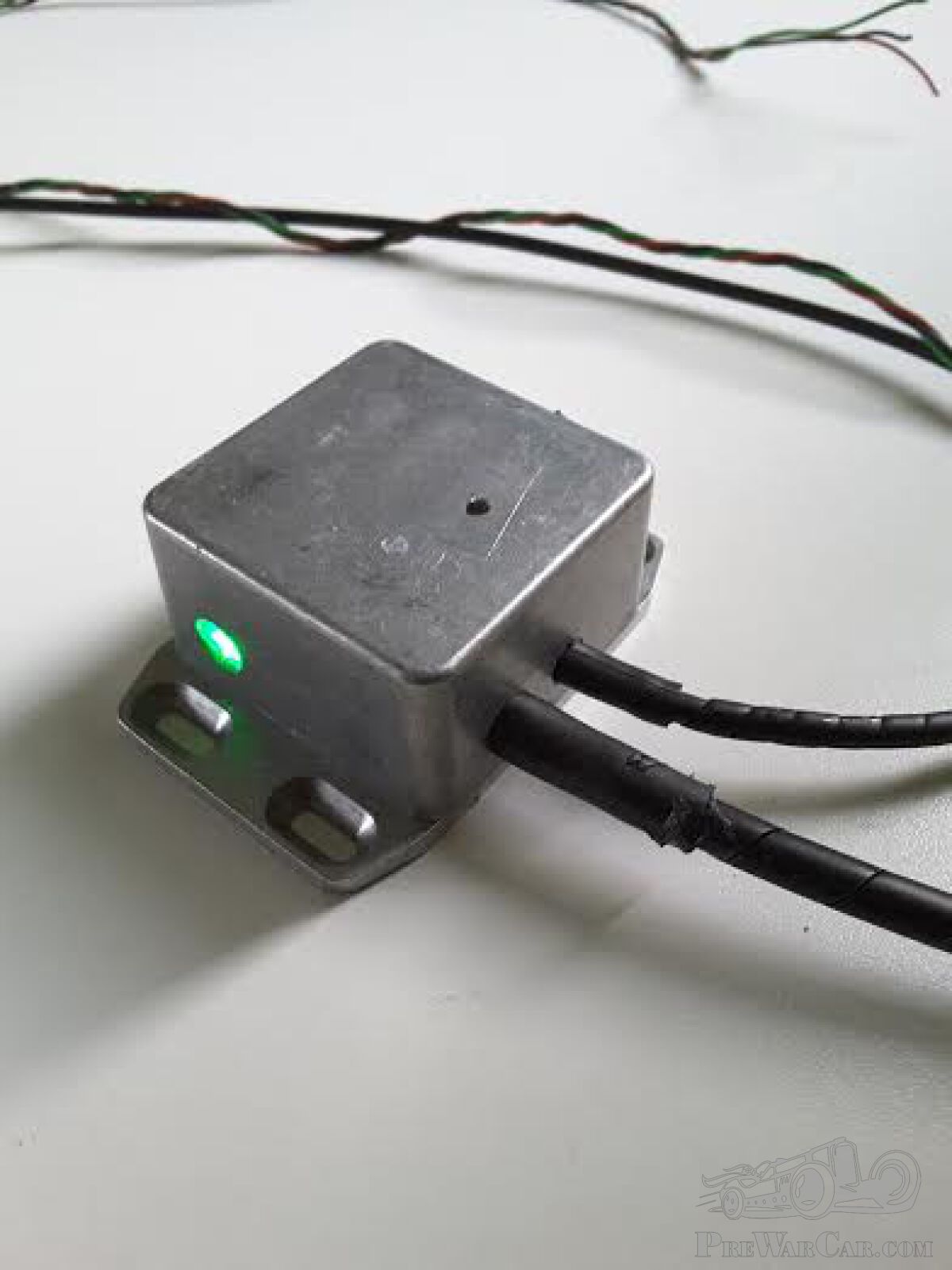
Placing the ignition box is most simple. Just screw it on a place that you think is a nice one. Most important thing is that you can see the LED light that is in the box.
The system comes with multiconnectors so it is easy to connect all the parts.
After installing the vane, sensor and ignition box and all the other parts together, you just need to adjust the ignition timing. Because of the LED light in the ignition box, live has become much more easy. When the light goes out, you have a spark. So put cylinder one on top dead center and turn the ignition a bit untill the light stops (depending on the car, you can advance the ignition a bit of course). And there you go, ready for making a lot of extra miles without ignition problems!
If you have a project that you like to show, send pictures and some information to [email protected]
Publiziert:
Dienstag Juli 26th, 2016
Facebook
LinkedIn
Twitter
WhatsApp
Email
Copy
Kommentare
Unbekannt
28 Juli 2016, 15:36
Unbekannt
27 Juli 2016, 19:38
I have fitted a VW Beetle distributor to a pre-war Mercedes when I could not get original parts. No one can tell and it works the same as the original, and even looks almost the same. 100% reliable, and no electronics to fail.
For a 1908 Mitchell I am working on, using the original Splitdorf magneto, as Thomas Edison intended. This has a starting coil also, that runs off a dry cell battery... no electronics or modern junk in there at all.
Weiter lesen
For a 1908 Mitchell I am working on, using the original Splitdorf magneto, as Thomas Edison intended. This has a starting coil also, that runs off a dry cell battery... no electronics or modern junk in there at all.
Unbekannt
27 Juli 2016, 19:21
I agree fully with Martin! And I don’t buy the argument that the alternation can’t be seen. What if you replace the body parts on an early car from say 1899 with new part made from Kevlar? Is this okay if you can’t se the difference?
Weiter lesen
Unbekannt
27 Juli 2016, 14:25
i have to say i agree with both comments BUT my Rover died on me in Rush hour traffic the other day, the little plastic piece that separates the spring from the base plate failed and caused a short, would it have been better with electronic parts?
Weiter lesen
Unbekannt
27 Juli 2016, 14:08
I'm restoring an Austin seven type 65 unfortunately not with the original engine. For that reason I've chosen to include electronic ignition and a few other tweeks BUT I've also chosen to do the tweeks in such a way that they don't show or could be fairly simply put back as built. Usability and hopefully reliability will determine for me if the mods' are successful.
Weiter lesen
Unbekannt
27 Juli 2016, 12:18
I mounted the electronic ignition on a 1902 de Dion engine. I can understand the comments against it but I like to run these cars anlot and the electronic ignition helps a lot with reliability. It beats having to clean the breakers every time from oil pollution.
Besides that, this car had long lost it's original points and was converted to something more modern from which it seems difficult to find the exact spare set. Bert's set as described in this tutorial is very easy to mount and especially easy to time! Works like a charm!
Here's a link to a photo album of my setup:
https://goo.gl/photos/xPP9aJP8XP58gxAB6
Weiter lesen
Besides that, this car had long lost it's original points and was converted to something more modern from which it seems difficult to find the exact spare set. Bert's set as described in this tutorial is very easy to mount and especially easy to time! Works like a charm!
Here's a link to a photo album of my setup:
https://goo.gl/photos/xPP9aJP8XP58gxAB6
Unbekannt
27 Juli 2016, 08:10
Hello.
I can not understand why people install such modern things on old cars! Of course a engine will run better, smother, with less fails etc..... But is it the technology from the past time? It is not! If someone is not agree with the technology of a car, which originaly has on it, he should better drive a modern car..... In my view, the most interesting thing on the classic cars is to see the technology of the past. How it works, and how the progress is compared with the cars from today. If someone shows his smooth running pre war engine with a electronic ignition shows a fake..... But anyway, this is my opinion and everyone should enjoy his hobby on his own way, which is absolutely OK! I wrote this only to think about and to hear, what other people think on that...... Regards and happy motoring..... Martin.
Weiter lesen
I can not understand why people install such modern things on old cars! Of course a engine will run better, smother, with less fails etc..... But is it the technology from the past time? It is not! If someone is not agree with the technology of a car, which originaly has on it, he should better drive a modern car..... In my view, the most interesting thing on the classic cars is to see the technology of the past. How it works, and how the progress is compared with the cars from today. If someone shows his smooth running pre war engine with a electronic ignition shows a fake..... But anyway, this is my opinion and everyone should enjoy his hobby on his own way, which is absolutely OK! I wrote this only to think about and to hear, what other people think on that...... Regards and happy motoring..... Martin.
Fortunately this is easily solved by using the condenser from Swiftune (no connection whatever with that comp. - I am just a very satisfied customer :-) ). Since I put it in ( about four years ago) no more problems whatsoever. Not cheap, of course, but worth every Pence for reliability.
I would never change to electronics - just another thing that can go wrong - and not fixed on the run, unlike the "classic" setup.
And yes - we do use, tour, race, rally and hillclimb our cars (pre war and other) - they are not (just) collector cars (how boring would that be!).
Ralf