Das weltweite Magazin und der Marktplatz für Oldtimer-Enthusiasten – von Enthusiasten.
Das weltweite Magazin und der Marktplatz für Oldtimer-Enthusiasten – von Enthusiasten.


Filter
Auswahl treffen
- Autos
-
Marke >>
-
Baujahr >>
-
-
Kategorie >>
-
Länder >>
- Motorräder
- Teile
-
Automarke >>
-
Hersteller >>
-
Kategorie >>
- Fahrräder
-
Baujahr >>
-
Länder



Pre-war of the week: Delahaye 135 Competition by Figoni-Falaschi - The Talk of Paris
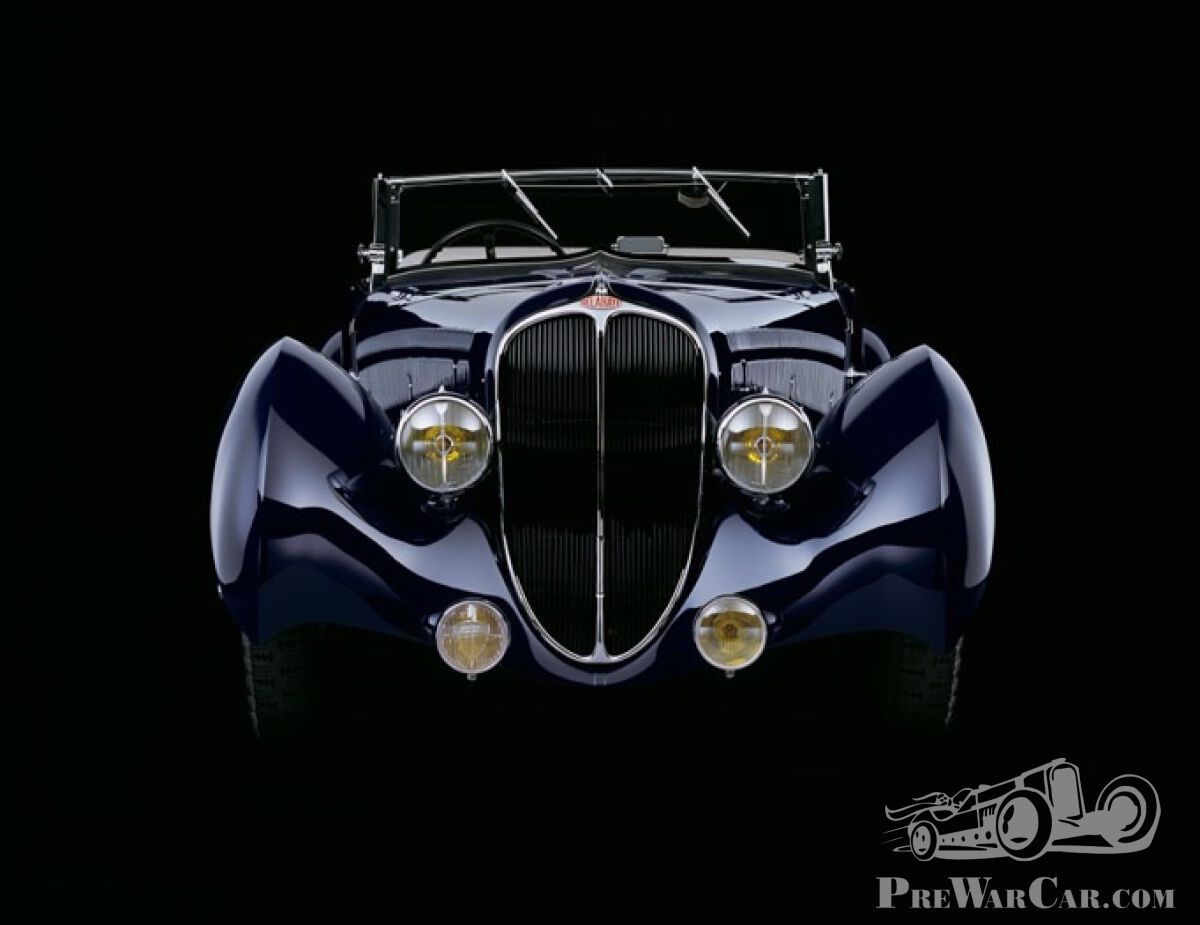

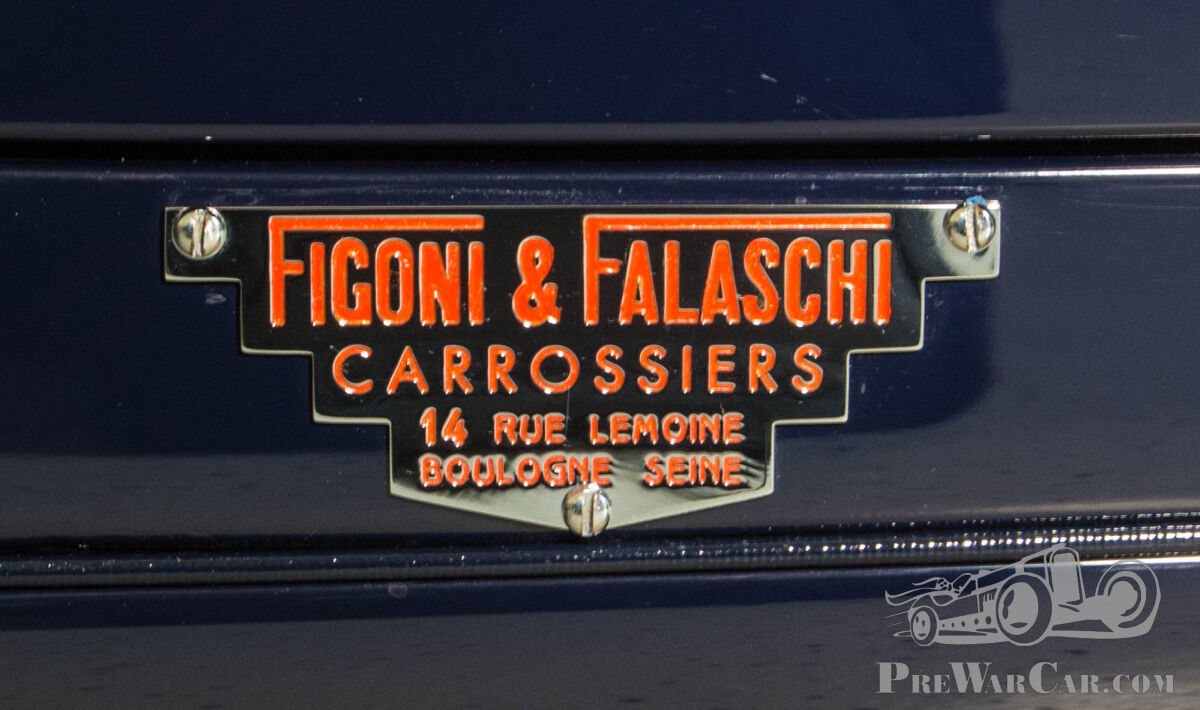


Think Paris in June, and a happy imagination explodes with visions of approaching summer, longer days with the sun setting about 10 pm, strolls along the banks of the Seine or perhaps a dinner cruise on a Bateaux Mouches. This time of expectation seems entirely appropriate, as on a Friday, 12 June 1936, a streamlined Delahaye car emerged from coachbuilders Figoni-Falaschi that along with other notable creations by Figoni would affect cars and designs to this very day. So breathtaking was the beauty of this one-off ‘piece unique' streamlined masterpiece that it quickly became known as ’The Talk of Paris’.
Figoni-Falaschi, as the names suggest, were Italian by birth, but moved to Paris as youth. Work by designer Figoni was at first functional in his early design days but in 1935 all that changed with longer, lower, ‘goutte d’eau’ (teardrop) and flowing streamlined lines on such names as Talbot Lago (T150C SS Coupe) and Delahaye. Aerodynamic form and function merged harmoniously into wind-cheating masterpieces, the likes of which we have not seen since.
A very close friend of Figoni’s was a Monsieur Wolf, reportedly one of the wealthiest men in Europe at the time and also a Parisian. Figoni shared his excitement about ideas of steeply raked windshields, fender skirts, lower roofs and aerodynamic flowing lines with Wolf, who immediately placed an order. Wolf envisioned a car that could have a dual purpose of being used for both showing in concours events as well as a car that could be campaigned in the many rallies of the time. To that end, he commissioned Figoni to build a streamlined 135 competition car of chassis, transmission, engine and drive train.
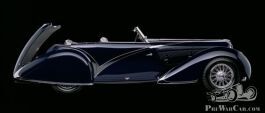
Claude Figoni, Joseph’s son, has said that his father agonized over this particular car, not only because it was his first such creation, but also his desire to create something that would revolutionize the automotive world. As a part of his plan, he envisioned and patented (French Patent 795.769, January 13, 1936) a disappearing top that folded neatly into the trunk/boot, just preceding the construction of this car. The goal was an uninterrupted flowing line, “fine et elancée” from the Delahaye grill flanked by a tucked tightly pair of Marchal headlights, fog lights and teardrop fenders front and rear with fender skirts enclosing the rear tires. The chrome accents highlighted the flowing lines, gracefully sweeping back from the peak of the grille, down across the doors and then filling the rear fender joint and a small chrome spline down the rear deck. There were 250 handmade louvers in the engine covers, emphasizing the purposefulness of its competition intent.
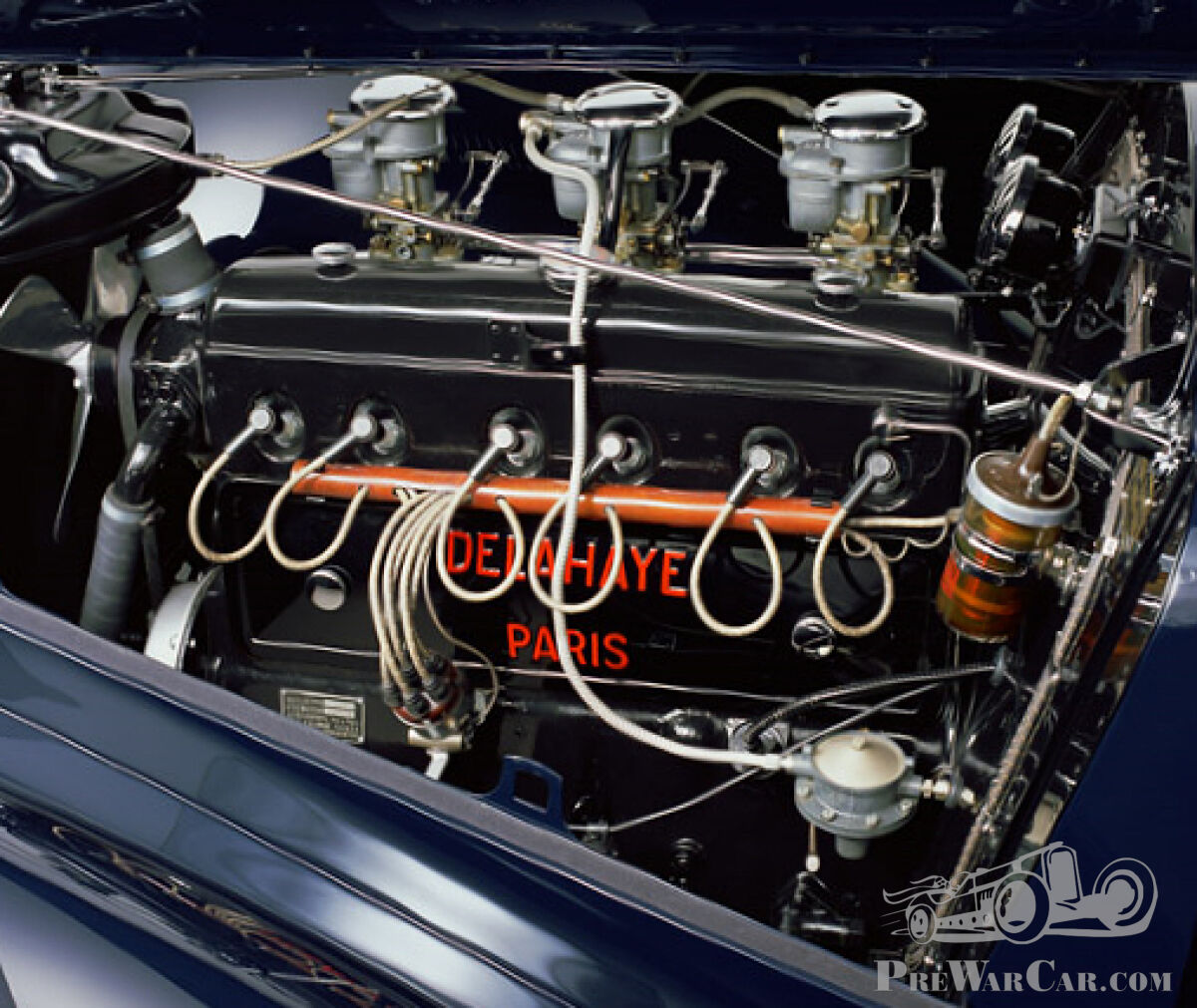
The windshield was also special in design as in addition to folding it also featured an upswept curve at the center of the base, a theme repeated in the wood cap rails on the interior. The dash layout was simple and purposeful for competition purposes, with leaf spring four-spoke steering wheel and in the center a rugged four-speed manual competition transmission. The engine is a reliable 3.5 liter six-cylinder competition with 120 horsepower and three Solex Type 40 PAI matched set carburetors. 17-inch Rudge wire wheels were fitted with Michelin 5.50-6.00 x 17 tires. Interestingly for such a purposely designed competition car, the copy of the build sheet (supplied by Claude Figoni) shows that the car was supplied originally with fitted luggage, which fit neatly behind the “plus two" rear seats when the back was dropped down. These gentlemen racers were used for the show but also 'go', meaning racing.
Compete it did. After years of numerous showings of the car all over France, Wolf hired the famous racing team of Guy Mairesse and Paul Vallée to campaign the car. A photo exists, of the car being raced by them at Rallye de Monte Carlo in 1949, where it placed sixth out a field of 230 cars. Not bad for a then thirteen-year-old car!
Club Delahaye research and Prefecture de Police records show that there were three French owners, the second being Jacques Persin (1951 registration), the Director General of Facel Cars, Paris, and the latter of which is believed to be an American (Peter Gagola, registration September 18, 1953) living in Paris at Hotel California on Rue de Beri and likely an employee of Persin's. Interestingly, that registration was still current, leading the Club to believe the car was still in France! A number of noted collectors have owned this car in the United States as a part of their collection.
The car is finished in a dark blue color, a beautiful French color of Bleu Foncé, which changes with the amount of light from a medium blue to almost black at night, with dark blue convertible top and carpets. The dash is a turned metal style. The leather is light gray quill ostrich with dark blue piping and the fitted luggage is the reverse, dark blue quill ostrich with gray ostrich edging.
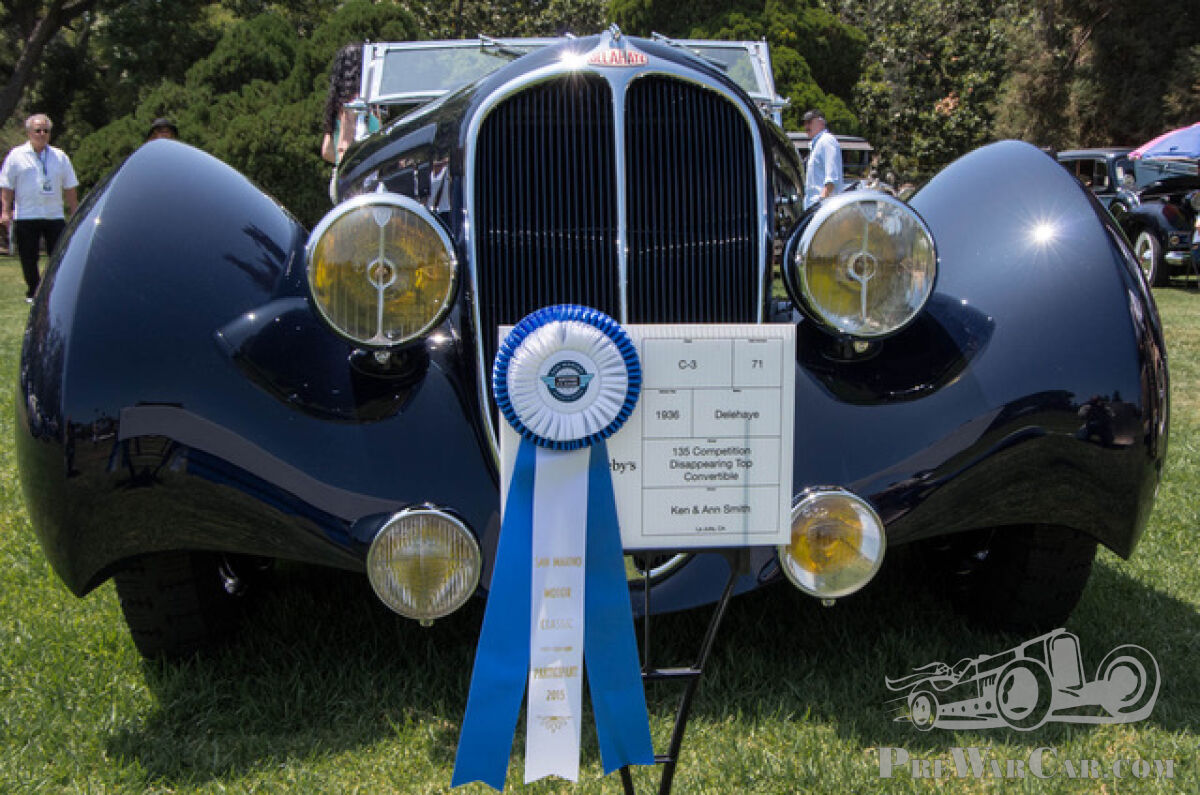
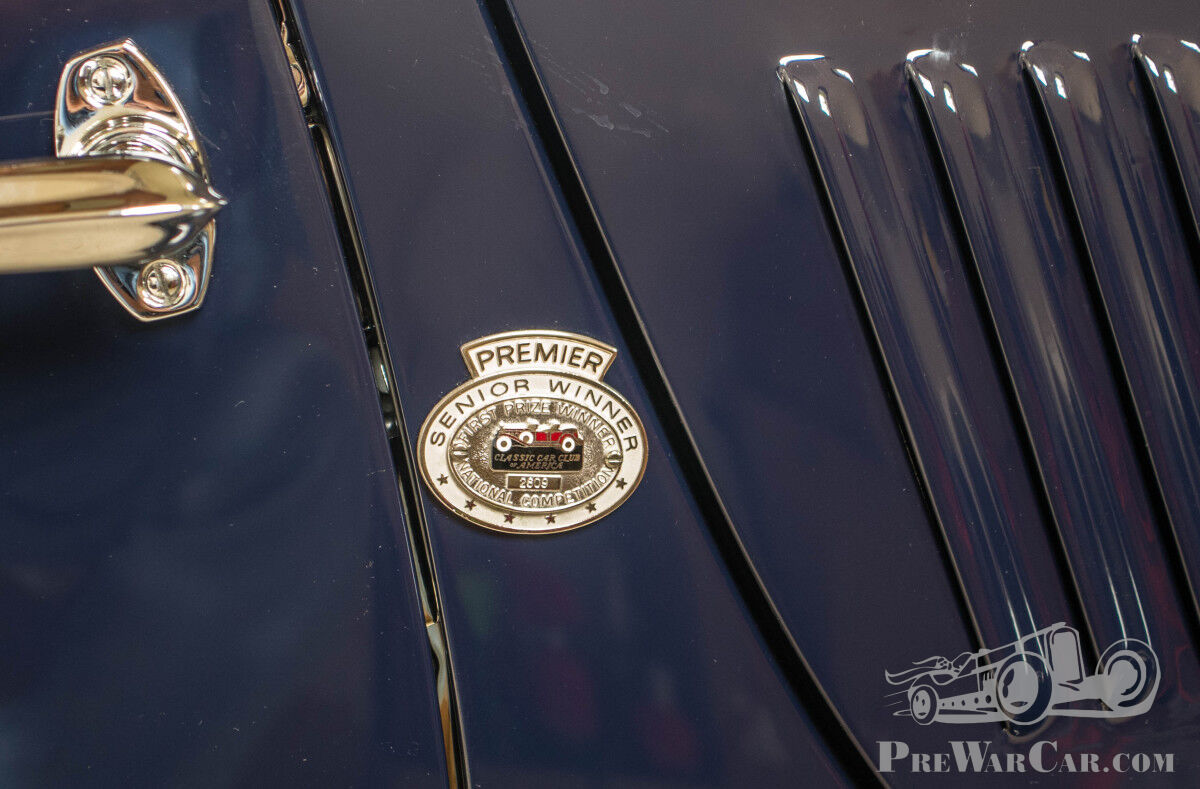
In all, this car of many Figoni firsts is a signature masterpiece of wind-cheating elegant design. Importantly, numbers all over the car match original Delahaye and Figoni records. It has been consistently judged as a 100-point classic by the Classic Car Club of America and judged more than twenty times as Best of Show against some of the finest cars in the world, as well as awards for most elegant, best paint, people’s choice, etc. In the words of Club Delahaye, “This is one of the most elegant creations of Joseph Figoni and one of the most important Delahaye cars."
The car is currently in the collection of Kenneth Smith of La Jolla, California, USA.
See this rare 1936 Delahaye for sale in our online Marketplace.
Photographs by Kenneth Smith.
Publiziert:
Dienstag Oktober 30th, 2018
Facebook
LinkedIn
Twitter
WhatsApp
Email
Copy