Das weltweite Magazin und der Marktplatz für Oldtimer-Enthusiasten – von Enthusiasten.
Das weltweite Magazin und der Marktplatz für Oldtimer-Enthusiasten – von Enthusiasten.


Filter
Auswahl treffen
- Autos
-
Marke >>
-
Baujahr >>
-
-
Kategorie >>
-
Länder >>
- Motorräder
- Teile
-
Automarke >>
-
Hersteller >>
-
Kategorie >>
- Fahrräder
-
Baujahr >>
-
Länder



Mystery solved before publication
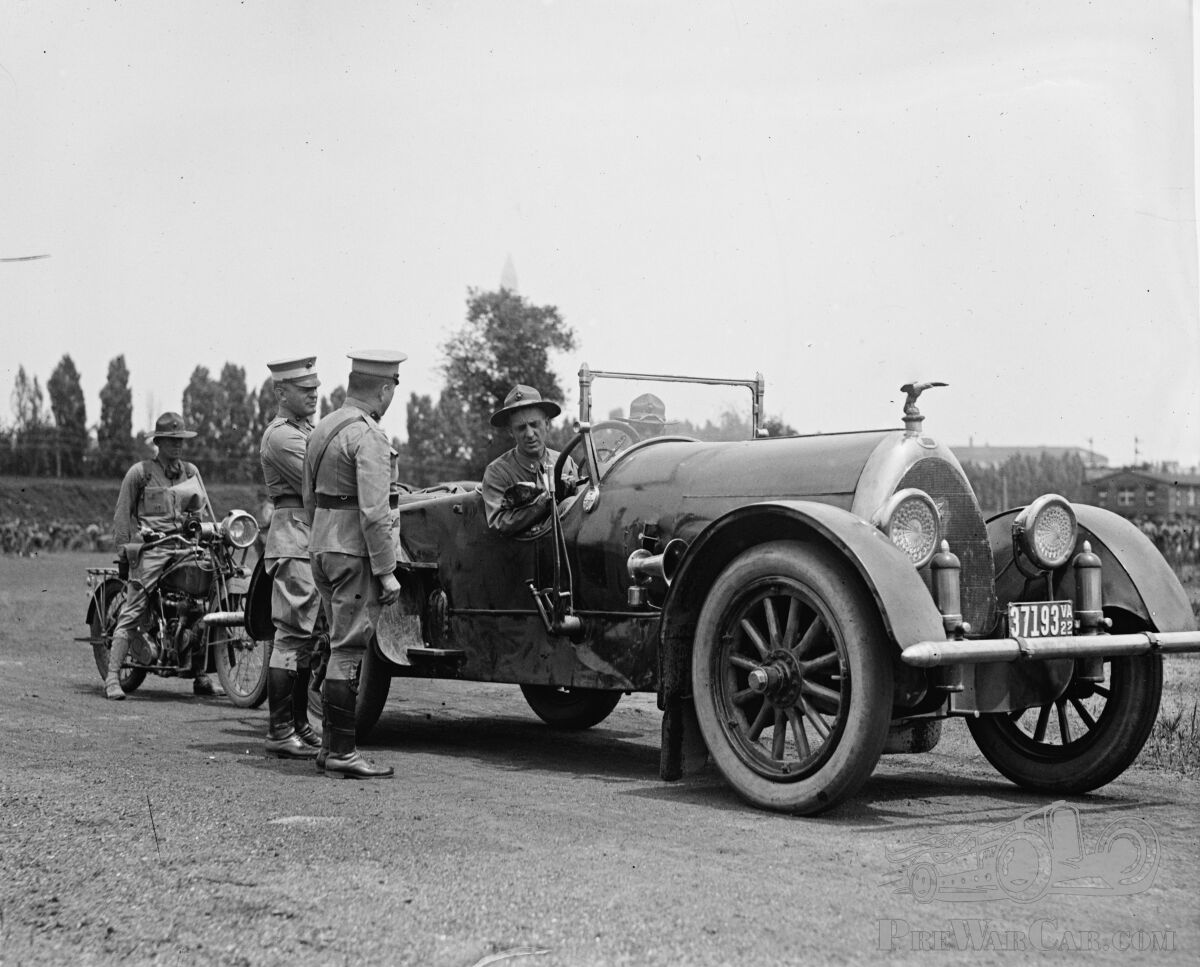

Our attentive readers might have seen a PreWarCar very similar to this one in our online Magazine. This (American) Fiat was the topic of discussion in our Monday Mystery column before. First in the (American) Fiat mystery and back in 2015, we were seeking info on this Fiat touring.
We again received an e-mail from our friend Thom. Attached was this picture from 1922. We see D. Butler in a car at Gettysburg, Pennsylvania during a Pickett's Charge reenactment by the United States Marines.
With the help of Alex Dragone of Dragone Classic Cars, Thom found out that Butler is driving a Fiat Type 55, with a custom body. Further, Thom wrote us: “Alex estimates that the chassis of the Butler Fiat was manufactured in 1913-1914 based upon the wheels & the horse-shoe shaped radiator, which both appear to be the same as on the Mystery Fiat. One thing I am still very curious about is the function of the bullet-shaped cylinders mounted on the front bumpers. I wonder if they may have held propane or natural gas to fuel the headlamps or provided another function. I have only seen the cylinders on these 2 Fiat's & not on any others that I have been able to find photographs of.” Therefore the following question: does anyone have any idea of what these bullet-shaped cylinders were for?
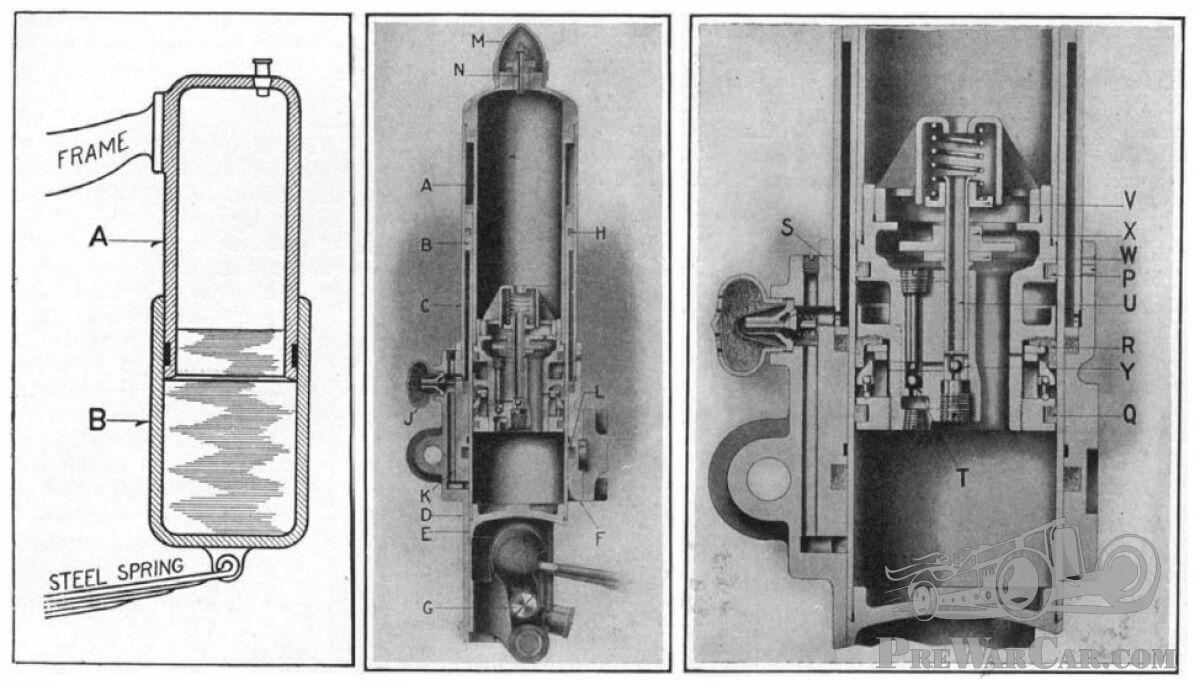
But then about a week later – before we could even publish the article – we again received an interesting e-mail from Thom saying; “I did find out what the cylinders mounted to the front bumpers are - they are Westinghouse Air Shocks - they consist of an air chamber made of 2 sections, one of which telescopes within the other. The outer section is attached to a bracket on the frame of the car. The inner section is attached to the end of the spring. The chamber is partly filled with oil through a filling hole. The filling plug has an ordinary Schraeder valve through which the chamber may be charged with air at any desired pressure. The oil in the chamber deals the packings if the telescoping joint & prevents the air from leaking out. There was also a one-way valve in the flat top piston which returned oil to the upper chamber. They were installed either at the factory or by a specialized after-market shop. The price in 1915 could be $1000 for a pair & they could be installed both front & back to improve the ride on unpaved roads. Back in the day when a Model T sold for $300 new, the addition of $1000 - $2000 for Westinghouse Air Shocks, in addition to the $5500 list price for the Fiat was a big chunk of change. That would work out to approximately $194,000 today.”
This meant the bullet-shaped cylinder mystery was solved before publication. But we thought it is an interesting topic and therefore share this information with you. If there is anyone who can tell us more - maybe something we do not know - about these Air Shocks, you are more than welcome to comment below.
Publiziert:
Montag August 26th, 2019
Facebook
LinkedIn
Twitter
WhatsApp
Email
Copy
Kommentare
Ace Zenek
30 August 2019, 15:33
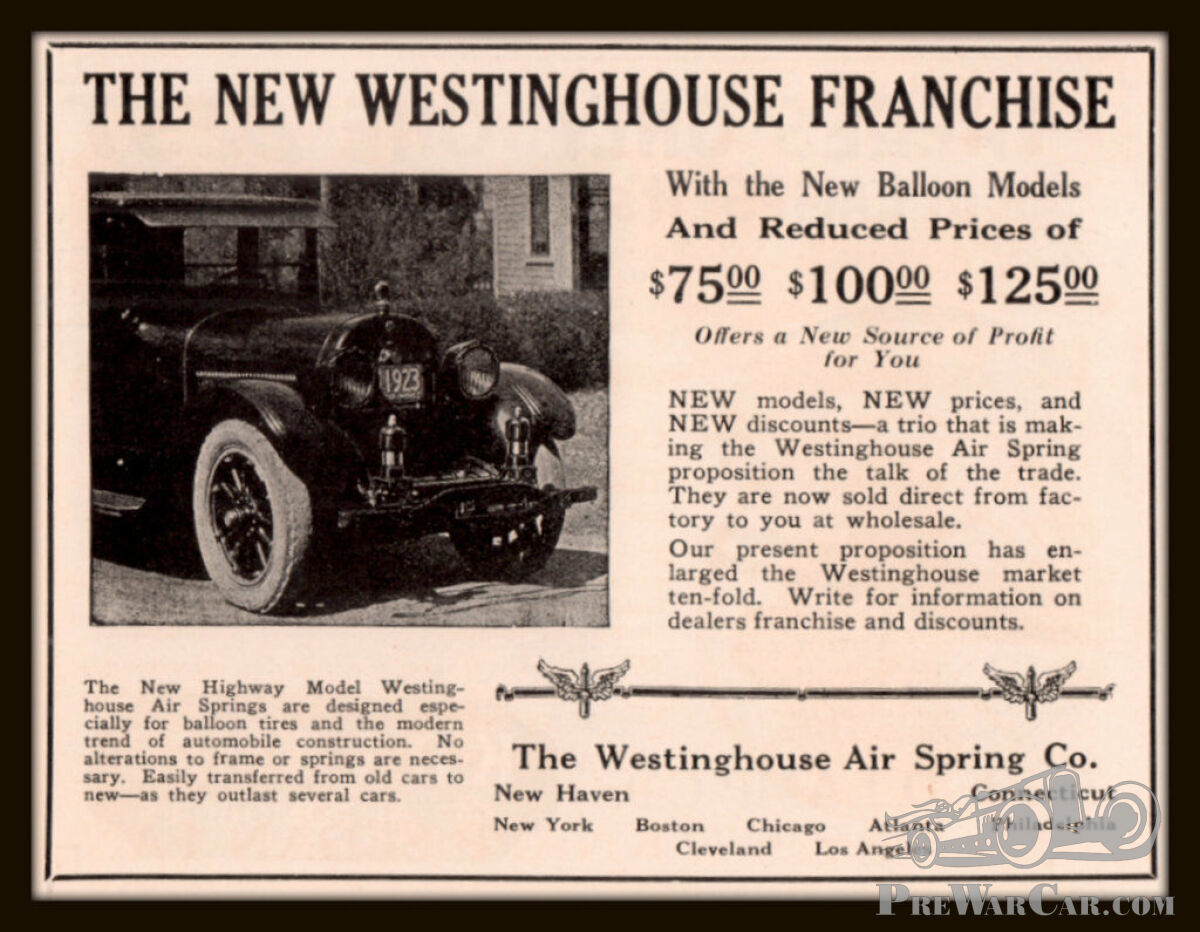
The price stated seems high in light of this advertisement from 1923.
Weiter lesen
Ace Zenek
30 August 2019, 15:11
"The Carriage Monthly" from May 1912 and other early automobile publications described the details of the Westinghouse Automobile Air Spring. A link to the article is below along with the best photos I could find.
https://books.google.com/books?id=R_RYAAAAYAAJ&pg=RA1-PA64&lpg=RA1-PA64&dq=Westinghouse+Automotive+Air-spring&source=bl&ots=X7un-UmgLD&sig=ACfU3U2qryjE8jzAdZaHmUbQAUQ--RneDg&hl=en&sa=X&ved=2ahUKEwjkrK2z0KrkAhUDWa0KHSkpBMsQ6AEwFnoECAsQAQ#v=onepage&q&f=false
Weiter lesen
https://books.google.com/books?id=R_RYAAAAYAAJ&pg=RA1-PA64&lpg=RA1-PA64&dq=Westinghouse+Automotive+Air-spring&source=bl&ots=X7un-UmgLD&sig=ACfU3U2qryjE8jzAdZaHmUbQAUQ--RneDg&hl=en&sa=X&ved=2ahUKEwjkrK2z0KrkAhUDWa0KHSkpBMsQ6AEwFnoECAsQAQ#v=onepage&q&f=false