Das weltweite Magazin und der Marktplatz für Oldtimer-Enthusiasten – von Enthusiasten.
Das weltweite Magazin und der Marktplatz für Oldtimer-Enthusiasten – von Enthusiasten.


Filter
Auswahl treffen
- Autos
-
Marke >>
-
Kategorie >>
-
Länder >>
- Motorräder
-
Standort >>
- Teile
-
Automarke >>
-
Hersteller >>
-
Kategorie >>
- Fahrräder
-
Baujahr >>
-
Länder



Monday mystery: an elegant limousine for a London engineer
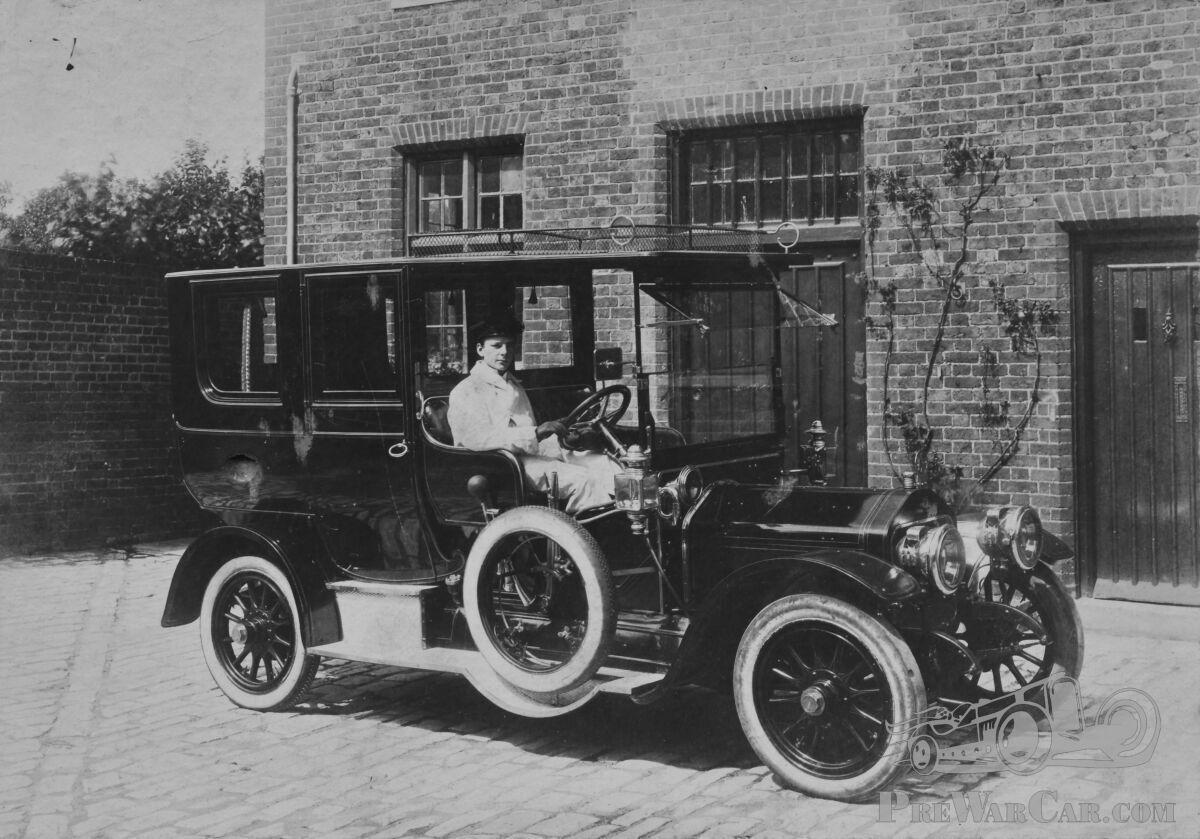
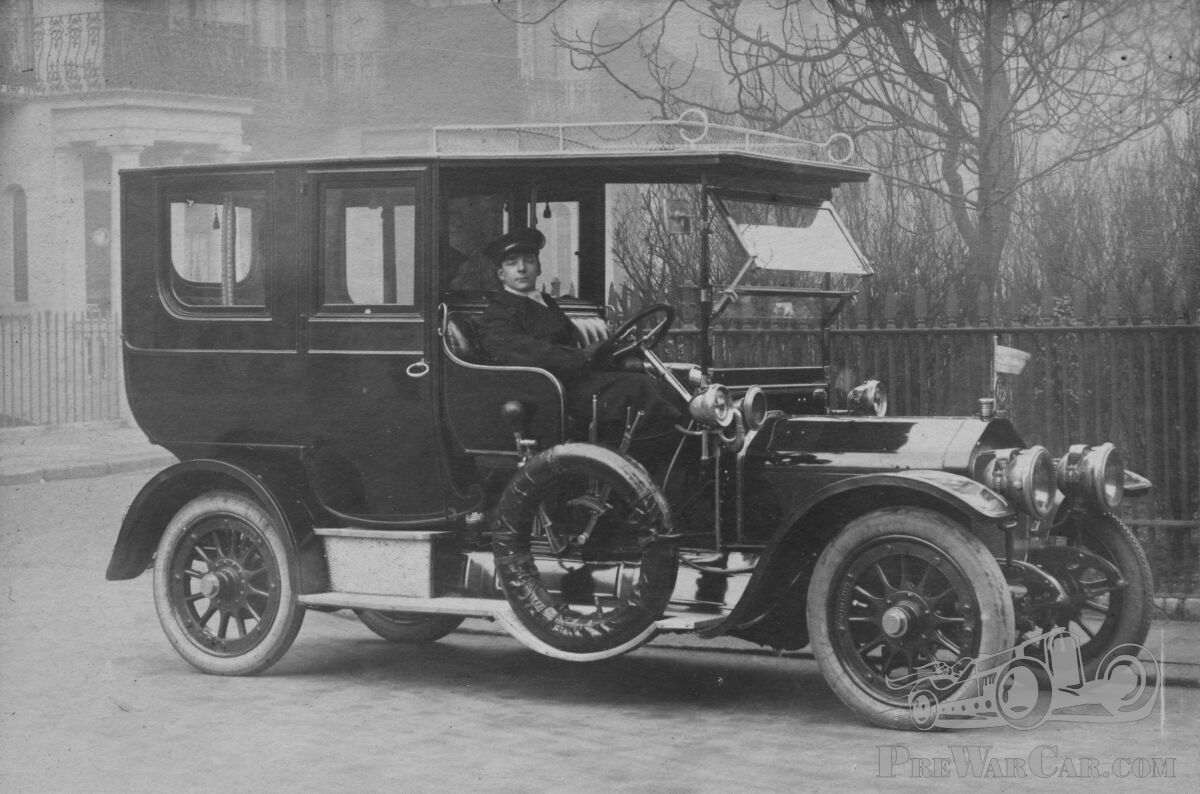


We are particularly delighted with these two further acquisitions to our archive. At first we thought that, like so many ancient photographs, they would have to remain more or less bereft of context. However, the owner of these photographs was thoughtful enough to scribble his name across the back, and from that we've managed to uncover a little bit of their backstory.
The first photograph, we might mention, was taken in June, 1910, and the second in December, 1911. It looks like the car was pretty well looked-after, and in the space of 18 months it had acquired a cover for the spare wheel, an A.A. badge and a little flag to adorn the radiator. The photographer's inscription appears on the frame of the second photograph; he was Frank Wells of 190, Ebury Street, London, S.W. Anyone who has regularly trodden the path between Victoria station and the Chelsea Embankment will associate the Ebury name with a characteristically affluent part of Belgravia. It runs almost from the Royal Hospital to Buckingham Palace and past residents, at different times, have included Mozart, Tennyson, Noël Coward and Ian Fleming—obviously the Edwardian age was a good time to be a photographer...
We can glean a little from all that, but it's the signature on the back which really provides the most useful information. The owner of this vehicle was a gentleman by the name of J. F. Haskins. If we look him up, we find that in 1882, he was in work as a consulting mechanical engineer and was proposed for membership of the Institute of Mechanical Engineers. His address at the time was 114a, Queen Victoria Street, a busy thoroughfare running across the City of London from Blackfriars Bridge to the Bank of England. Of course, J. F. Haskins is not an unusual name and our man could be somebody else altogether, but we're inclined to believe they're the same. It would make sense for a prospering young engineer in London in 1882 to progress through his job, amass a comfortable fortune and take an interest in the emergence of the motor car. Supposing him to have been about 60 years old in 1910, it's quite plausible that he would have settled in a comfortable townhouse in Belgravia and been able to afford a sumptious limousine such as we see here.
Now then, the limousine—that's the real crux of this article. Unfortunately, Mr. Haskins didn't see fit to make a note of what it was. We'd like to have a guess, and say that it looks to us like a Wolseley-Siddeley, but we might be wide of the mark. It's over to you...
Words: Zack Stiling
Photograph: Stiling Collection
Publiziert:
Montag Oktober 7th, 2024
Facebook
LinkedIn
Twitter
WhatsApp
Email
Copy
Kommentare
David Grimstead
17 Oktober 2024, 19:58
Ken van der Loo
11 Oktober 2024, 19:41
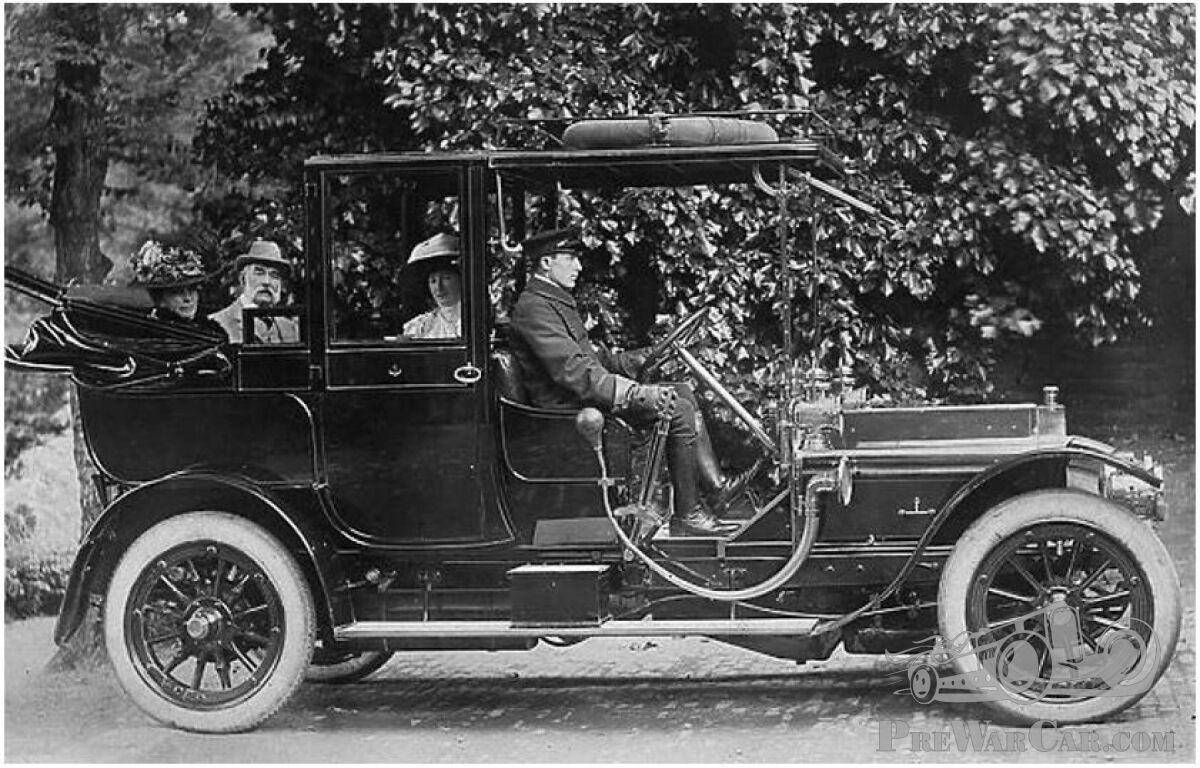
The cars of photos one and two are the same, likely a Wolseley, but photo three is a different car; see the coachwork details.
Weiter lesen
Luc Ryckaert
09 Oktober 2024, 15:31
The car in the photo looks very similar to this Wolseley-Siddely from 1910.
Weiter lesen
John A. Kent
07 Oktober 2024, 22:42
The car is a Wolseley and likely their top of the line model.
Weiter lesen
Tim Hewitt
07 Oktober 2024, 08:19
It's not just a spare wheel cover that has been added, the wheels are of a different type in the second picture and are now of the "bolt-on rim" type, the originals look like locking-ring type. It's also had an update of the bulkhead lamps, probably from acetylene to electric. As an engineer I guess he was keeping up with advances in technology, much as we do with 'phones these days. Unfortunately I can't shed any light on the manufacturer, but I'm looking forward to updates from others.
Weiter lesen
Few with Haskins’ initials were noteworthy in Edwardian London or subsequently, although there was a Dr. James Frederick Haskins who was a London church-music composer and organist but he died in June 1910.
If this is a Wolseley-Siddeley, the Haskins who owned it was small beer compared to Queen Alexandra and Prime Minister Asquith who both had one of their limousines. This looks like the standard limousine saloon, not landaulette, body fitted to 18, 20, 30 and 40 h.p. chassis from 1909.
Once in July, 1912, Frank Wells advertised his club photo-panalette documentation from 190, Ebury Street, which was the address of the Mercantile Press. It was a high-class lithographic and letter-press printer of books, catalogues, cards, programmes, tickets, etc. from late Victorian through Edwardian times and the Great War. Maybe Wells photographed the occasional car for them for printing. Between the wars, his studio was nearby at 40, Pimlico Road at the south west end of Ebury Street.
And, as to other meritorious occupants of Ebury Street: these, ahem, include me! Well, at least for a week in October, 1962, when I stayed with my aunt and her American actor husband who lived at No. 22, in the flat below the one Ian Fleming had once occupied. Knowing I was car-mad, they took me to the Earls Court Motor Show and when my uncle was recognised on the American stands, I got to sit in some “awesome” gas-guzzlers—push-button automatics were the in-thing that year…