Das weltweite Magazin und der Marktplatz für Oldtimer-Enthusiasten – von Enthusiasten.
Das weltweite Magazin und der Marktplatz für Oldtimer-Enthusiasten – von Enthusiasten.


Filter
Auswahl treffen
- Autos
-
Marke >>
-
Baujahr >>
-
-
Kategorie >>
-
Länder >>
- Motorräder
-
Standort >>
- Teile
-
Automarke >>
-
Hersteller >>
-
Kategorie >>
- Fahrräder
-
Baujahr >>
-
Länder



MG at 100: Abingdon's greatest cars assemble in Paris

The 1925 MG 'Old Number One' was the first MG purpose-built for motorsport
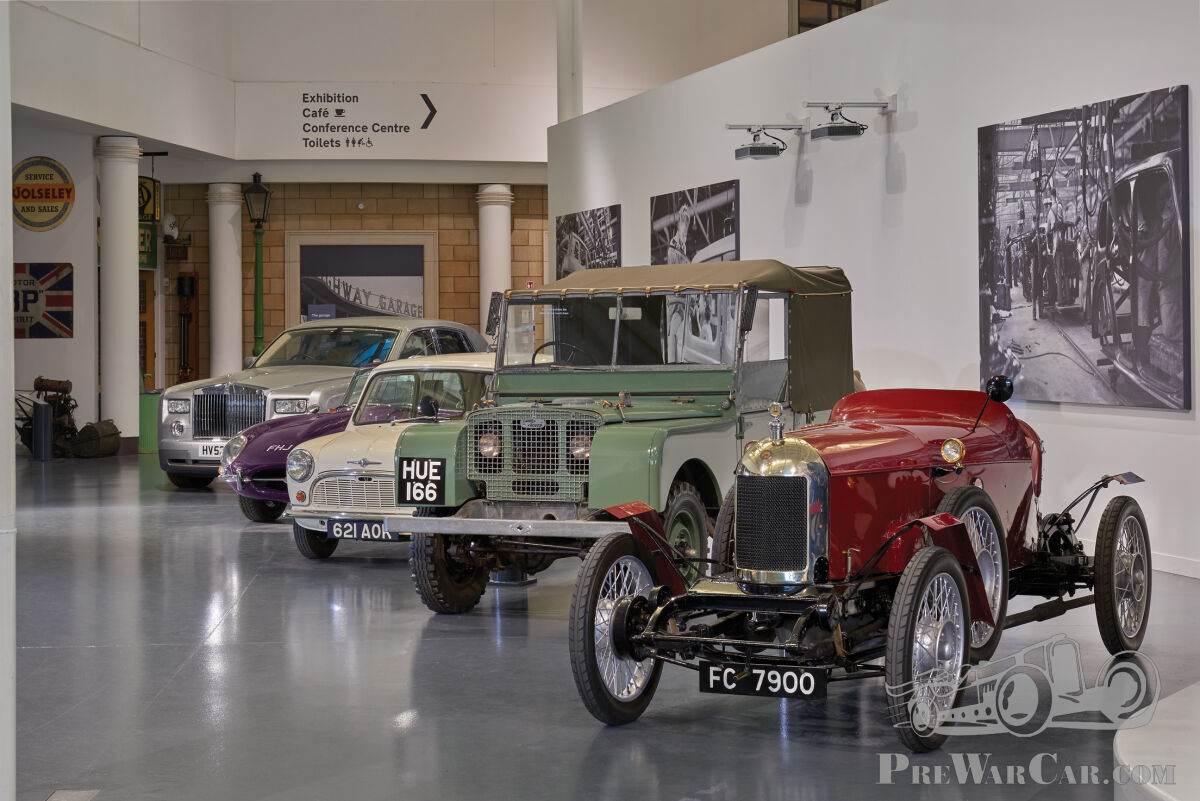
Today, it can be seen at the British Motor Museum along with other landmarks of British motoring history


EX135 is seen in the background with its successor from 1954, EX179

EX181 from 1957, the last MG record car, will also be at Rétromobile
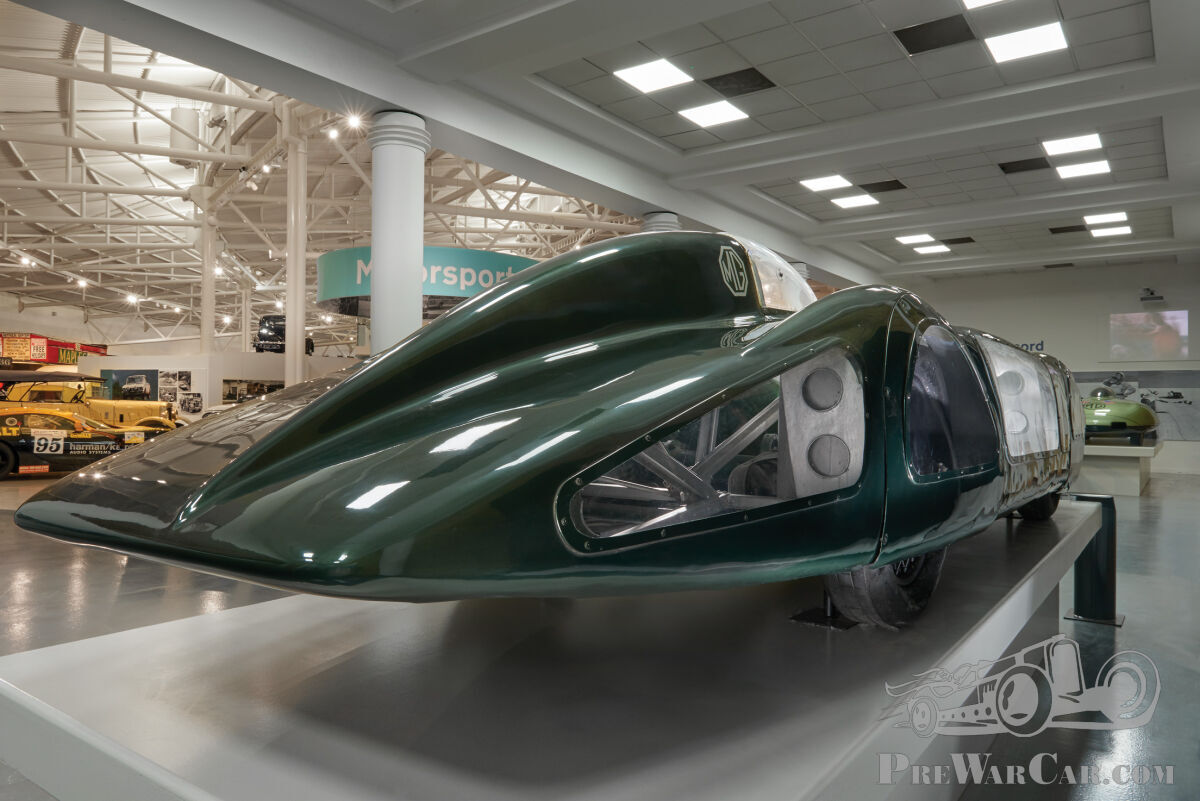
EX135's glazed panels were installed for display purposes by the British Motor Corporation
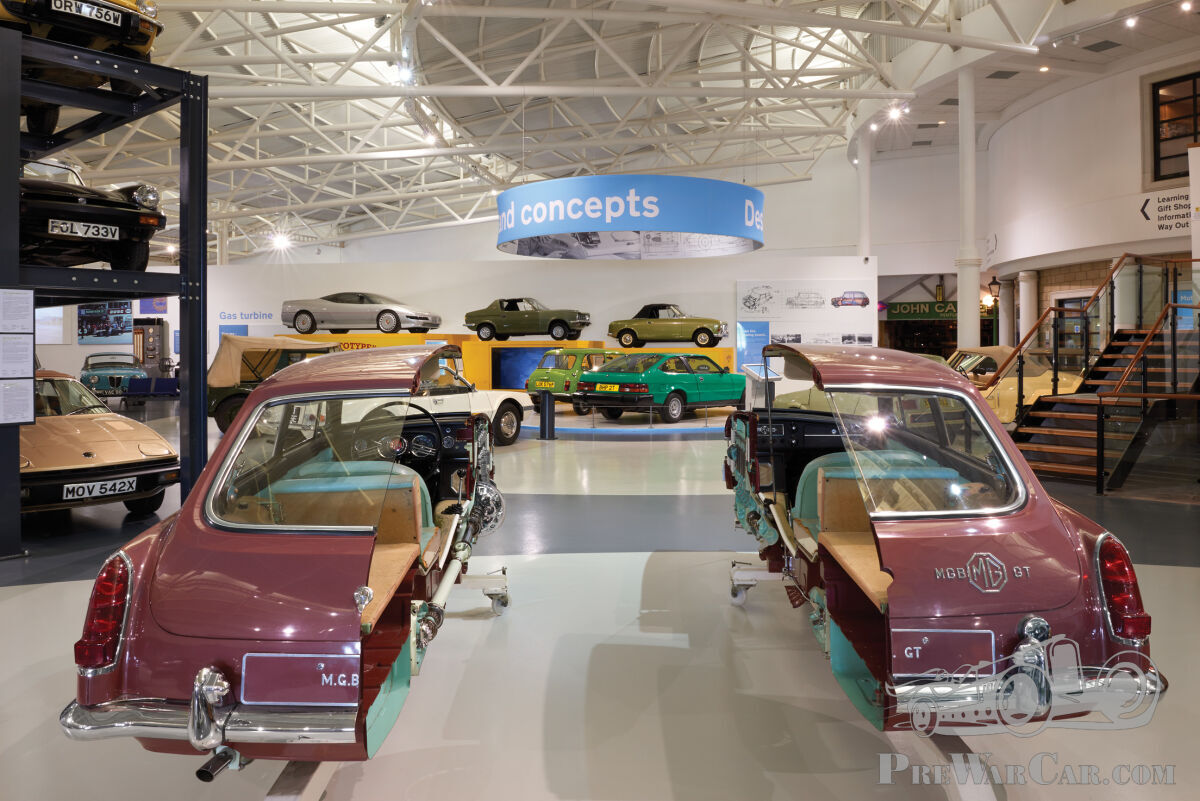
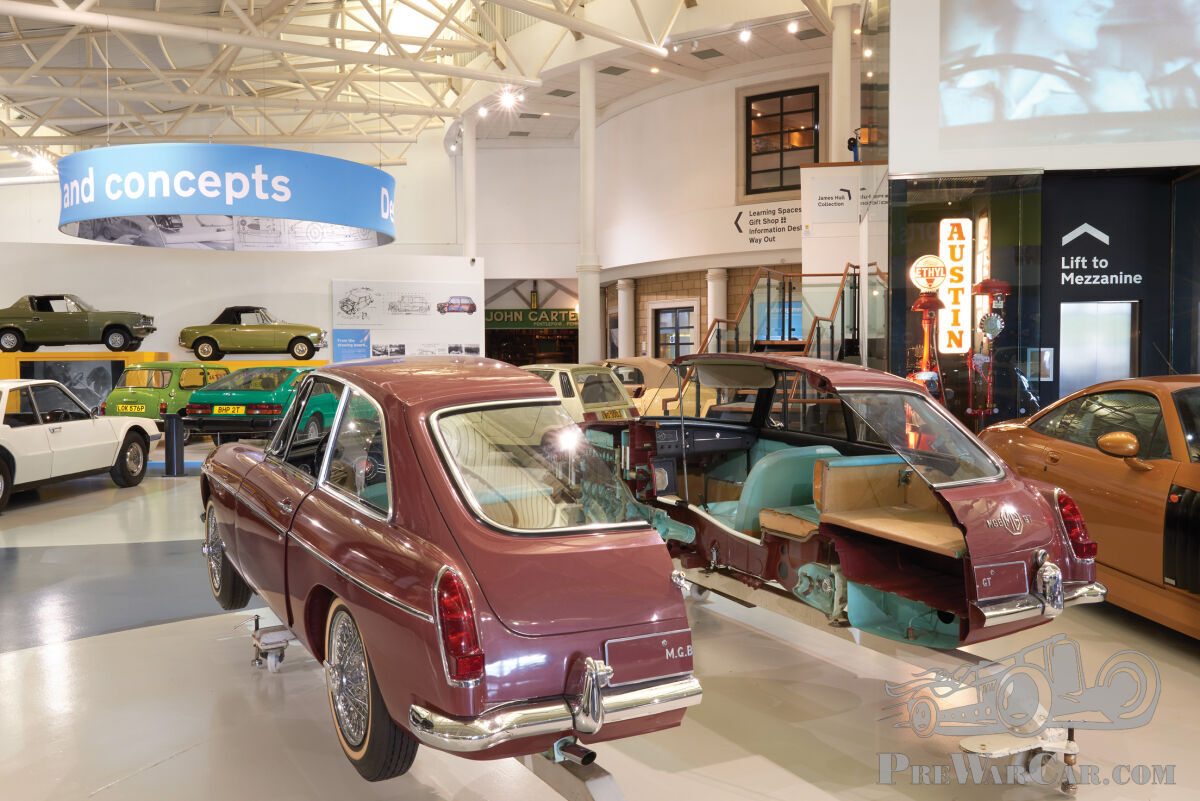
The dissected MGB GT Motor Show car can also be seen at Gaydon


One hundred years ago, in March, 1923, a young man named Jack Gardiner drove out of a garage in Oxford in an unusually rakish car. At first glance, it looked very much like one of the Bullnose Morrises which had already been seen around Oxford in their dozens, but as Mr. Gardiner made his way out of town, accelerated past Magdalen College to cheers from a posse of excitable students, and drowned out the contented, gurgling waters of the Cherwell, the more attentive observer might have seen that it was something quite different from the norm. The same observation would certainly have been made in May, when a sleek, low-sided tourer in shining aluminium was hustled all the way across the country by Russell Chiesman in the London to Edinburgh Trial. This car looked like a Morris, and was badged as a Morris, but it was like no other Morris...
The Morris Garage—soon to become Morris Garages—was established in 1910 when William Morris rebuilt and expanded the garage in Oxford where he had for several years been selling and repairing motorcycles and motor cars. He started building his own cars, the very first 'Bullnose' Morris Oxfords, in 1913, and their popularity led to him founding Morris Motors in 1918 as a distinct entity from Morris Garages, which would continue to exist for sales and service. In 1921, a 33-year-old Cecil Kimber joined the Garages business as its sales manager, and within a year had been promoted to general manager. Unlike William Morris, Kimber saw motoring as something of a pastime, and ultimately succeeded in convincing his boss that there would be many other motorists who would gladly buy a Bullnose if only it could be made a bit more exciting.
Thus did Kimber get the green light to build his own Morris Garages sports specials in 1923, and the famous MG octagon appeared in December. The first cars to be built under such a programme reached the road in August, 1923, but these early cars, although sold as the MG Super Sports Morris, were simply standard Morris Cowley chassis despatched to the coachbuilder Raworth for slightly sportier two-seat bodies. The car Jack Gardiner bought himself for his 21st birthday was a more impressive-looking tourer, but underneath it remained a standard Morris Oxford. The London to Edinburgh car, however, marked a watershed. It featured a raked steering column and a few other tweaks made here and there to improve performance. Although officially it was a Morris-Oxford 13.9hp Sports—Morris Garages was not distinguished as a manufacturer in its own right until 1927—there are many enthusiasts who would say that it was the first true MG.
With that in mind, the centenary of the marque is being celebrated at this year's Salon Rétromobile with no fewer than a dozen landmark cars, among them Old Number One from 1925 and the EX135 record car from 1938.
Old Number One
Cecil Kimber had always been a keen enthusiast for trials, so it was only natural that he should seek to promote his own cars in such competition. He entered a Morris Garages special-bodied Cowley in the 1923 Land's End Trial and his co-driver Chiesman returned with one of MG's Raworth two-seaters for the 1924 Land's End, Gold Medals being awarded on both occasions.
For the 1925 Land's End, Kimber channelled his energies into a purpose-built trials car. Although the event was open to all cars up to 2,000 cc, development began in 1924 when there was a 1,500 cc limit in effect, so for that reason Kimber used the the 11.9 hp, 1,547 cc Hotchkiss engine rather than the recently-developed 14/28 engine of 13.9 hp and 1,802 cc.
An overhead-valve engine by design, the Hotchkiss unit was stripped and prepared at the Morris Garages workshop on Longwall Street, where a special chassis was constructed using simple hand tools by Frank Stevens, foreman of the machine shop. The front end was as per the Morris design, but the rear section was scratch-made with a pronounced curvature over the rear axle. A front axle from the new 13.9hp Oxford was used, with beefy 12-inch brake drums.
Working in between other jobs, the car was finished in March, 1925, just two weeks before the trial. On test, the car returned a superb speed of 82 mph, which was promising. However, a crack was discovered in the chassis two days before the trial, occasioning some last-minute welding repairs. Kimber and co-driver Wilfred Mathews, a local insurance broker, jumped in the Spartan two-seater and made for the start in Slough.
The car performed admirably on even the toughest of hills, until a puncture on Beggar's Roost threatened to make them late. However, Kimber and Mathews made up the time lost and arrived at Land's End with an unblemished scorecard, winning a third Gold Medal for Morris Garages.
Not long after, Old Number One, as it became known, was sold for £300 to Harry Turner, a Morris agent in Stockport, and in 1930 he sold it for £50 to Ronald Davison. Davison exchanged correspondence with the factory and was told by Kimber that it was "virtually the first MG ever produced," before Kimber enquired about buying it back. Unfortunately, Davison had already sold it at auction to a Birmingham butcher, who reduced it to a life of towing trailers of pig food. By a stroke of luck, an MG employee later spotted it in a Manchester scrapyard. It was duly rescued and returned to the MG factory in the mid-1930s to be restored and preserved, serving the marque well as a kind of promotional mascot for many years thereafter.
EX135
In 1930, MG moved from its small workshop in Oxford to a purpose-built factory in nearby Abingdon, and with increased production facilities it would soon rise to become one of Britain's foremost sports-car makers. The success of its various Midget, Magna and Magnette models, both in sales and competitions, led to the marque becoming increasingly ambitious and chasing ever faster speeds.
The first of the 'EX' series of speed-record cars was EX120, an extensively modified M-type Midget which in 1930 became the first 750 cc car to exceed 100 mph. It was shortly followed by EX127, which raised the bar to 120 mph. George Eyston had piloted both cars, and it was he who commissioned a special K3 Magnette, a 1,087 cc six-cylinder model, for further speed runs at Brooklands and Montlhéry. The chassis was modified, lengthened by five inches and strengthened. It was designed to take two bodies, one a slippery streamlined job for the record attempts, painted rather like a flying humbug in cream and brown stripes, while the other was a pug-nosed but effective body for ordinary racing.
The Magic Magnette soon proved its worth, winning races and setting lap records throughout 1934. At the BRDC 500-Mile Race at Brooklands, the streamlined body was tried and EX135 lapped at an average of 113 mph, but a seized wheel bearing caused it to suffer an accident, fortunately without serious injury to car or driver.
Eyston hoped to break records in the 1,100 cc class, and meant also to attempt the unrestricted one-hour world speed record which stood then at 134 mph. Fitted with a Powerplus supercharger, it set several records at Montlhéry including 10 miles at 128.53 mph and one hour at 120.88 mph. However, Eyston developed it no further and sold it to amateur racer Donald Letts, who campaigned it Brooklands throughout 1935 and 1936, though it grew steadily less competitive.
In a more private capacity, one of the other great record-breakers of the day, Lt. Col. 'Goldie' Gardner, had also been attempting records at Brooklands and Montlhéry in a streamlined K3, and set the unbeaten Brooklands 1,100 cc lap record of 124.40 mph. In 1937, he used German autobahns to set the flying-kilometre and flying-mile records, reaching 142.2 mph, and the Montlhéry circuit for the five-, 10- and 50-kilometre and five- and 10-mile records.
Cecil Kimber was keen to support Gardner and push an MG past 150 mph. The Brooklands-based engineer Robin Jackson bought the old EX135, which was overhauled at Abingdon, and was engaged to rebuild Gardner's engine to place into it. With a Centric supercharger, it produced 194 bhp at 7,000 rpm. Reid Railton designed an all-new, lightweight streamlined body.
The reborn EX135 was completed in November, 1938, and it was promptly despatched to the Frankfurt-am-Main autobahn. Even by the works' expectations, the results were astonishing: the results for the flying kilometre and flying mile were 186.5 and 186.6 mph respectively. However, the final drive ratio was too low and the supercharger was thought to be problematic. In May, 1939, EX135 arrived at a new stretch of autobahn at Dessau, and set flying kilometre, mile and five-kilometre records at a best speed of 204.3 mph.
During the war, EX135's engine was destroyed in a fire at the former clothes factory in Abingdon where the car was stored, but that did not hinder Gardner. He tried the car with several different engines of between 497 cc and 1,970 cc, and continued breaking records until illness caused him to retire in 1953. After EX135's last run in 1952, it held the unequalled distinction of holding world speed records in new fewer than six classes. So celebrated were Gardner's achievements that the Gardner-MG had occupied pride of place in the Transport Pavilion at the 1951 Festival of Britain, albeit only for a month, since Gardner could not well afford the time out of his record-breaking activities. On Gardner's retirement, his car was purchased for £2000 by the British Motor Corporation. Glazed inspection panels were installed in the bodywork and it has been in preservation ever since.
Today both Old Number One and EX135 can be seen at the British Motor Museum in Gaydon, Warwickshire. They form part of a collection of more than 400 historically important British-built cars which are on display all year round. Several other significant MGs are among them and will also be forming part of the centenary display at Salon Rétromobile, including the 1957 record-breaker EX181, as driven by Stirling Moss and Phil Hill, which reached 255.1 mph at Bonneville Salt Flats in 1959.
Rétromobile runs from January to 31st and February 4th, and tickets are on sale here.
Words by Zack Stiling
Photographs supplied by the British Motor Museum
Publiziert:
Montag Januar 29th, 2024
Facebook
LinkedIn
Twitter
WhatsApp
Email
Copy
Kommentare
Randall Morgan
04 Februar 2024, 18:34
Edward Hosford
06 Februar 2024, 12:49
I suggest that Randal Morgan contacts the Octagon Car Club for pre-1953 MG cars.
Weiter lesen
Any thoughts on researching our PA and as well MG places to visit in Britain will be appreciated.