Das weltweite Magazin und der Marktplatz für Oldtimer-Enthusiasten – von Enthusiasten.
Das weltweite Magazin und der Marktplatz für Oldtimer-Enthusiasten – von Enthusiasten.


Filter
Auswahl treffen
- Autos
-
Marke >>
-
Baujahr >>
-
-
Kategorie >>
-
Länder >>
- Motorräder
-
Standort >>
- Teile
-
Automarke >>
-
Hersteller >>
-
Kategorie >>
- Fahrräder
-
Baujahr >>
-
Länder



Matt Coles: The Future of Pre-War Cars
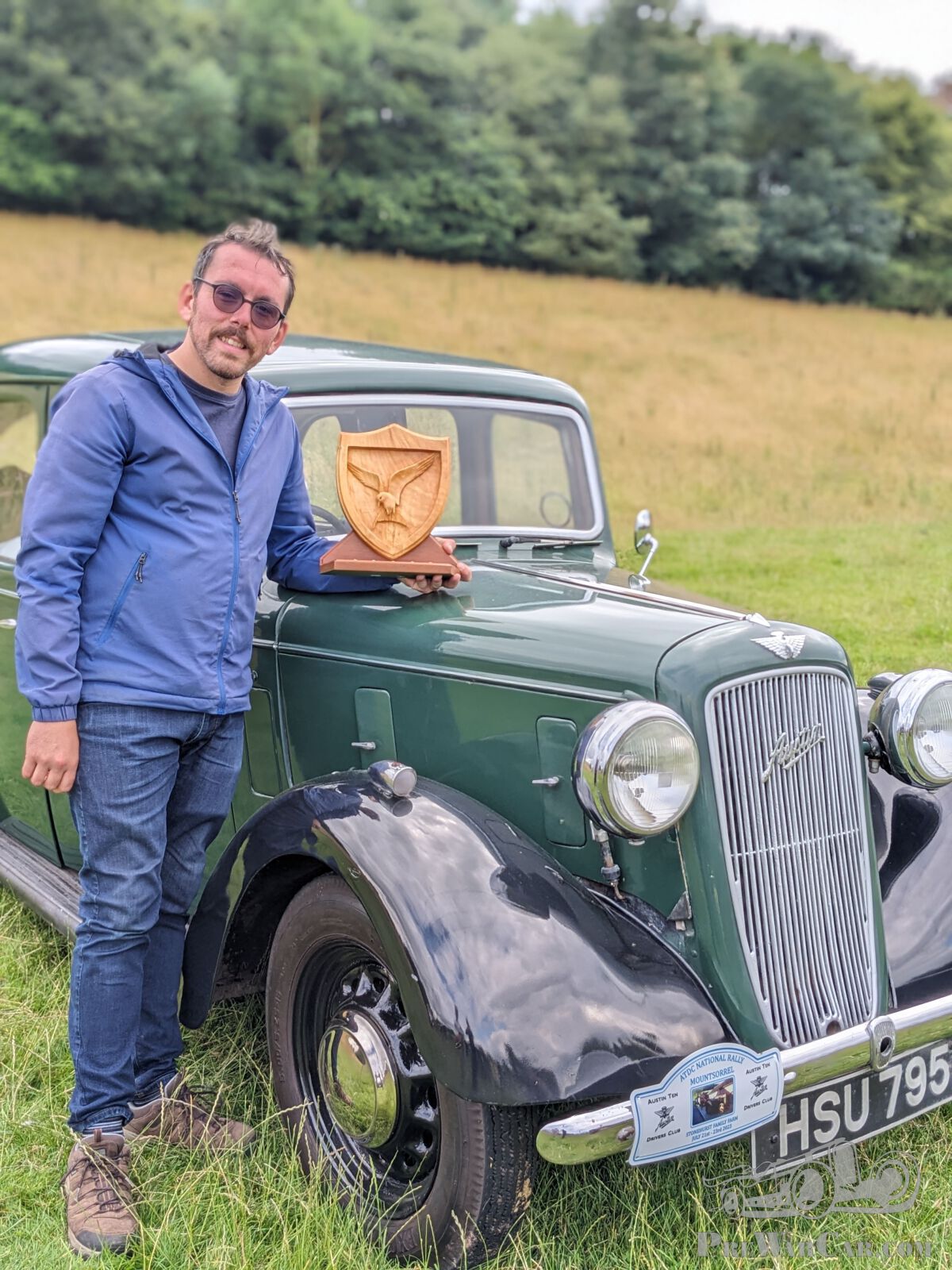

The question of how, as enthusiasts, we are to attract young blood to our hobby is one that gets raised time and time again. In discussing it, possibly the most helpful thing is to hear the from young enthusiasts themselves. We are therefore pleased to introduce Matt Coles, Publicity Officer of the Austin Ten Drivers' Club, who has sent us his thoughts on the matter.
As a 30-something-year-old, I am very much one of the younger pre-war car owners. If you have attended any car shows recently, you’ll have noticed that the younger generation is going for things that some would still consider modern, like hot hatches from the 1980s, '90s, or even 2000s. How do we overcome this, how do we encourage the next generation of pre-war car owners before the enthusiasm and skills for keeping these cars on the road dies out completely?
As a 30-something-year-old, I am very much one of the younger pre-war car owners. If you have attended any car shows recently, you’ll have noticed that the younger generation is going for things that some would still consider modern, like hot hatches from the 1980s, '90s, or even 2000s. How do we overcome this, how do we encourage the next generation of pre-war car owners before the enthusiasm and skills for keeping these cars on the road dies out completely?
One problem is relatability. Most who own a pre-war car do so because either a close family member owned one or they perhaps had one themselves as an ‘old banger’ when they first passed their driving test. To have had parents that owned one or to have owned one when it was a 25-year-old banger slightly ages the current owners of these vehicles – I will let you do the maths!
There are clubs, groups and initiatives that are trying to encourage the ownership of pre-war vehicles, such as the Vintage Sports-Car Club, the StarterMotor Group, and the Classic Car Loan Project. They all have their merits, but there are still some issues to overcome.
The VSCC is great for getting youngsters into older cars—they appear to have a lot of fun taking part in rallies, et cetera, and having fun is the key to encouraging younger ownership. But what of those more ‘pedestrian’ cars, without the racing pedigree, such as the 1938 Austin Ten Cambridge that I own. How do we encourage the ownership of these vehicles?
The StarterMotor Group and Classic Car Loan Scheme are to be applauded for their efforts; they do a huge amount to help secure a future for our aging vehicles. The issue I foresee here is that we are getting to a point in time where the number of people no longer able to pursue our hobby due to age or illness, or who may not even be around anymore to take part, is greatly outnumbering those coming into the hobby. Again, the efforts made by these organisations are to be congratulated, but there is only so much they can do. So, what will happen with the vehicles that are left without a custodian?
Another issue, of course, is the rising cost of living coupled with the practicality of a pre-war vehicle. There will be some, of course, that use their cars every day but, generally, these cars are for high days and holidays. On the other hand, something from a post-war garage, a classic from the 1950s or ‘60s, could be used for the daily commute and could keep up fairly well with modern traffic and tolerate the odd trip down the motorway. It would be difficult for someone who is paying rent, bills, and saving for a deposit for a mortgage for their own property, to justify the expense of a second car that would only be used at the weekends.
So, what is the answer? Is there one? From my own experience, there is some hope. I, like a few of my friends, started with a post-war car and, anecdotally, it seems to me that those who have had a taste of this era of driving then want to try something a little older. These are the people we need to be trying to encourage, to entice to the world of pre-war motoring. My recommendation is that pre-war clubs should open their events to those with post-war cars, inviting them along to experience something a little older, to see if this piques their interest. Let these post-war owners sit in your car, even perhaps have a drive (if insurance allows) - they are already familiar with older cars and will be aware of how they should be treated. If you give one person the pre-war car bug, that is one more person who may purchase a vehicle that would otherwise languish in a garage until it is only fit for scrap.
As part of my work on the Austin Ten Drivers' Club committee, I am working on encouraging younger members into our hobby and club. If you have any thoughts and suggestions on how we can do this, or if you are a representative of another pre-war car club who would like to discuss this issue further and perhaps help to tackle it, then please do get in touch with me at
Publiziert:
Montag März 4th, 2024
Facebook
LinkedIn
Twitter
WhatsApp
Email
Copy
Kommentare
Chris Pickering
11 März 2024, 13:38
Keith K.
10 März 2024, 19:47
I agree wholeheartedly with Jarod and Sjoerd. I have three Edwardian motor cars and hope my grandchildren will cherish them. I give rides to others every chance I can, in hopes a seed will be planted, or a memory of some old geezer in an ancient car that gave a child a ride. Prices have gone nuts, in my opinion. I sure can't afford some I'd like to have, but then again, where to put another car?! What concerns me much more though is more and more regulation against ancient motor cars and vehicles. I fear it will get to the point where anybody driving one will be labelled. Even car museums are hurting, maybe due to lack of interest, and maybe because cars are getting to be "politically incorrect". Then add in the possibiilty of not being able to get correct fuel. Alcohol additives are a big problem. On one drive, when that was all that was available, my 1912 car vapour-locked in the middle of a busy intersection, closing down the road in four directions for a few minutes. I needed help pushing it out of the way. I have never been cursed at with so many filthy words by so many in my life! On the other hand, when things run well, it's always thumbs up! Anyway, time will tell. But in the meantime, share, give rides, let a child sit in your car, toot the horn, take a photo.
Weiter lesen
Sjoerd van de Wal
05 März 2024, 09:34
Interesting thought, however, one thing that’s briefly mentioned in the article are the costs. I often hear older owners talking about the “greying” of the hobby and young people not interested. Could it be that these same owners have a significant influence on this issue?
They bought there cars in a much cheaper age, lovingly maintained and/or restored them and enjoyed them. We come at a moment in time they are not able to drive and maintain there cars anymore and decide to sell them.
When you look at adverts you see prices that are too high nowadays to be afforded by young people at the start of there career, starting families and buying a house. Of course you want a good price for your beloved car, but if you worry about young people not being able to continue maintaining and owning these cars, why wouldn’t you get more realistic and adjust the price to make it an interesting option and above all, affordable and a justified expense. You’ve had your fun, you’ve bought the car significantly cheaper and isn’t it a nice thought that your car is still being enjoyed by a new generation that can bring the love to yet another generation?
I’m one of those people that entered the hobby in his late 20s. and am lucky to own two pre-1945 cars and enjoy these with the family. I bought my Morris Eight for a good price and restored it in the past few years. My kids (eight and ten) witnessed the process and enjoy the drives very much; already there are memories created for the rest of their life.
Maybe a little seed is already planted for there future classic car ownership, who knows, but all thanks to a former owner that granted me his project (and my first) for a reasonable price.
Give it a thought, it might be a part of the future of our great hobby.
Weiter lesen
They bought there cars in a much cheaper age, lovingly maintained and/or restored them and enjoyed them. We come at a moment in time they are not able to drive and maintain there cars anymore and decide to sell them.
When you look at adverts you see prices that are too high nowadays to be afforded by young people at the start of there career, starting families and buying a house. Of course you want a good price for your beloved car, but if you worry about young people not being able to continue maintaining and owning these cars, why wouldn’t you get more realistic and adjust the price to make it an interesting option and above all, affordable and a justified expense. You’ve had your fun, you’ve bought the car significantly cheaper and isn’t it a nice thought that your car is still being enjoyed by a new generation that can bring the love to yet another generation?
I’m one of those people that entered the hobby in his late 20s. and am lucky to own two pre-1945 cars and enjoy these with the family. I bought my Morris Eight for a good price and restored it in the past few years. My kids (eight and ten) witnessed the process and enjoy the drives very much; already there are memories created for the rest of their life.
Maybe a little seed is already planted for there future classic car ownership, who knows, but all thanks to a former owner that granted me his project (and my first) for a reasonable price.
Give it a thought, it might be a part of the future of our great hobby.
Jarrod
04 März 2024, 12:09
As a younger enthusiast of prewar vehicles (although not yet an owner), I appreciate the acknowledgment of this issue. While I'm not overly optimistic about finding a definitive "solution," I believe the hobby won't completely fade away. Instead, it's crucial for enthusiasts to recognize that the community will continue to dwindle, and the value of these classic cars may decline.
However, I see a silver lining in this situation. As vehicle prices drop, ownership becomes more attainable for a broader range of enthusiasts, potentially attracting a new generation to the hobby. This phenomenon isn't unfamiliar to me; having worked with antiques, I've witnessed a similar trend. Older collectors and dealers often lamented decreasing values without considering the positive outcome: accessibility to a new demographic of enthusiasts.
Personally, as someone who dreams of owning an early motor car but currently cannot afford it, the prospect of falling prices is encouraging. It presents an opportunity for me and others in similar situations to eventually acquire our desired vehicles. While this shift may be bittersweet for current owners, I believe it's a blessing in disguise that will sustain the hobby in the long run.
Weiter lesen
However, I see a silver lining in this situation. As vehicle prices drop, ownership becomes more attainable for a broader range of enthusiasts, potentially attracting a new generation to the hobby. This phenomenon isn't unfamiliar to me; having worked with antiques, I've witnessed a similar trend. Older collectors and dealers often lamented decreasing values without considering the positive outcome: accessibility to a new demographic of enthusiasts.
Personally, as someone who dreams of owning an early motor car but currently cannot afford it, the prospect of falling prices is encouraging. It presents an opportunity for me and others in similar situations to eventually acquire our desired vehicles. While this shift may be bittersweet for current owners, I believe it's a blessing in disguise that will sustain the hobby in the long run.
Granted, competition cars have an inherent advantage here, but I think anything that shows these cars as living, breathing machines rather than static exhibits helps. It's about getting the chance to sit in a car, have a ride in one or at least watch them drive past on the road. It's not reasonable to expect any kid to get into cars by looking at them from the other side of the cordon at a museum or a car show.
Once that spark is ignited, it's about making vintage car ownership more attainable. Prices seem to be coming down, and I think this can only be a good thing for younger people looking to get into old cars. Perhaps we also need to be a little less precious with them. Our grandparents' generation would buy an Austin Seven for £10 and teach themselves to look after it; if something went wrong with that DIY maintenance they'd buy a replacement engine or gearbox for £5 and chalk it down to experience. These days, the cars are expensive assets, so novice mechanics are understandably a bit wary about damaging them. And it can get very expensive very quickly if you're paying someone else to do the work.
We need to be aware that soon a lot of young drivers might not have any experience of combustion engines or manual gearboxes, let alone cable brakes or Autovac systems. We need a massive push on basic skills, and we need to acknowledge that it's totally unreasonable to expect kids coming through today to acquire these skills in their day-to-day lives. If we want future generations to know how to adjust a carburetter or what the difference is between coil and magneto ignition, we need to make an effort to pass that knowledge on.
Lastly, it needs to be sociable. I finally took the plunge on vintage cars after meeting some people who were closer to my own age (in fact, quite a bit younger than I am...) who were already involved. Social media is a powerful tool here too. We need young enthusiasts to show that they're going out, having fun and actively using these cars. There are a handful of people like Jonas Lach of Jonny's Garage and Ben and Al of Selecting Neutral who are already doing this and I think it helps to make the hobby more relatable.