Das weltweite Magazin und der Marktplatz für Oldtimer-Enthusiasten – von Enthusiasten.
Das weltweite Magazin und der Marktplatz für Oldtimer-Enthusiasten – von Enthusiasten.


Filter
Auswahl treffen
- Autos
-
Marke >>
-
Baujahr >>
-
-
Kategorie >>
-
Länder >>
- Motorräder
-
Standort >>
- Teile
-
Automarke >>
-
Hersteller >>
-
Kategorie >>
- Fahrräder
-
Baujahr >>
-
Länder



Magnificent men in their racing machines: speedsters tailored for Terry-Thomas
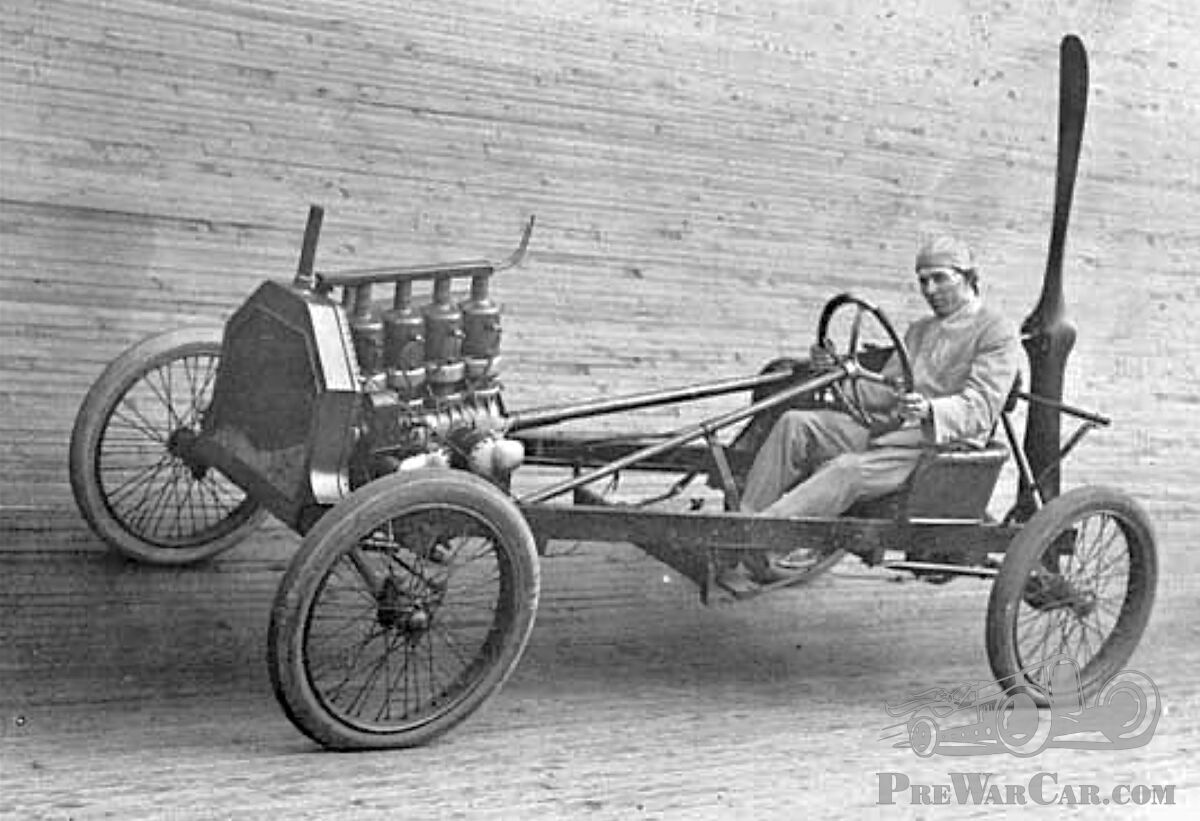
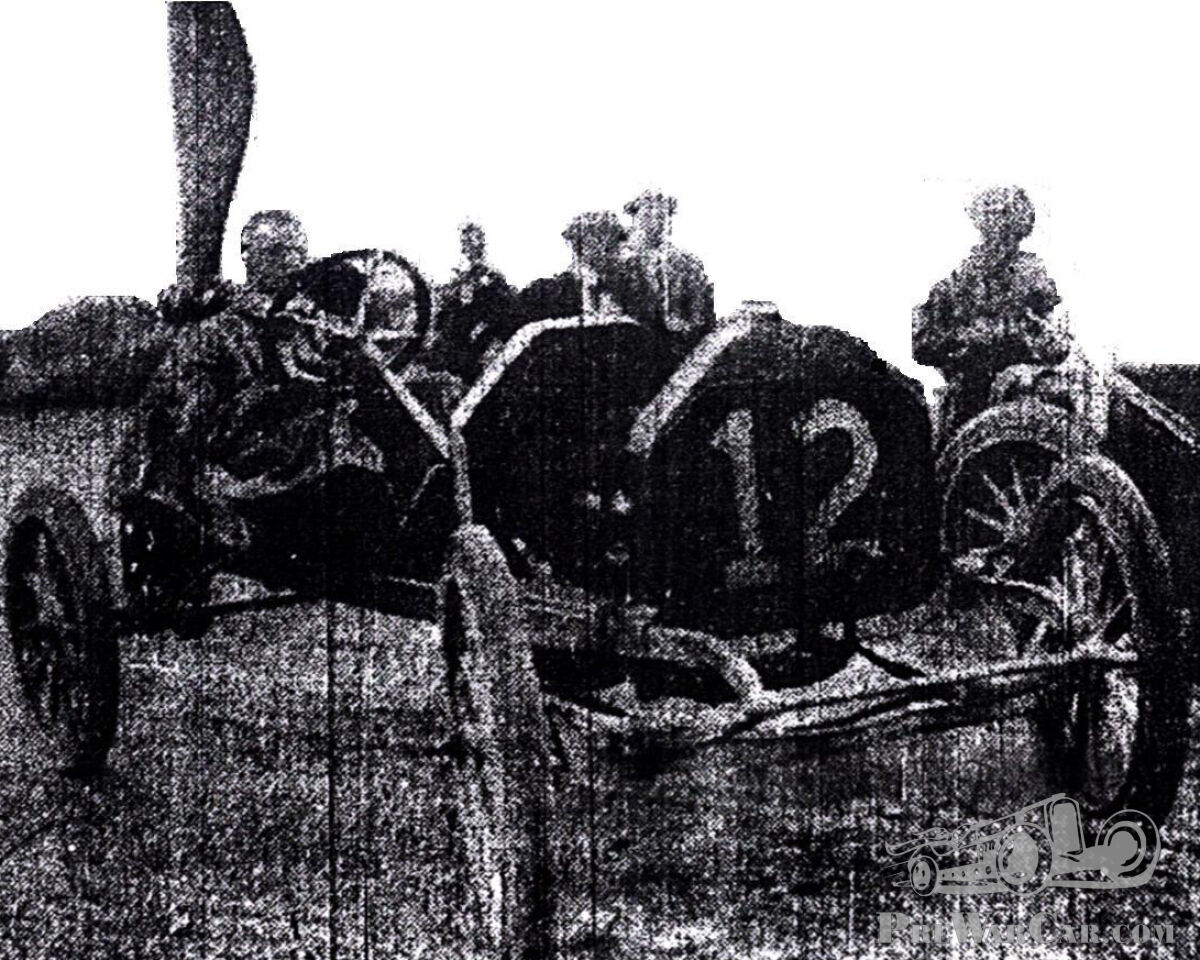
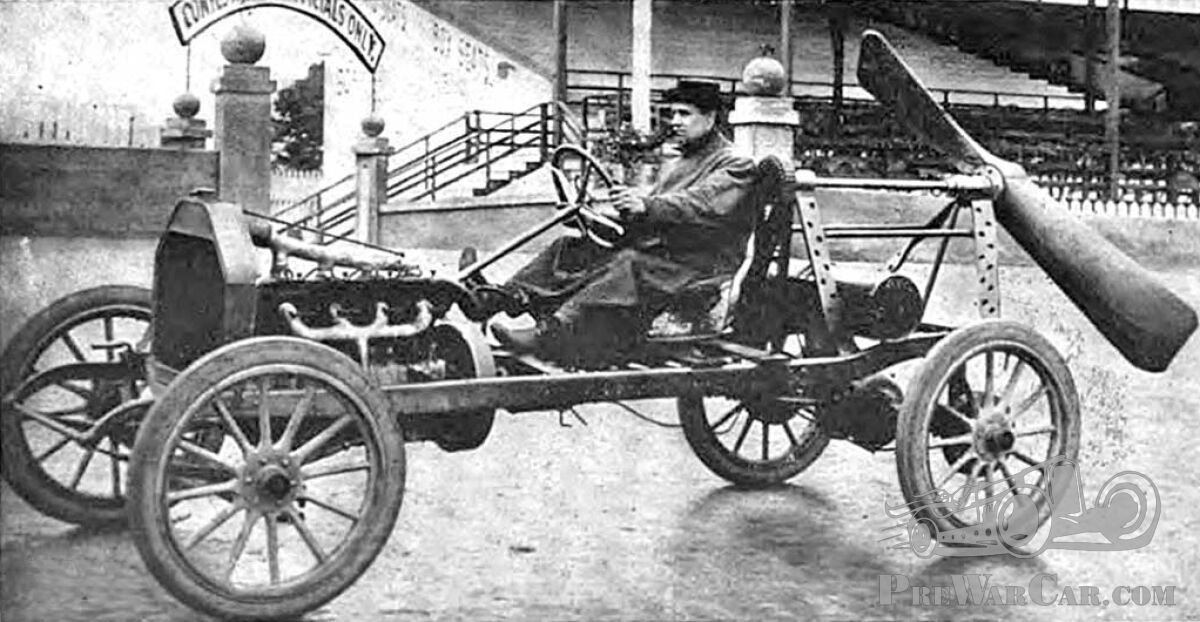


One can't very well imagine that these propeller-driven contraptions would pass any inspection in today's health and safety-led culture, but back in the 1910s, when we expect these photographs were taken, things weren't quite so strict. Such machines would have been a dream come true for old Terry-Thomas. "I say, Courtney..."
What exactly are we beholding here? You may well have come across the propeller-driven Hélica by French engineer Marcel Leyat, one of which was restored in recent times and has since been attracting a lot of attention from visitors to motoring festivals. That, however, has its propeller mounted at the front, and it was encased within a cage to prevent it shredding everything which came too close. This one is mounted at the back with no protection whatsoever. "Courtney, be a good man and find out how to get that thing started, would you..."
The banked wooden track in the first photograph may indicate that car running on it was intended for record-breaking, but we haven’t been able to find any further information about it at all. The closest we could get was a vehicle named the Overland Wind Wagon (pictures two and three), which was made by the Overland Automobile Company and supposedly demonstrated at Indianapolis in June, 1910, at the Indianapolis Motor Speedway Aviation Show. Its eight-foot wooden propeller gave it a 53mph top speed.
That, however, is clearly a different car. Are we able to determine the base vehicle of our main monster with its big four-cylinder engine?
Words: Jeroen Booij
Publiziert:
Mittwoch Juli 24th, 2024
Facebook
LinkedIn
Twitter
WhatsApp
Email
Copy
Kommentare
Alexander Stolpmann
28 Juli 2024, 16:19
Peter Maguire
27 Juli 2024, 17:32
A certain amout of information can be gleaned from the photograph. Firstly, it appears that the vehicle is sitting on a banked board track. This probably places it somewhere in the U.S.A. Then, there are indications just visible behind the front axle of a tie rod and a drag link to the 'offside' of the axle. The engine is very obviously a water-cooled four-cylinder and, from the ribbed (lightweight?) crankcase, possibly for aeronautical use! Post-Great War, perhaps?
The drive from the engine appears to be connected directly to the propeller. No brakes seem to be fitted! Also, more interestingly, I cannot see a petrol tank, or any container to provide fuel for the engine.
So, might this be something that was dreamt up as a propeller-powered racing car (for banked board circuit racing) and never completed? It does not look complete to me and I suspect that this was part of a publicity photoshoot, in order to arouse interest and obtain finance to finish the project. Any other ideas, anyone?
Weiter lesen
The drive from the engine appears to be connected directly to the propeller. No brakes seem to be fitted! Also, more interestingly, I cannot see a petrol tank, or any container to provide fuel for the engine.
So, might this be something that was dreamt up as a propeller-powered racing car (for banked board circuit racing) and never completed? It does not look complete to me and I suspect that this was part of a publicity photoshoot, in order to arouse interest and obtain finance to finish the project. Any other ideas, anyone?
Alexander Schallenberg
25 Juli 2024, 18:37
I can see a differential housing but no brakes, so it could be only for testing propellers, etc.
Weiter lesen


Mr. Roger Harrison
24 Juli 2024, 22:38
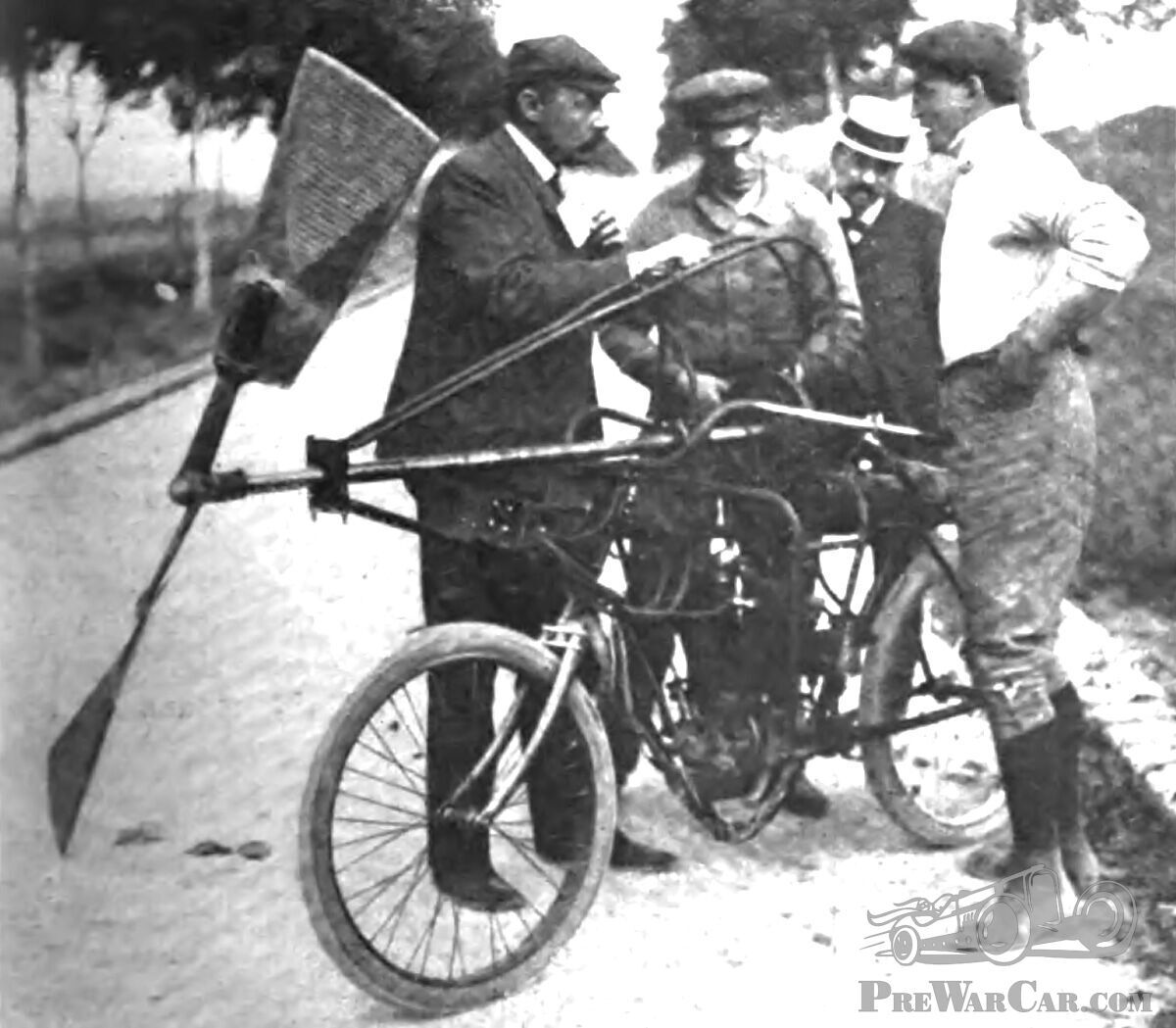
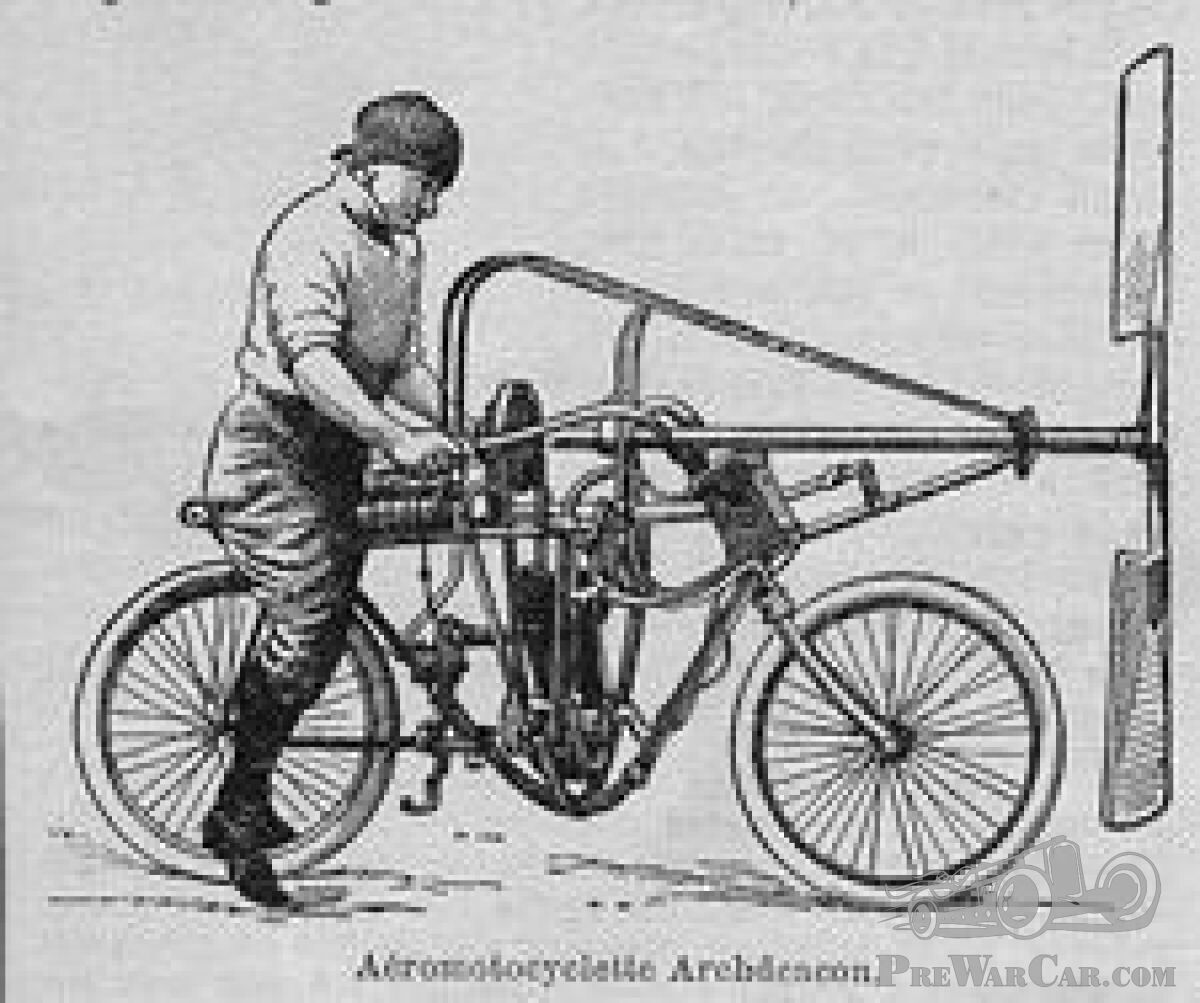
The car was probably built as a device for testing various propellers, rather like the Archdeacon cycle ridden by Anzani to test propellers for Blériot.
Weiter lesen
David Liepelt
24 Juli 2024, 05:38
With the first one, the shape of the crankcase and jugs suggests to me a four-cylinder, two-stroke engine, such as American Simplex, Elmore or Atlas, but the axles and wheels are much lighter than most things on this side of the pond.
Weiter lesen
The mysterious car in the first picture stands on a board track. Racing motorcycles and cars on wooden board tracks was common in the 1910s and 1920s in the Unites States. The first board track for motor racing was the Los Angeles Motordrome, built in 1910.
The chassis is rather wide and comparatively strong, compared to the Ford Model T and similar cars of that era. Next to the driver a drum shaped object could be the tank. The car seems to have a single brake drum attached to the differential. Spoked wheels were quite common on runabout cars of the early 20th century and probably readily available. The front axle appears to be unsprung, while the rear axle could have a transversely mounted semi-elliptical spring.
The engine is a mystery by itself. I go along with Peter that it could be an aero engine. My best guess is an early water-cooled vertical four-cylinder two-stroke engine built by the Roberts Motor Manufacturing Company of Sandusky, Ohio, USA, during 1911 – 1912. A later version could be possible, too, as Edmund Willson Roberts (1866 – 1947) designed a total of 131 engines in his lifetime. Sadly I have not found an image to prove my idea.