Das weltweite Magazin und der Marktplatz für Oldtimer-Enthusiasten – von Enthusiasten.
Das weltweite Magazin und der Marktplatz für Oldtimer-Enthusiasten – von Enthusiasten.


Filter
Auswahl treffen
- Autos
-
Marke >>
-
Baujahr >>
-
-
Kategorie >>
-
Länder >>
- Motorräder
-
Standort >>
- Teile
-
Automarke >>
-
Hersteller >>
-
Kategorie >>
- Fahrräder
-
Baujahr >>
-
Länder



The motoring geisha, a symbol of a modernising Japan
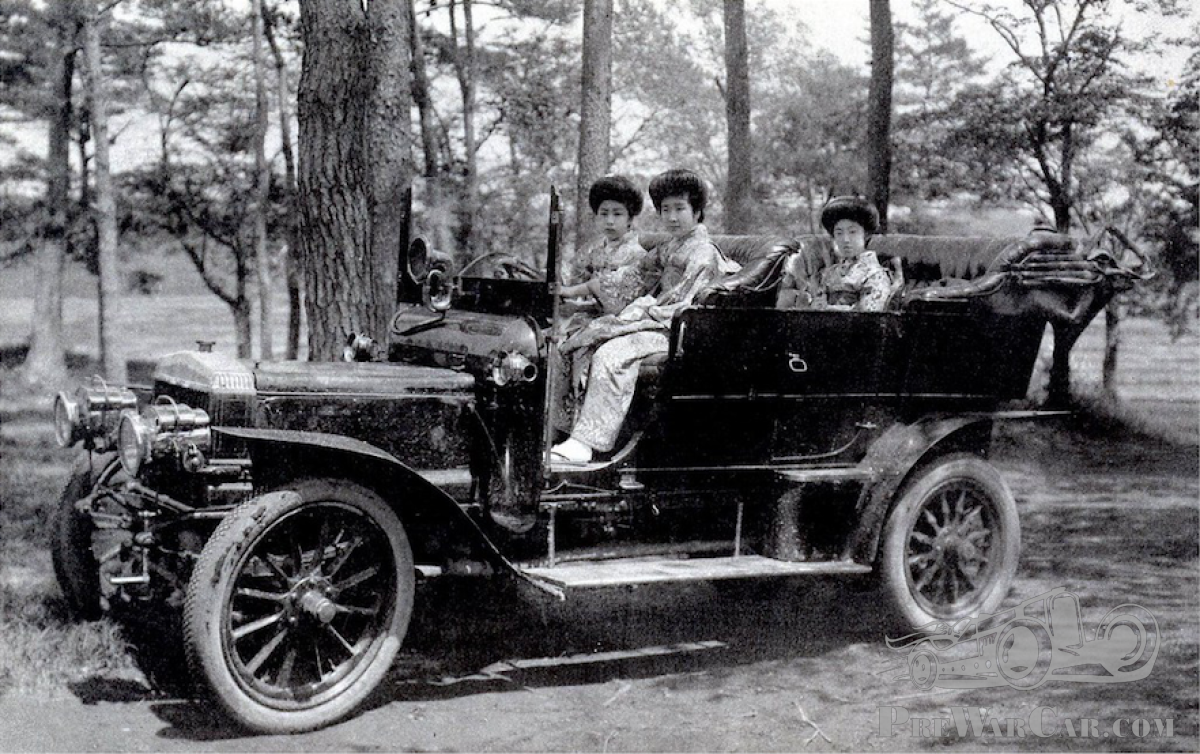

Japanese cars are everywhere today, but Edwardian cars made in the land of the rising sun are as rare as they come. Takuri and Kunisue seem to have been the country’s only manufacturers circa 1910, followed by DAT in 1914, which would later become Datsun, and Mitsubishi in 1917.
This photograph is believed to have been taken in Japan and date back to 1910. It shows ‘Three Hangyoku (young Geisha) in an early touring car’. From the pictures we could find of Takuri and Kunisue models, we think it's safe to conclude that this has to be a foreign motor.
Last year we published a picture in the same vein, showing ‘the Geishas in the Colibri’ with similarly dressed girls in a German-built Colibri car. Reader David Grimstead added in a comment, “The Colibri design was well suited to Japanese conditions according to comments made in January, 1910, when Mr. M. Spencer Smith of the Rising Sun Petroleum Company of Yokohama was photographed with his De Dion loaded with a dozen Geishas in Northern Japan: 'The importation of cars is rapidly increasing in Japan; the types suitable are of medium power and short wheel-base, the unsatisfactory state of the roads and the denseness of the population rendering high powered engines practically useless.'"
We found the picture mentioned, showing Spencer Smith’s 1908 De Dion-Bouton 12/14hp, which was praised by its owner: “I have driven it for some thousands of miles over the country districts of Japan. And I consider that for its power it is the most wonderful car I have ever been in. I have never yet been stopped on the road except for one or two trivial adjustments in spite of the fact that I have driven it over roads which in England would not be considered possible for the passage of a donkey cart.”
David Grimstead continued in his comment at the time, “A Japanese automobile press was active by 1912 when a photograph of two more Geishas driving a large limousine appeared in European papers. Geishas in cars must have been tempting symbols of a modernising Japan.”
Well, here’s another example we reckon. So over to you again, dear reader: what’s that big touring car?
Words: Jeroen Booij; picture: archive
Publiziert:
Freitag Dezember 15th, 2023
Facebook
LinkedIn
Twitter
WhatsApp
Email
Copy
Kommentare
Ariejan Bos
17 Dezember 2023, 22:01
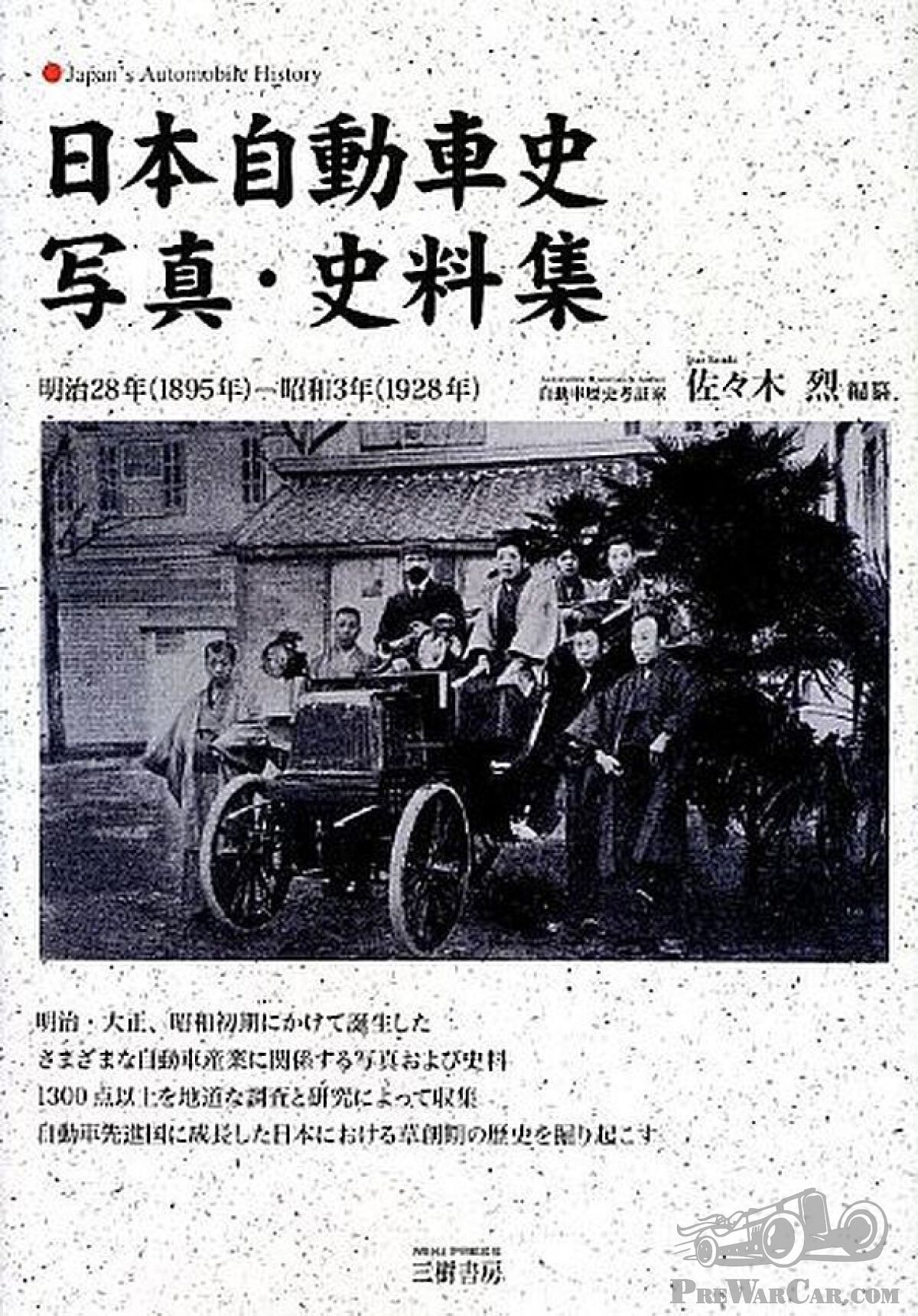
There is a book written by Isao Sasaki on the early car history in Japan. I have it on my shelves and it shows that there were no secrets to the Japanese people about cars. Many makes from both Europe and America were available there. The book contains numerous photos and several of the cars are still an enigma to me. The biggest problem is that most of the text is in Japanese. Also there is a curious mix of foreign and Japanese photos, images and adverts. But it shows that in contrast to China, Japan was a modern country, embracing this new industry. I believe the main problem in developing their own makes in the early days was that all activity took place in very small workshops making large scale production almost impossible. The book can still be found on the internet by looking for the author. I've uploaded an image of the cover.
Weiter lesen
Michael Barnes
17 Dezember 2023, 08:48
I too believe it to be a veteran Daimler. I have a booklet mentioning the Japanese Royal Family purchased Daimlers. There's no mistaking fluted the grille.
Weiter lesen
Erik
17 Dezember 2023, 01:58
There was an importer of European and particularly British cars in Kanagowa, near Tokyo. I would like to learn more about this period of motoring in Japan, however information is scarce.
Weiter lesen
David Liepelt
15 Dezember 2023, 16:16
Yes, the Daimler radiator has a bolt-on top aluminum tank. The blurriness of the photo doesn't show ribs on the tank running for and aft. The bonnet has removable sides and a top piece that lifts opens like a modern bonnet.
Weiter lesen