Das weltweite Magazin und der Marktplatz für Oldtimer-Enthusiasten – von Enthusiasten.
Das weltweite Magazin und der Marktplatz für Oldtimer-Enthusiasten – von Enthusiasten.


Filter
Auswahl treffen
- Autos
-
Marke >>
-
Baujahr >>
-
-
Kategorie >>
-
Länder >>
- Motorräder
-
Standort >>
- Teile
-
Automarke >>
-
Hersteller >>
-
Kategorie >>
- Fahrräder
-
Baujahr >>
-
Länder



How a De Dion gave Roald Dahl a bloody nose
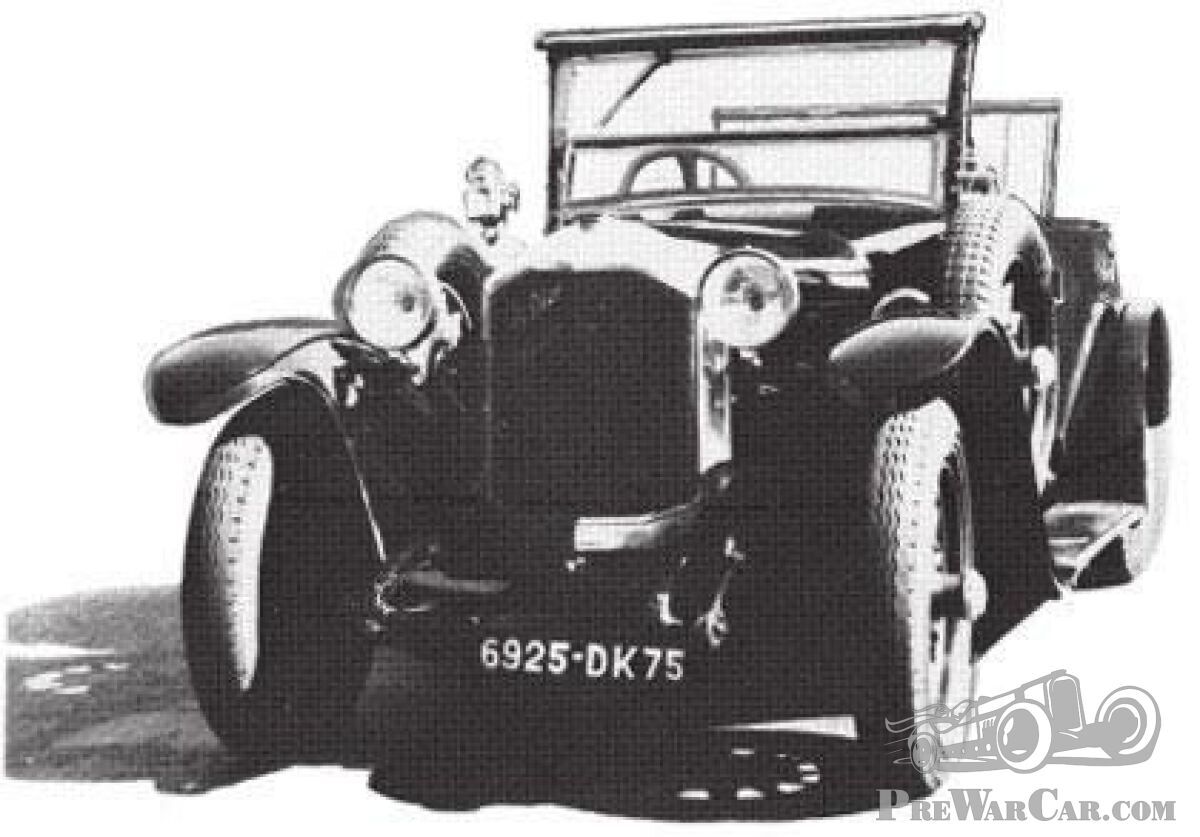

What would Roald Dahl have said about the violation of his writings by ‘sensitivity readers’ to make them more suitable for these times? Some rather appalling curse words come to mind, not suitable for publishing here, as do phrases about turning in graves.
Anyway, it’s reminded us of that great story of the 1920s De Dion-Bouton again, driven by the ‘ancient half-sister’ in Dahl’s autobiographical Boy - Tales of Childhood. If you don’t know it, go and do yourself a great favour and buy the book straight away. You may just about still be able to find the uncensored version.
The story tells the tale of a young Dahl (nine years old at the time) who, on Christmas leave from boarding school, is taken out with his mother, three sisters, one half-sister and one half-brother on a tour in the family’s first car. From the book: ‘This new motor-car was an enormous long black French automobile called a De Dion-Bouton which had a canvas roof that folded back. The driver was to be that twelve-years-older-than-me half-sister (now aged twenty-one) who had recently had her appendix removed. She had received two full half-hour lessons in driving from the man who delivered the car, and in that enlightened year of 1925 this was considered quite sufficient. Nobody had to take a driving-test. You were your own judge of competence, and as soon as you felt you were ready to go, off you jolly well went.”
Crunching gears to 60mph
Although she hardly knows how to get the thing going, the half-sister is provoked to spur on the big car on Welsh country roads by all her minor family members. From the book: ‘“How fast will it go?” we cried out. “Will it do fifty miles an hour?” “It'll do sixty!” the ancient sister answered. Her tone was so confident and cocky it should have scared us to death, but it didn't. “Oh, let's make it do sixty!” we shouted. “Will you promise to take us up to sixty?” “We shall probably go faster than that,” the sister announced, pulling on her driving-gloves and tying a scarf over her head in the approved driving-fashion of the period.’
Well, you have to read it for yourself but we’ll only tell you the tour results in a nasty accident in which little Roald’s nose was severed. But how about the vehicle itself? Dahl only adds: “Our machine possessed one very special feature which I don't think you see on the cars of today. This was a second windscreen in the back solely to keep the breeze off the faces of the back-seat passengers when the hood was down. It had a long centre section and two little end sections that could be angled backwards to deflect the wind.”
So a dual-windscreen tourer or torpedo, and one that was severely put to the test by the half-sister, too: ‘The noise of gear-wheels grinding against each other was terrible. It sounded as though a lawn-mower was being driven over hard rocks.’ There is a picture of the De Dion in the book, clearly registered 6925-DK75, a Paris plate. Bill Boddy wrote in Motor Sport about it: ‘That seems an odd one for a car presumably taxed in Wales… It is not that of the 1923 Model-IW De Dion Bouton owned by H. O. Duncan, author of the now much sought-after book ‘World On Wheels’, as this tourer had the registration number 880-BK 30.'
Is anyone here able to shed more light on the situation?
Words: Jeroen Booij; picture: DocPlayer.net
Publiziert:
Donnerstag März 9th, 2023
Facebook
LinkedIn
Twitter
WhatsApp
Email
Copy
Kommentare
David Grimstead
06 Mai 2023, 22:13
The Dahl’s, to a 9-year-old’s eyes’, “enormous, long” motor-car big enough to squeeze in a family of seven, still sounds much bigger than this one appears, like a 15/43 h.p. all-weather 5/7-seater, which could be bought new in 1923 with “a three-section Auster rear screen, spring gaiters, wire wheels and a luggage rack” for £838 - over £40,000 today. As the car’s rear brakes locked, spinning it, likely a pre-1925 model from when front brakes and much bigger hubcaps were fitted and a single spare wheel usually mounted at the rear.
Dahl’s description of the rear screen having adjustable end sections isn’t quite what this car appears to have and where is its folded-down hood and the bulb-horn he said his sister kept honking? It appears to have coach-lamp side-lights when torpedo style was a 1925 UK fitting; also, the headlights are higher than on advertised UK models. Shadows indicate this car has artillery-style wheels when early 1920s English-advertised cars mostly had wires or discs. Some features you’d think might stick in the memory.
Most De Dions sold in the UK at this time were bodied “H.H.H.” pattern under control of H. W. Hillman at De Dion’s Woodside Works in North Finchley (H.H.H. comprised Messrs. Hillman, H. O. Duncan and H. H. Rodwell). They made a 12/28 h.p. 4/5-seat torpedo in 1925; a poor-quality advert photo shows one fitted with a four-section rear screen. Larger 15-18 h.p.- and 22/65 h.p.-engined chassis were also fitted with the same H.H.H. generic, but bespoke-appointed, bodies. Some complete cars of unknown style and quantity were also imported new from France.
From 1924, all models were described as “embodying four-speed gear-boxes, with a right-hand gearchange… Ease of gear changing marks all these models, and there is no doubt that in this respect the De Dion sets a lead that many other makers would do well to follow.” Dahl’s half-sister made a lie of this sales pitch but he did write that she had to be reminded to use the clutch when trying to engage a gear…
Re Dahl’s severed nose, he wrote that in 1925 “there was no Triplex then”, which is wrong by over a dozen years, unless he really meant “toughened glass”. Discovered and patented in 1909 in France by artistic chemist Eduard Benedictus, safety glass laminated with celluloid/xylonite was already in limited use there by 1912 when Reginald Delpech, reportedly recovering from a shattered plate glass taxi windscreen injury, bought a British manufacturing licence. His new Triplex company’s prospectus described manufacture “as so simple that female labour could largely be employed” and although initially there were not enough shareholders, the company was making laminated Triplex at Hythe Road, Willesden by mid-1913.
With evidentially unjustified foresight, Triplex’s luridly-named chairman, General Sir Bindon Blood, declared at a 1913 introductory luncheon: “No matter how you shatter it […] no pieces like those which cause motor accidents ever fly from the glass, so that you can encounter an accident without fear of having your nose or ears cut away.” Celebrity endorsement soon followed when London-based dancer Madame Pavlova had it fitted to her saloon car. Ironically, according to a court report shortly after the factory began production, a couple of youths were fined ten-shillings apiece by magistrates for throwing stones through its windows – one supposes just testing...
Before WWI, Triplex was recommended for all transport vehicle windows and architectural use, shop display-cases, etc. Weather equipment maker G, Beaton and Sons Ltd. even had an accessory Triplex rear screen on sale in 1914 but then, perforce, non-shattering vehicle, aircraft and ship’s-bridge screens took priority. Auster Ltd. supplied Triplex windscreens for military vehicles during WWI, publishing photos of a shrapnel-starred but still whole Crossley staff-car’s screen to record their benefit.
Wider usage for vehicle windscreens began as soon as post-war car manufacture commenced, encouraged by Delpech’s extensive advertising campaigns – twelve cars had them as standard at the 1919 London Motor Show, where both Auster and Beatonsons displayed Triplex front and extending rear screens. Beatonsons’ rear design was advertised as tough enough to fold down for use as a picnic table. Some De Dion Bouton cars sold in the UK had it by at least 1923; hence, quite remiss of whoever ordered Dahl’s car not to have had Triplex screens fitted – unless they had?
Although Triplex advertised that glass injuries due to ordinary glass were the most dangerous outcome of collisions and insurance with it was lower, fitting laminated glass was not universal until 1929. That was also the year Triplex was first sued for misrepresentation after a beautician lost the end of her nose and soon after another woman suffered severe facial cuts, from “shatterproof” screens. Investigations revealed that some Triplex of the time could, if the sandwiched layer of celluloid had been sun-embrittled, cease to retain shards when broken, even helping sharp edges stick out. Even so, the fitting of safety glass windscreens became compulsory for all British cars in January 1931. (Not relevant, but by then the development of toughened single-sheet granulating safety-glass by Triplex/Pilkington Brothers and others was nearing fruition, allowing it to replace laminated from 1934.)
Ergo, unless the Dahl’s “new” car was really quite old in 1925 it could and should have been fitted with some Triplex laminated glass.