Das weltweite Magazin und der Marktplatz für Oldtimer-Enthusiasten – von Enthusiasten.
Das weltweite Magazin und der Marktplatz für Oldtimer-Enthusiasten – von Enthusiasten.


Filter
Auswahl treffen
- Autos
-
Marke >>
-
Baujahr >>
-
-
Kategorie >>
-
Länder >>
- Motorräder
- Teile
-
Automarke >>
-
Hersteller >>
-
Kategorie >>
- Fahrräder
-
Baujahr >>
-
Länder



Hanomag’s People’s Car
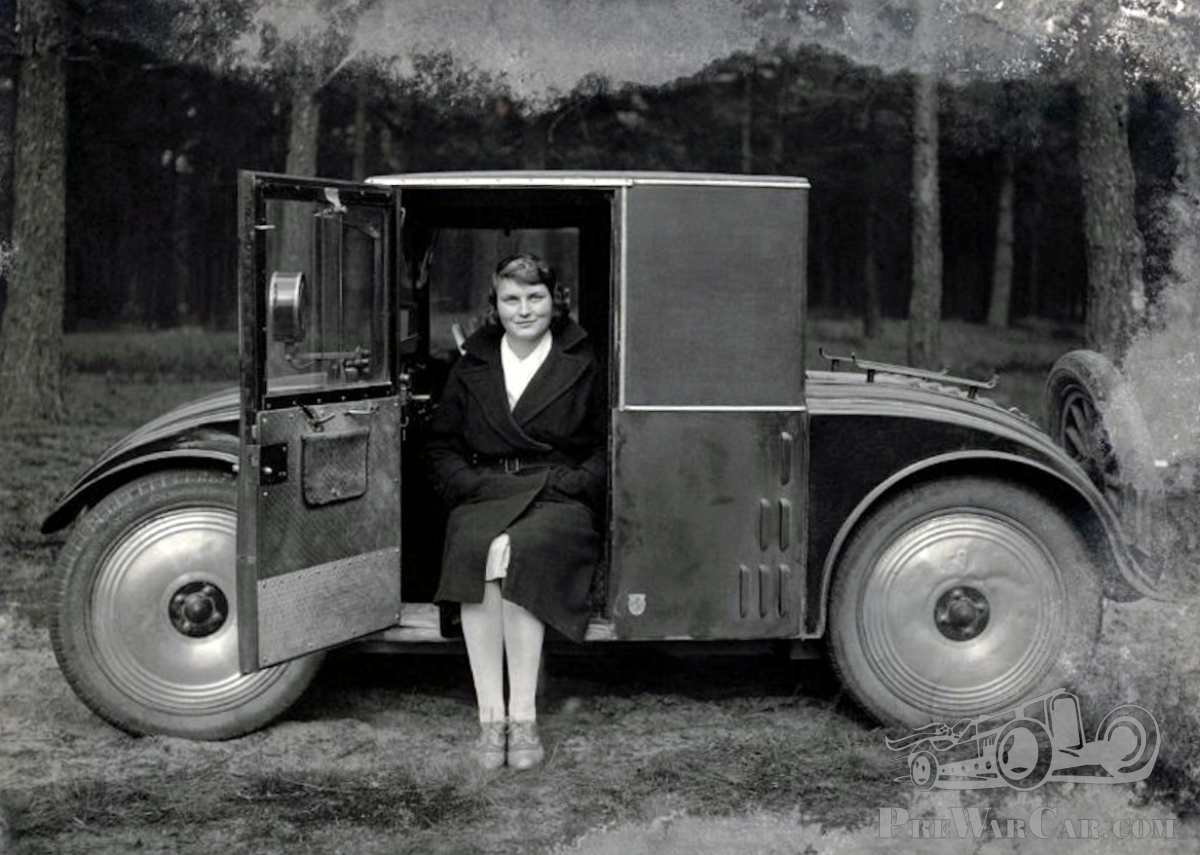

We wrote about the Porsche-designed and Zündapp-backed project Type 12 recently as a 'People’s Car' or 'Volkswagen' avant la lettre. But we had forgotten about that other German vehicle intended for a mass middle-class market: the Hanomag 2/10 PS. While Porsche had just started work on his Type 12, the Hanomag had already been in production since 1924. And look at one here, presented by a lovely Friday Lady.
Hanomag (Hannoversche Maschinenbau) was a manufacturer of tractors, steam engines, lorries and forest machinery that decided to tackle the lucrative car market with a small vehicle in the 1920s. A lot of effort was put into making the car as light and economical as possible and Hanomag came up with some clever ideas. Separate wings with running boards were left out to reduce the width of the car and save on weight. The small 10HP 503cc single-cylinder engine’s position at the back was thought up to provide as much legroom as possible, while one headlight was deemed to be enough. Styling-wise it was pure simplicity, with front and back similarly shaped.
Still, it wasn’t on its own in the German motoring market of the 1920s. BMW had just teamed up with Austin of England to manufacture their Dixi-variant of the Seven, while Opel had just launched its cheap 4HP model. These more conventional cars weren’t only cheaper; they were soon to prove to be far more popular, too. By 1928 Hanomag ceased production of the characteristic 2/10 PS model – 15,775 are said to have been built. Opel made almost 120,000 of their 4PS models while BMW sold over 28,000 Dixis.
Words by Jeroen Booij. Picture source unknown.
Originally published: Friday August 13th, 2021
Publiziert:
Mittwoch Dezember 15th, 2021
Facebook
LinkedIn
Twitter
WhatsApp
Email
Copy
Kommentare
Mike Costigan
18 Dezember 2021, 17:47
BMW had not 'just teamed up with Austin'; the first Austin-licenced Dixis were built in December 1927, and the Hanomag had gone long before BMW took over Dixi and the Austin licence.
Weiter lesen
Charles Walmsley
16 Dezember 2021, 21:59
There was one close to my home in the 90's. Belive it was exported.
Charles Walmsley
Buenos Aires
Argentina
Weiter lesen
Charles Walmsley
Buenos Aires
Argentina
Leo van Stirum
16 Dezember 2021, 17:56
A popular german saying about these Kommisbrot cars in those days was:
"Ein bischen blech, ein bischen lack, und fertig ist der Hanomag !"
Weiter lesen
"Ein bischen blech, ein bischen lack, und fertig ist der Hanomag !"
Rainer Schmid
16 August 2021, 18:32
Three Hanomag 2/10 were the first racing cars (with a very reduced body!) which crossed the starting line at the Nürburgringe's opening race in 1927.
They were very successful in the class up to 750ccm, with 1st, 2nd and 3rd place
(but it should be mentioned that they were the only starters in this class!)
The pictures from 1927 and 90 years later in 2017 at the "90 years Nürburgring" anniversary!
The fun was unbelievable, letting the car fly over the Nordschleife with full speed ...
Weiter lesen
They were very successful in the class up to 750ccm, with 1st, 2nd and 3rd place
(but it should be mentioned that they were the only starters in this class!)
The pictures from 1927 and 90 years later in 2017 at the "90 years Nürburgring" anniversary!
The fun was unbelievable, letting the car fly over the Nordschleife with full speed ...
Michael Müller
15 Dezember 2021, 17:13
No, the Hanomags had not been the first cars crossed the starting line, these had been the racing cars of group II (2000-5000 cc), followed by group IIIa (1500-2000 cc), IIIb (1100-1500 cc), IV (750-1100 cc), and V (up to 750 cc, the Hanomag group. Then came the sports cars, first group I (over 5000 cc), II (2000-5000 cc), and III (up to 2000 cc). The single groups started in intervals of one minute. So the Hanomags had been the last group of the race cars, followed by the first group of the sports cars. Unable to post photo here showing the full grid...
Weiter lesen
Michael Schlenger
14 August 2021, 01:07
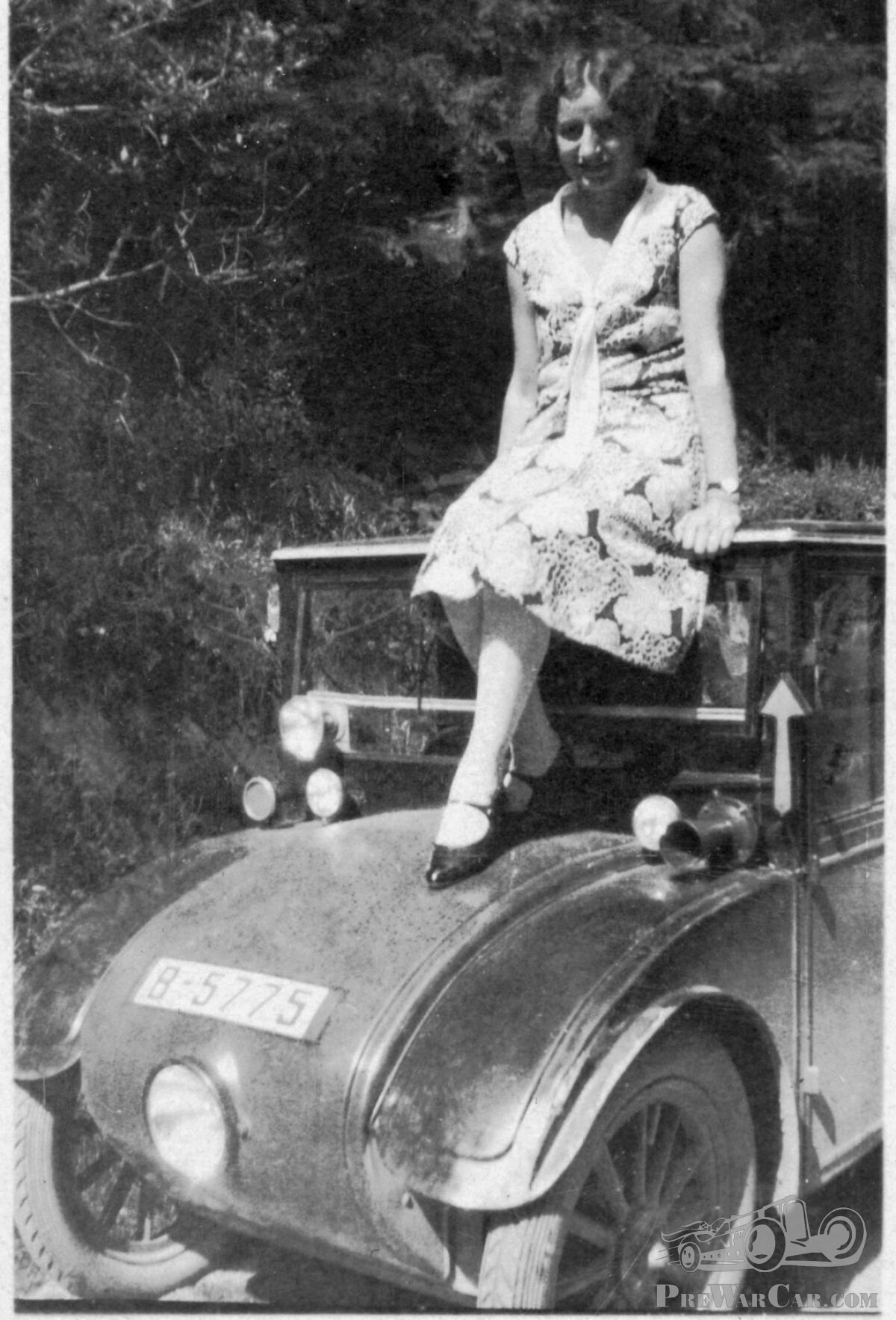
Another lady illustrating that the little Hanomag wasn't a proper car, but an uncoventional toy (photo taken in 1929 from my collection).
Weiter lesen
Rudy
14 August 2021, 00:08
One of the only 13 worldwide remaining Opel 4/12 models of the first edition.
Weiter lesen
Larry Lewis
14 August 2021, 17:13
Wasn't that Opel a copy of an early Citroen?
Weiter lesen
Larry Lewis
13 August 2021, 17:00
I saw a Hanomag at Technoclassica Essen a few years ago. I've read that they originally had solid-rubber tyres and no differential. Must have been fun turning a corner on a wet cobblestone street! Also, due to their shape, they were called the "Komissbrot," or "army loaf" and how this is an improvement on the tram, I do not understand.
Weiter lesen
Michael Schlenger
14 August 2021, 01:03
Solid rubber tyres are incorrect, but lack of differential is right. Several cars from the 1920s didn't have one, since their track width was rather narrow.
Weiter lesen
Maciek Peda
13 August 2021, 22:04
No differential - yes
Solid rubber tyres - not. All Kommisbrot cars have pneumatic tyres.
But corners are tricky due lack of differential - my personal experience :)
Rear track is narrower than front for help turning a corner.
Weiter lesen
Solid rubber tyres - not. All Kommisbrot cars have pneumatic tyres.
But corners are tricky due lack of differential - my personal experience :)
Rear track is narrower than front for help turning a corner.
Larry Lewis
14 August 2021, 17:12
Thanks, but I did hear or read somewhere that they had solid rubber tyres. I guess I was wrong.
Weiter lesen
Maciek Peda
13 August 2021, 16:28
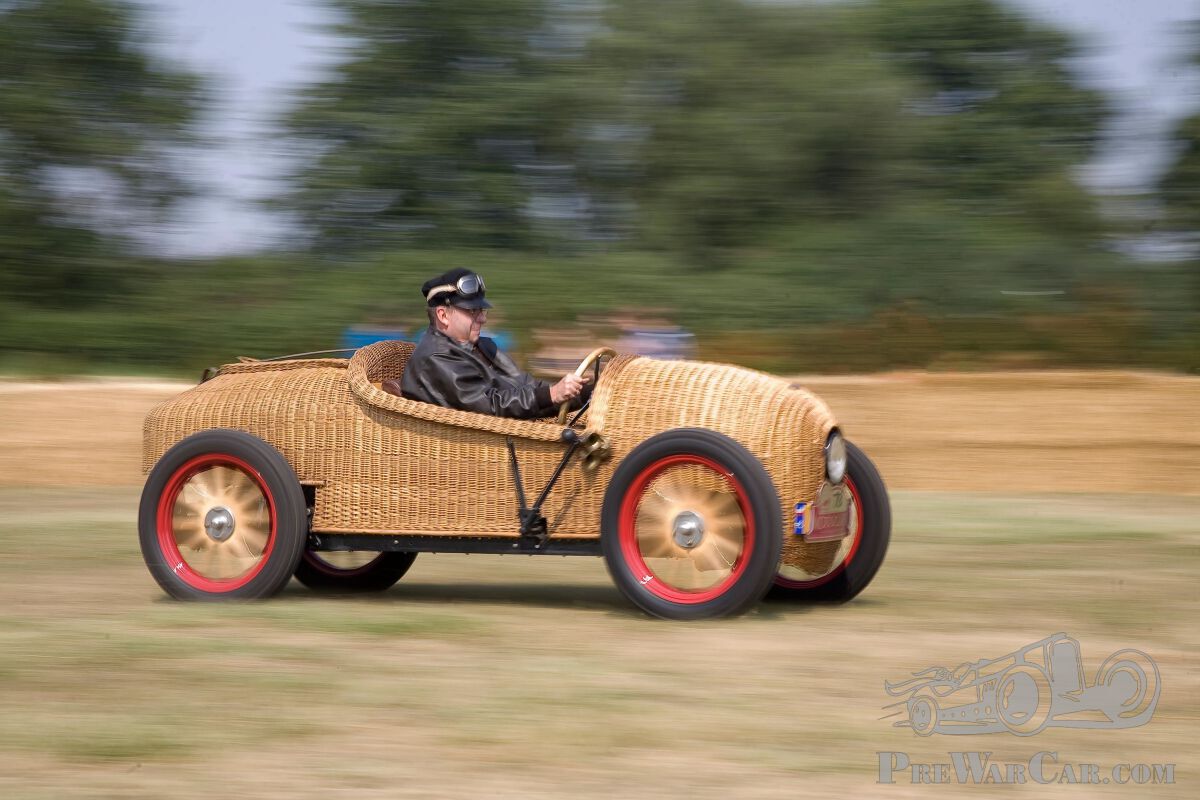
On the subject of the popular Hanomag - a competition one :) with me behind the steering wheel :) We reached a escape velocity :)
Weiter lesen
Sujit Gupta
13 August 2021, 11:42
Wheels look huge on these Kommissbrots. Can anyone tell me the size.
Weiter lesen
Michael Schlenger
14 August 2021, 00:59
The wheels look so huge, since the car was so small. According to my literature, wheel diameter was 27 inches, slightly smaller than on a coventional bicycle.
Weiter lesen
Michael Schlenger
13 August 2021, 00:45
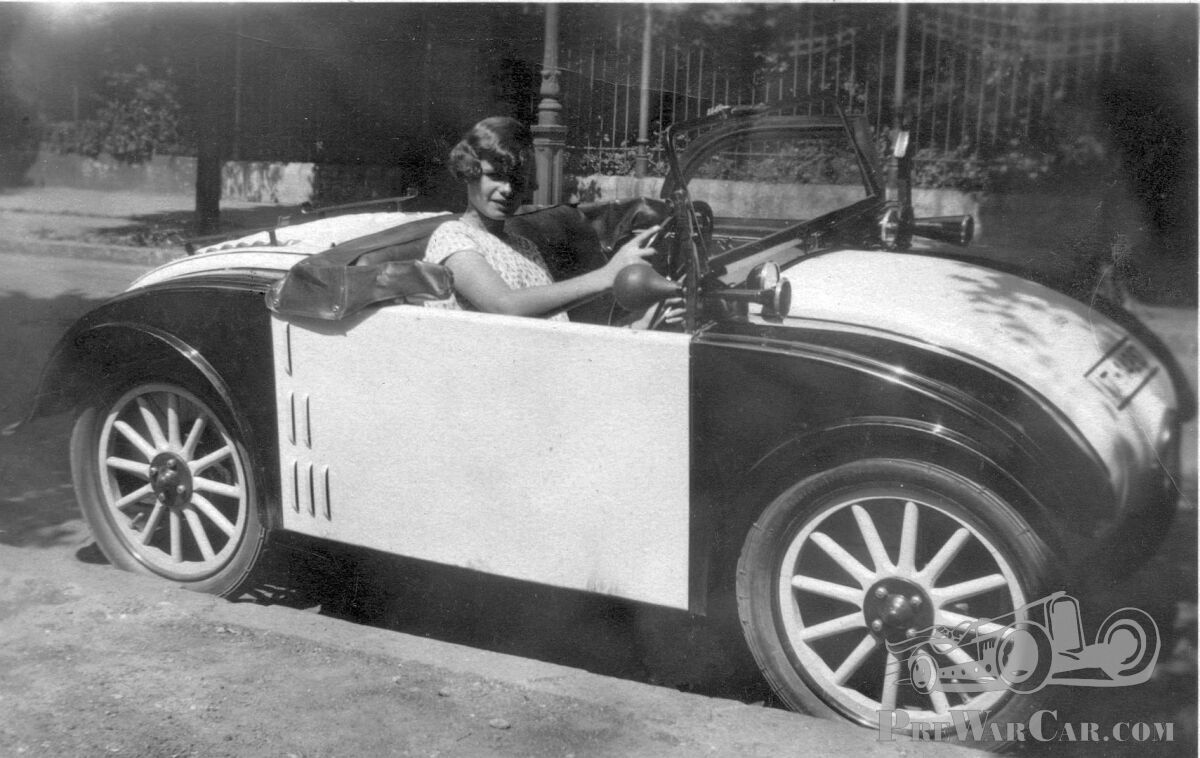
I don't know who came up with the odd idea that the two-seater Hanomag 2/10 hp was intended to become a "people's car" in Germany - which would have implied the production of hundreds of thousands of cars for a people of 63 million in 1925 (and probably a trailer for the children...). The machinery company Hanomag would not nearly have been able for the mass production of cars (which actually remained just a sideline until 1945). What's more, despite some truely remarkable features like the pontoon-style body, the Hanomag 2/10 hp was hardly a fully-fledged motorcar compared to established designs like the Citroen 5CV from 1922, for example. It certainly appealed to quite a number of buyers seeking an unusual means of motorized transport, but flaws like the lack of a starter motor and the noisy single-cylinder engine meant that it would remain a niche design. The importance of the Hanomag 2/10 hp is based on its bold "out of the box-thinking" (which however led to a dead-end like so many Teutonic "Sonderwege"). Among lovers of German prewar-cars the curious little Hanomag still has lots of faithful "followers". Attached is a photo from my collection showing another lovely Friday lady in her Hanomag 2/10 hp "cabriolet" in 1928.
Weiter lesen