Das weltweite Magazin und der Marktplatz für Oldtimer-Enthusiasten – von Enthusiasten.
Das weltweite Magazin und der Marktplatz für Oldtimer-Enthusiasten – von Enthusiasten.


Filter
Auswahl treffen
- Autos
-
Marke >>
-
Kategorie >>
-
Länder >>
- Motorräder
- Teile
-
Automarke >>
-
Hersteller >>
-
Kategorie >>
- Fahrräder
-
Baujahr >>
-
Länder



Gobron-Brillié erneut: Rigollys 100-mph-Rennwagen
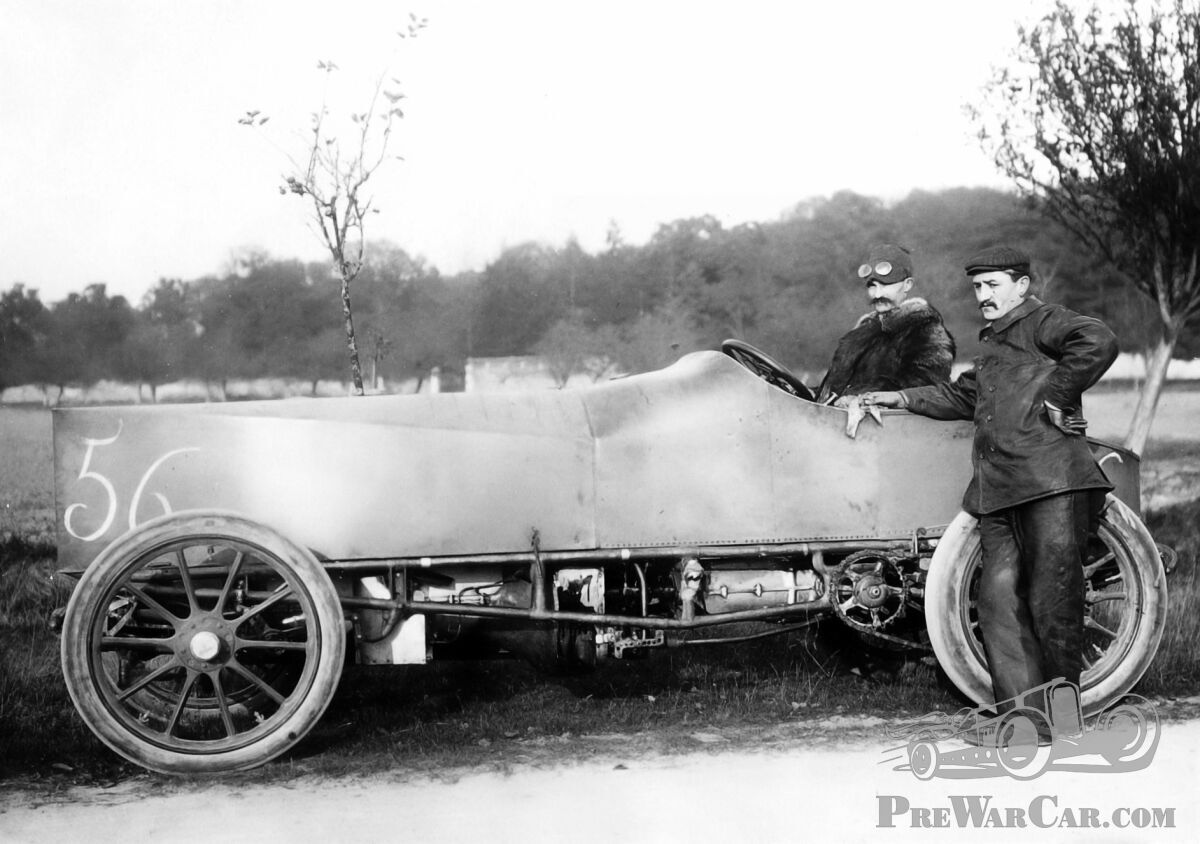

In den vergangenen Monaten haben wir Ihnen bereits mehrfach Geschichten über Gobron-Brillié präsentiert. Der erste Beitrag erschien im Mai, gefolgt von einem weiteren Artikel über die Rennwagen der Marke im Juni. Nachdem inzwischen ein weiterer Monat vergangen ist, möchten wir diesem außergewöhnlichen französischen Hersteller noch einmal einen eigenen Beitrag widmen.
Der hier gezeigte Wagen gilt als Louis Rigollys 100-PS-Gobron-Brillié beim Bergrennen Côte de Gaillon am 30. Oktober 1904. Angetrieben wurde er von dem bereits zuvor beschriebenen Gegenkolbenmotor und dürfte identisch mit jenem Fahrzeug sein, mit dem Rigolly am 21. Juli 1904 während der Ostend Automobile Week in Belgien Geschichte schrieb. Dort erreichte er über den fliegenden Kilometer eine bemerkenswerte Geschwindigkeit von 166,665 km/h und ging als erster Mensch in die Geschichte ein, der mit einem Automobil die Marke von 100 mph (160 km/h) überschritt.
Rigollys Gobron-Brillié soll mit einer besonders leichten Karosserie auf einem Rohrrahmen ausgestattet gewesen sein, doch erstaunlicherweise sind verlässliche Informationen über dieses Fahrzeug nur äußerst spärlich zu finden. Vielleicht weiß einer unserer Leser mehr? Immerhin konnten wir herausfinden, dass Rigollys Rennfahrerkarriere nur von kurzer Dauer war. Bereits 1906 endete sie, als sich Gobron-Brillié schrittweise aus dem internationalen Spitzenmotorsport zurückzog. Anschließend führte Rigolly ein zurückgezogenes Leben in Frankreich, überstand beide Weltkriege und starb schließlich 1958 im Alter von 82 Jahren.
Text: Jeroen Booij
Foto: Quelle unbekannt
Publiziert:
Montag August 10th, 2026
Facebook
LinkedIn
Twitter
WhatsApp
Email
Copy
Kommentare
Graham Rankin
10 August, 10:15
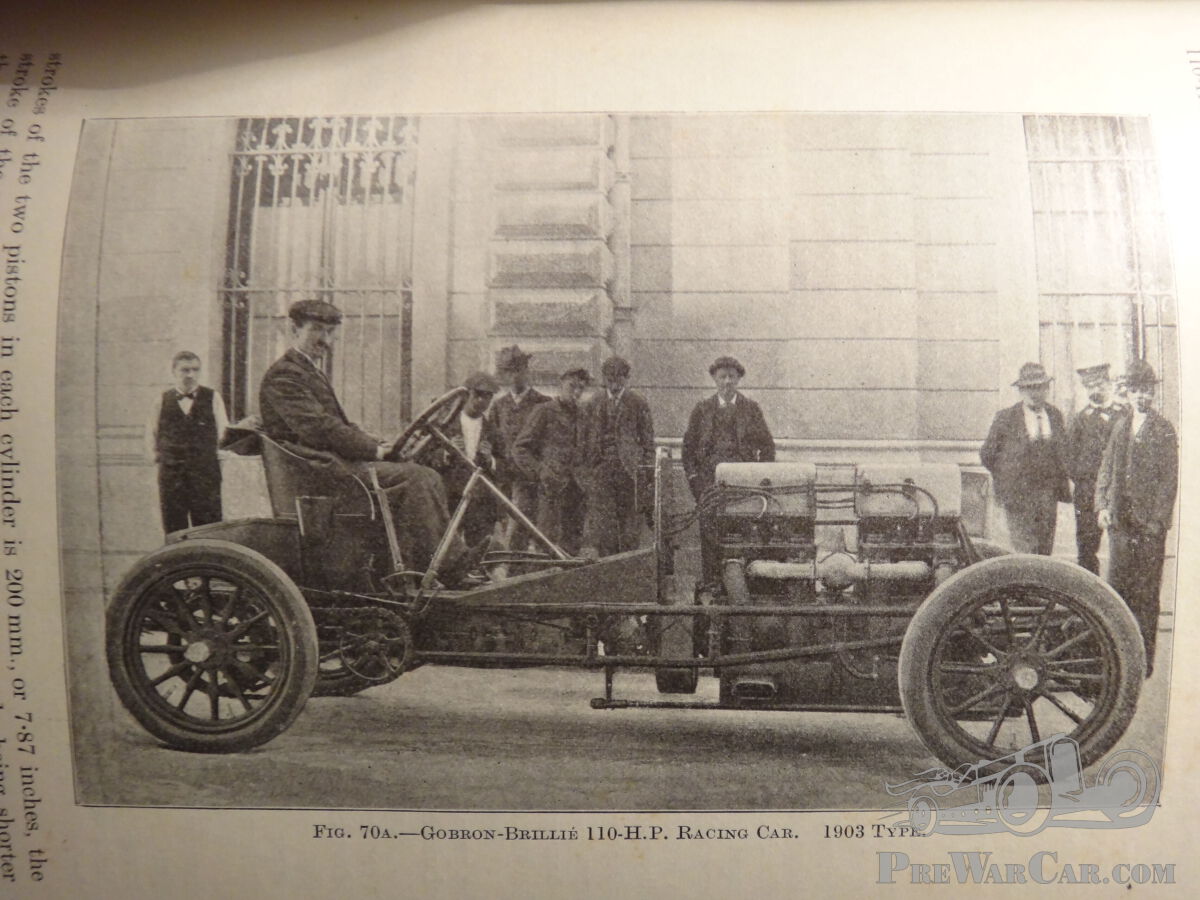
Here is another photo of a 110 HP race car from 1903 which may interest readers and which is extracted from the ever wonderful W. Worby-Beaumont publication---Archibald Constable & Company Ltd, 16 James Street, London--1906. Volume 2. (42 Shillings net).
...."Of the car illustrated, it may be mentioned that the engine is of nominally 110 HP and it has cylinders of 140mm, or 5.51 inches bore. The combined strokes of the two pistons in each cylinder is 200mm, or 7.87 inches, the stroke of the upper pistons, with the long connecting rods, being shorter than that of the lower pistons, and as arranged in the smaller engines. The stroke of the lower pistons is about 1.27 times greater than that of the upper pistons. During 1904 Rigolly drove the racing car of that year's construction at a recorded speed of nearly 95 miles per hour."....
Weiter lesen
...."Of the car illustrated, it may be mentioned that the engine is of nominally 110 HP and it has cylinders of 140mm, or 5.51 inches bore. The combined strokes of the two pistons in each cylinder is 200mm, or 7.87 inches, the stroke of the upper pistons, with the long connecting rods, being shorter than that of the lower pistons, and as arranged in the smaller engines. The stroke of the lower pistons is about 1.27 times greater than that of the upper pistons. During 1904 Rigolly drove the racing car of that year's construction at a recorded speed of nearly 95 miles per hour."....
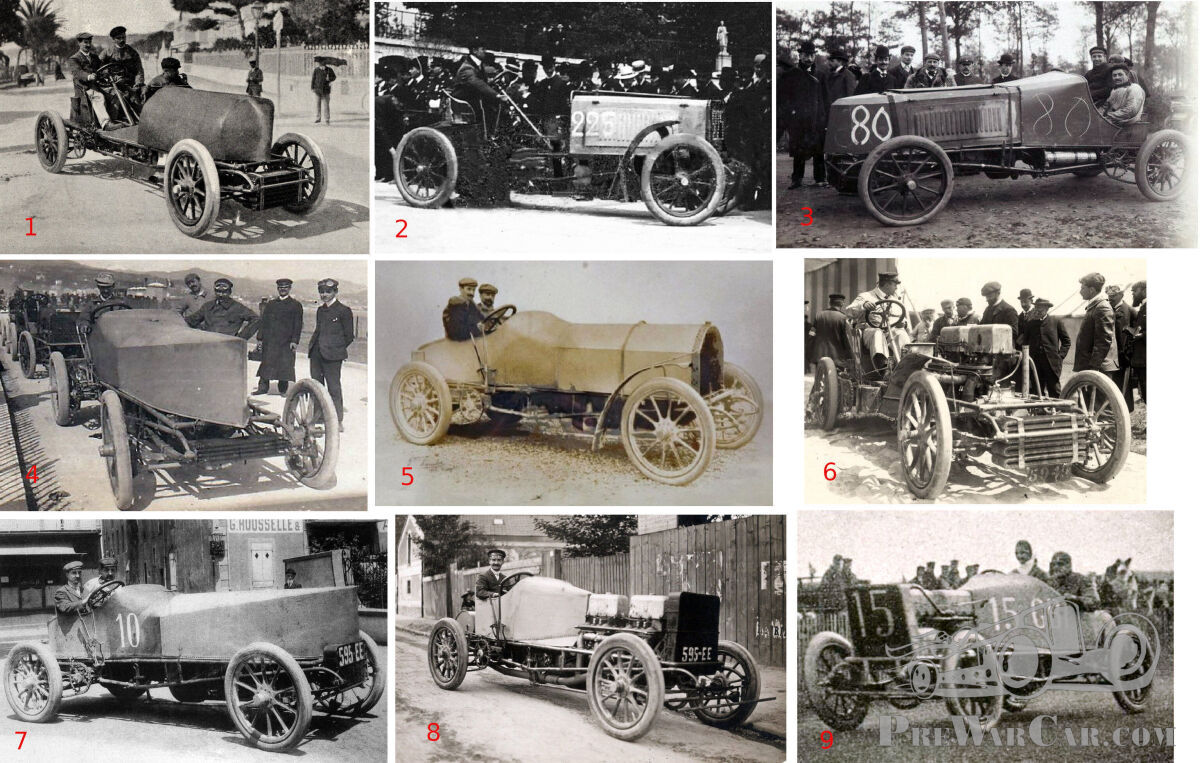
It is remarkable that Gobron-Brillié continued to use this tubular frame till and with the 1907 Grand Prix de l’ACF, when in fact all other makes had already changed to pressed steel frames for years. As I stated before, the car was fast and performed well on relatively short races, but during long distance races, especially during the circuit races with their many turns and braking moments, they either didn’t perform well or were even forced to withdraw by mechanical failure like worn-out tyres or broken radiators. It could well be that a lot of trouble was caused by frame torsion due to the large and powerful engine.
In the uploaded image I’ve collected the different appearances of the car in the 1903-1907 period, showing the first time a change was observed: 1. Semaine de Nice 1903 (Rigolly); 2. Paris-Madrid 1903 (Duray); 3. Kilomètre de Dourdan 1903 (Duray); 4. Semaine de Nice 1904 (Rigolly); 5 and 6. Gordon Bennett trials 1904 (Rigolly resp. Burton); 7. Gordon Bennett trials 1905 (Rigolly); 8. Grand Prix de l’ACF 1906 (Rigolly); 9. Grand Prix de l’ACF 1907 (Rigolly). The 1906 and 1907 Grand Prix cars seem to be more or less identical.
To be continued …?