Das weltweite Magazin und der Marktplatz für Oldtimer-Enthusiasten – von Enthusiasten.
Das weltweite Magazin und der Marktplatz für Oldtimer-Enthusiasten – von Enthusiasten.


Filter
Auswahl treffen
- Autos
-
Marke >>
-
Baujahr >>
-
-
Kategorie >>
-
Länder >>
- Motorräder
- Teile
-
Automarke >>
-
Hersteller >>
-
Kategorie >>
- Fahrräder
-
Baujahr >>
-
Länder



Drive me to the moon
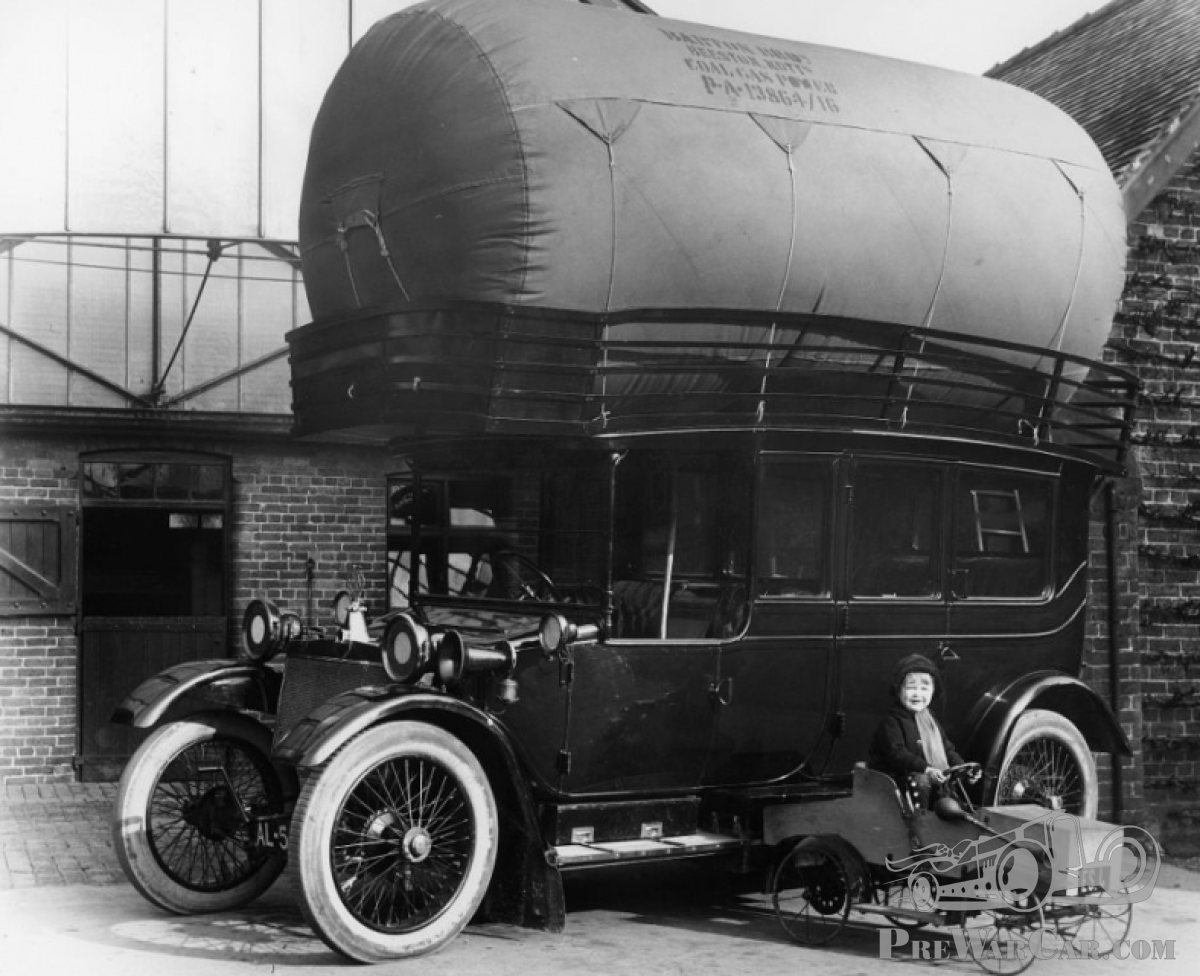

Throwback Thursday! With the current safety and environmental measures, would it be possible to drive this 1913 Lanchester do you think?
Daddy, load my car in case we run out of gas
In times of war and petrol rationing, all sorts of alternative fuels were experimented with. In WWI town gas was one choice. One of its problems was the size of the container that was required to carry it to give a worthwhile mileage. This amazing picture is of a 1913 38hp Lanchester so equipped. The driver would have to be careful not to choose a route with low bridges. The bag and presumably the conversion has been supplied by Barton Bros of Nottingham whose main business was that of running a fleet of buses and coaches. A number of these were converted to gas as well. Quite why the photographer has posed a small child in what appears to be a homemade pedal car in the picture, is not known.
Words by Michael E Ware. Picture The Motoring Picture Library, Beaulieu.
Publiziert:
Donnerstag Juli 9th, 2020
Facebook
LinkedIn
Twitter
WhatsApp
Email
Copy
Kommentare
Grimmo
09 Juli 2020, 19:04
John Bates
09 Juli 2020, 11:44
My doctor used this system on his Austin 7 when he did his rounds in 1945/6. Being a city doctor, his rounds would not have entailed a high daily mileage. From memory, the gas bag looked as big as the car and extended forward of the windscreen.
Weiter lesen
Tony Mobile
09 Juli 2020, 08:26
The use of gas for road vehicles was very popular during WW2 here in France. A fellow I met, not far from where I live now, still makes a conversion for a gasogene, he has one fitted to his old Citroen truck.
It's funny, I just checked the registration document for one of our modern cars, and the French documents still show a category for Gasogene today. Perhaps they are hedging their bets, just in case the government can get some additional tax from road users!!!
Weiter lesen
It's funny, I just checked the registration document for one of our modern cars, and the French documents still show a category for Gasogene today. Perhaps they are hedging their bets, just in case the government can get some additional tax from road users!!!
The Countess of Arran’s 1917, 25h.p. Lanchester landaulet fitted with a neat collapsible gas container made by rivals Spencer-Lyon Ltd., balloon makers of London, was shown at an Olympia exhibition.
One wag in 1917 reckoned that a bag of coal gas on the roof would reduce the weight of the car and hence road adhesion, so causing tyre trouble but was corrected when it was pointed out that 250 cubic feet of gas would only give 10lbs of lift; less than the weight of the rubberised bag.
Because too many petrol-rationed drivers fitted them, the government brought producer/coal gas use for cars into rationing regulations after 1917, although there was a glut of it as a by-product of carbonising coal for munitions. There followed changes to the regulations for vehicles towing gas-bag trailers too, to permit those to exceed the normal 5mph limit. Gas bags had all but disappeared by mid 1919.
Many drivers were fined for illegal use of gas. Even Sir Thomas Beecham was fined £5 in March 1918 for contravening the Petrol and Gas Restriction Order in his gas-powered car on the way to Drury Lane Theatre.