Das weltweite Magazin und der Marktplatz für Oldtimer-Enthusiasten – von Enthusiasten.
Das weltweite Magazin und der Marktplatz für Oldtimer-Enthusiasten – von Enthusiasten.


Filter
Auswahl treffen
- Autos
-
Marke >>
-
Baujahr >>
-
-
Kategorie >>
-
Länder >>
- Motorräder
-
Standort >>
- Teile
-
Automarke >>
-
Hersteller >>
-
Kategorie >>
- Fahrräder
-
Baujahr >>
-
Länder



Tod in den Bergen: Das mysteriöse Souvenir einer Bugatti-Expedition von 1929
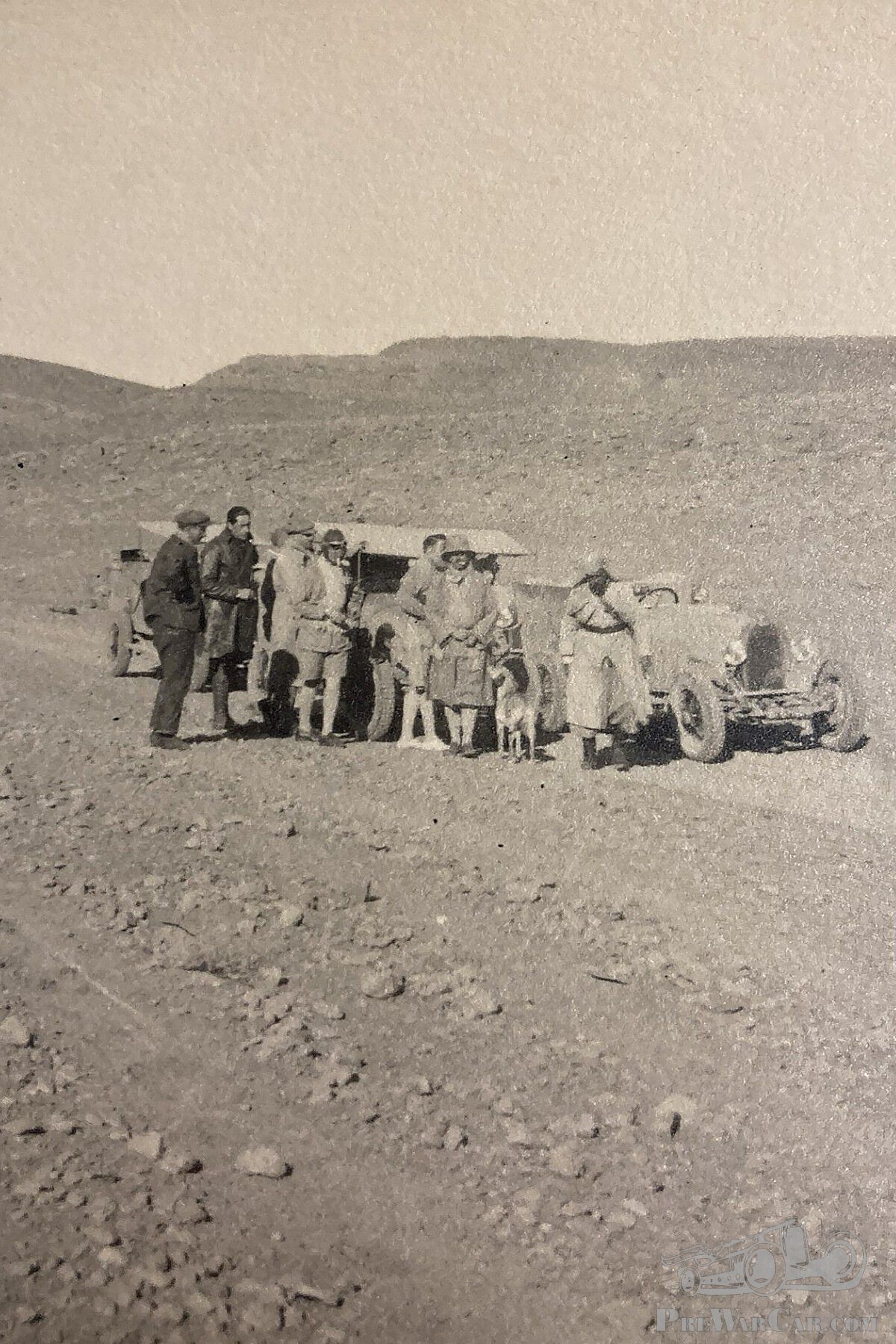
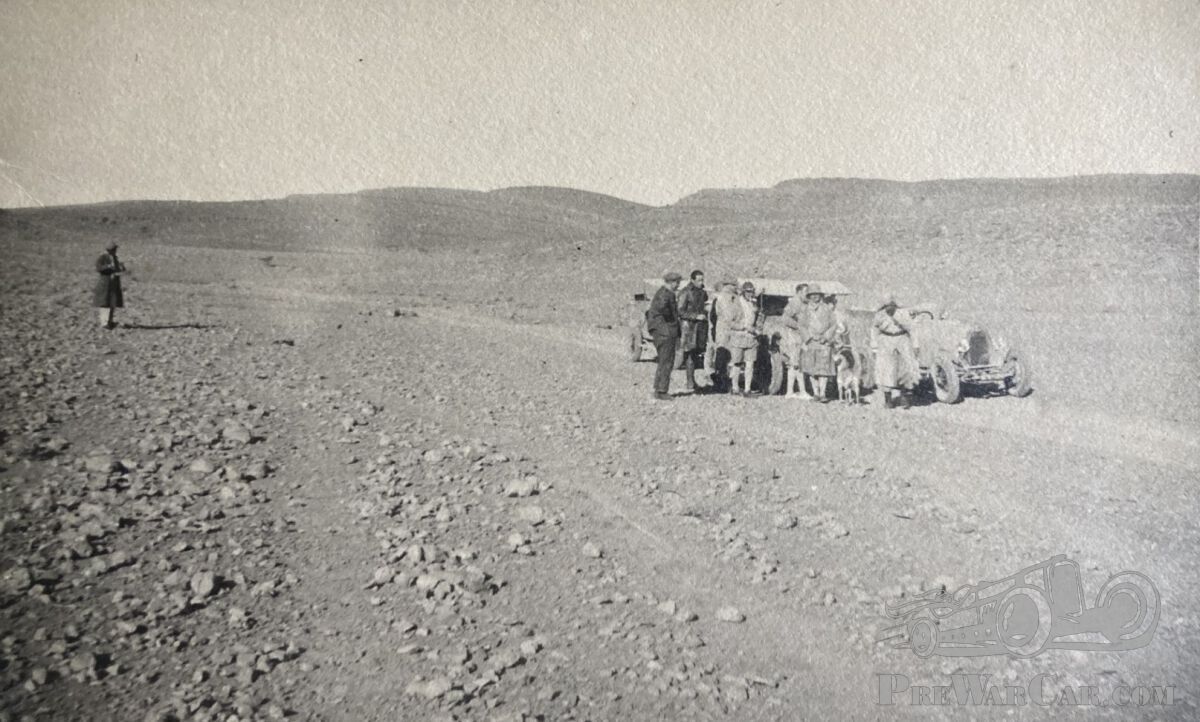
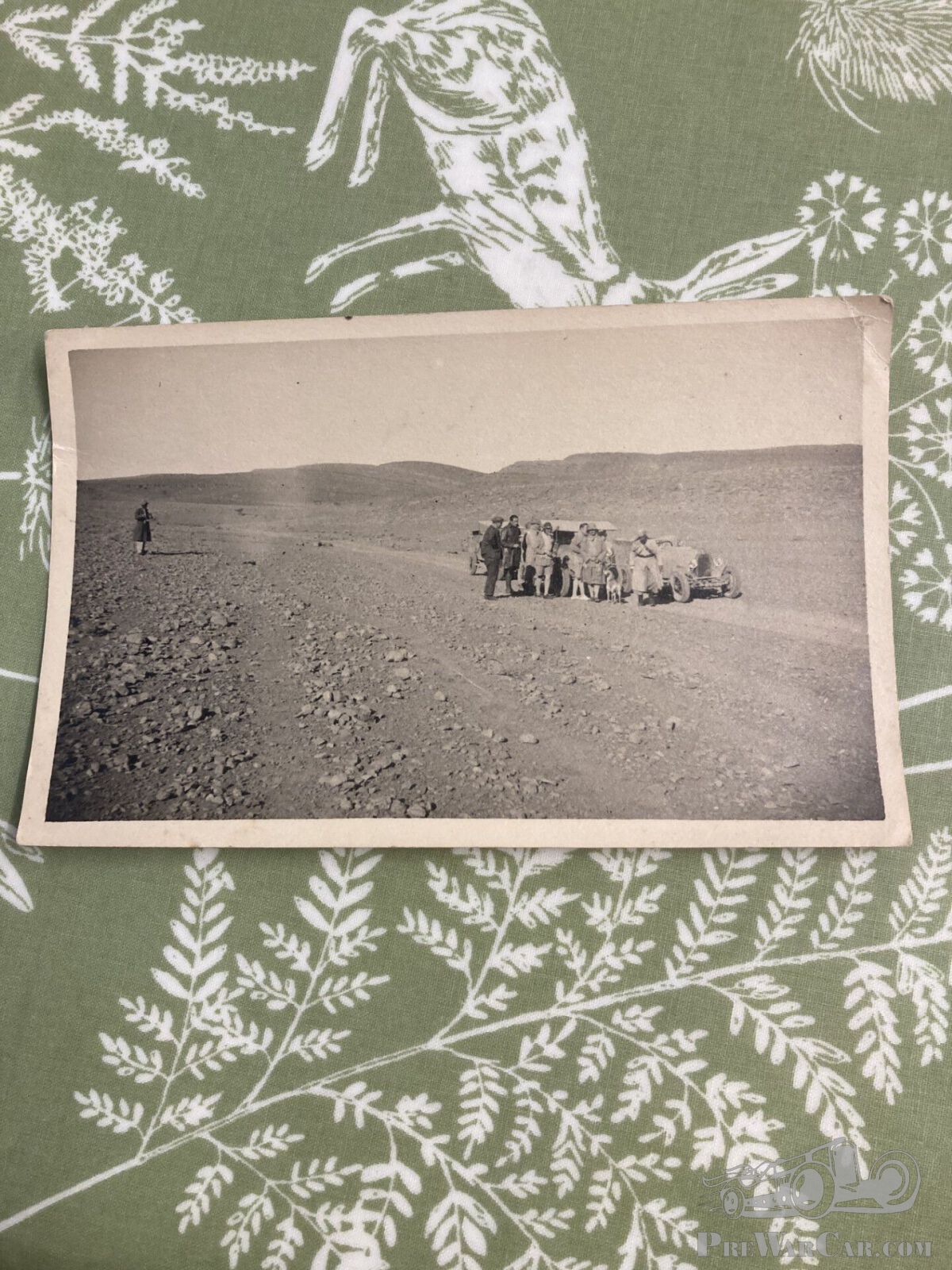


Kürzlich haben wir einen Artikel über die Abenteuer der Kégresse Citroëns und ihre erfolgreichen Durchquerungen der Sahara und der Gobi-Wüste veröffentlicht. Doch welche Art von Auto, so könnten wir uns fragen, wäre geeignet, um das etwas weniger unwirtliche Terrain der nordafrikanischen Berge zu durchqueren? Warum nicht ein Bugatti Type 38 oder 40, wie die Herren auf diesem Foto? Mit einigen Begleitfahrzeugen, die Werkzeuge, Ersatzteile, Treibstoff und Wasser transportieren, sind wir sicher, dass sich der Bugatti trotz des felsigen Geländes und der sengenden Hitze gut geschlagen hat.
Dieses Foto wurde uns von Mark Miller zur Verfügung gestellt, der schreibt:
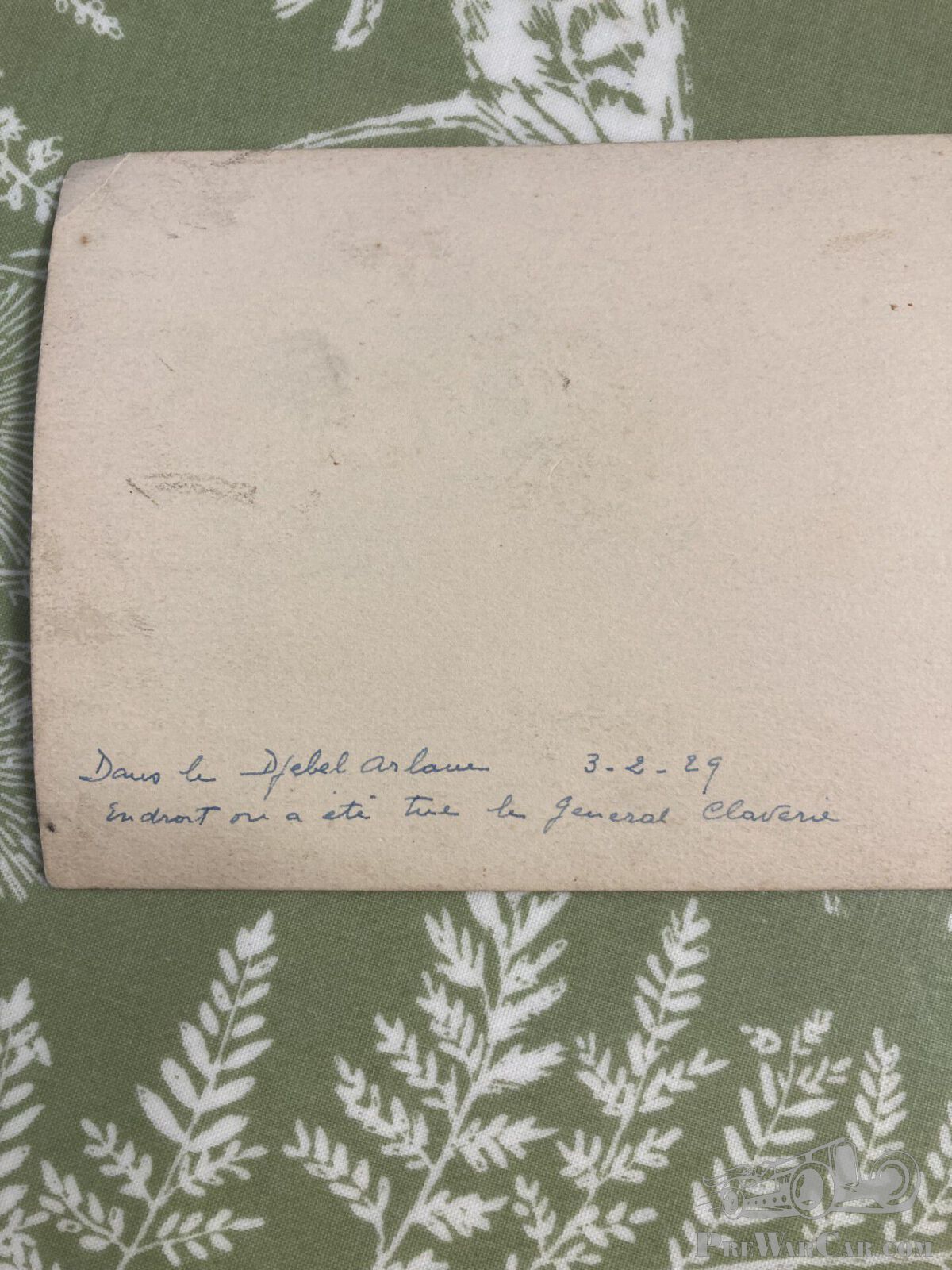
"Ich habe dieses Foto kürzlich erworben, und es scheint einen Bugatti zu zeigen – ich vermute entweder einen Type 40 oder 38 (Speichenräder). Auf der Rückseite ist eine Beschreibung mit dem Datum 3. Februar 1929 notiert. Es sieht aus, als wäre es auf Französisch. Kann jemand es übersetzen?"
Es ist tatsächlich Französisch, doch die Worte werfen mehr Fragen auf, als sie beantworten. Die Notiz beginnt mit "Dans le Djebel...", doch das Wort danach ist nicht zu entziffern. Es muss der Name eines Berges sein, da Djebel ein französischer Begriff für die Berge und Hügel Nordafrikas und des Nahen Ostens ist.
Der nächste Satz scheint zu lauten: "Endroit où a été tué le Général Claverie", was sich korrekt mit "Der Ort, an dem General Claverie getötet wurde" übersetzen lässt.
Doch wer war General Claverie? Und sollten wir daraus schließen, dass unsere Gruppe von Bugattisten möglicherweise Militärangehörige waren? Welchen anderen Zweck könnten sie gehabt haben, eine Expedition durch diese staubigen Berge zu unternehmen?
Wir hoffen, dass ihr uns mehr dazu erzählen könnt...
Text: Zack Stiling
Foto zur Verfügung gestellt von Mark Miller
Publiziert:
Montag Februar 17th, 2025
Facebook
LinkedIn
Twitter
WhatsApp
Email
Copy
Kommentare


Herman van Oldeneel
17 Februar 2025, 08:02
Bugatti Type 40 (I searched for "Bugatti Colomb-Béchar").
Weiter lesen
Herman van Oldeneel
17 Februar 2025, 07:37
Monument to the death of General Clavery, in combat against the Douis Menai in December, 1928, at Djebell el Arlal, 26km from Taghit.
The confrontation of the Doui Menais with Colonel Amédée Clavery:
On December 8th, 1928, in the afternoon, three army vehicles followed a track in south-eastern Algeria, in the region of Colomb-Béchar. They were completing an inspection visit of the territory which was in the process of rebellion against the invasion of the Haut Guir of the Douis Menais, by the French Colonial troops. The first vehicle, a van, reached the top of the Maghzen pass and entered a narrow defile. It was then taken under fire by rebels, hidden behind rocks, fifteen or twenty metres above the track. The occupants of the van were killed. Twenty-five minutes later, the car arrived in which Colonel Amédée Clavery, senior commander of the Aïn-Sefra territory, was sitting. He, in turn, was fatally shot. Colonel Clavery died without knowing that the day before he had been promoted to general: the decree was not to be published until December 12th, 1928.
---------------------------------------------------------------
MONUMENT DU GÉNÉRAL CLAVERY MORT
Au combat contre les douis menai en decembre 1928 au Djebell el Arlal à 26km de Taghit.
L'affrontement des Doui Menais au Colonel AMEDEE CLAVERY.
Le 8 décembre 1928, dans l'après-midi, trois véhicules de l'armée suivent une piste du sud-est ALGERIEN, dans la région de Colomb-Béchar. Elles achèvent une visite d'inspection du territoire qui est en voie de REBELLION contre l'invasion du Haut Guir des Douis Menais,par les troupes Coloniale Francaises. Le premier véhicule, une camionnette, parvient au sommet du col du Maghzen et s'engage dans un étroit défilé. C'est alors qu'elle est prise sous le feu des armes de rebelles, dissimulés derrière des rochers, à quinze ou vingt mètres au-dessus de la piste. Les occupants de la camionnette sont tués. Vingt-cinq minutes plus tard, arrive la voiture dans laquelle a pris place le colonel Amédée Clavery, commandant supérieur du territoire d'Aïn-Sefra. Il est, à son tour, atteint mortellement d'une balle. Le colonel Clavery mourut sans savoir que, la veille, il avait été promu général : le décret ne devait être publié que le 12 décembre 1928.
Weiter lesen
The confrontation of the Doui Menais with Colonel Amédée Clavery:
On December 8th, 1928, in the afternoon, three army vehicles followed a track in south-eastern Algeria, in the region of Colomb-Béchar. They were completing an inspection visit of the territory which was in the process of rebellion against the invasion of the Haut Guir of the Douis Menais, by the French Colonial troops. The first vehicle, a van, reached the top of the Maghzen pass and entered a narrow defile. It was then taken under fire by rebels, hidden behind rocks, fifteen or twenty metres above the track. The occupants of the van were killed. Twenty-five minutes later, the car arrived in which Colonel Amédée Clavery, senior commander of the Aïn-Sefra territory, was sitting. He, in turn, was fatally shot. Colonel Clavery died without knowing that the day before he had been promoted to general: the decree was not to be published until December 12th, 1928.
---------------------------------------------------------------
MONUMENT DU GÉNÉRAL CLAVERY MORT
Au combat contre les douis menai en decembre 1928 au Djebell el Arlal à 26km de Taghit.
L'affrontement des Doui Menais au Colonel AMEDEE CLAVERY.
Le 8 décembre 1928, dans l'après-midi, trois véhicules de l'armée suivent une piste du sud-est ALGERIEN, dans la région de Colomb-Béchar. Elles achèvent une visite d'inspection du territoire qui est en voie de REBELLION contre l'invasion du Haut Guir des Douis Menais,par les troupes Coloniale Francaises. Le premier véhicule, une camionnette, parvient au sommet du col du Maghzen et s'engage dans un étroit défilé. C'est alors qu'elle est prise sous le feu des armes de rebelles, dissimulés derrière des rochers, à quinze ou vingt mètres au-dessus de la piste. Les occupants de la camionnette sont tués. Vingt-cinq minutes plus tard, arrive la voiture dans laquelle a pris place le colonel Amédée Clavery, commandant supérieur du territoire d'Aïn-Sefra. Il est, à son tour, atteint mortellement d'une balle. Le colonel Clavery mourut sans savoir que, la veille, il avait été promu général : le décret ne devait être publié que le 12 décembre 1928.
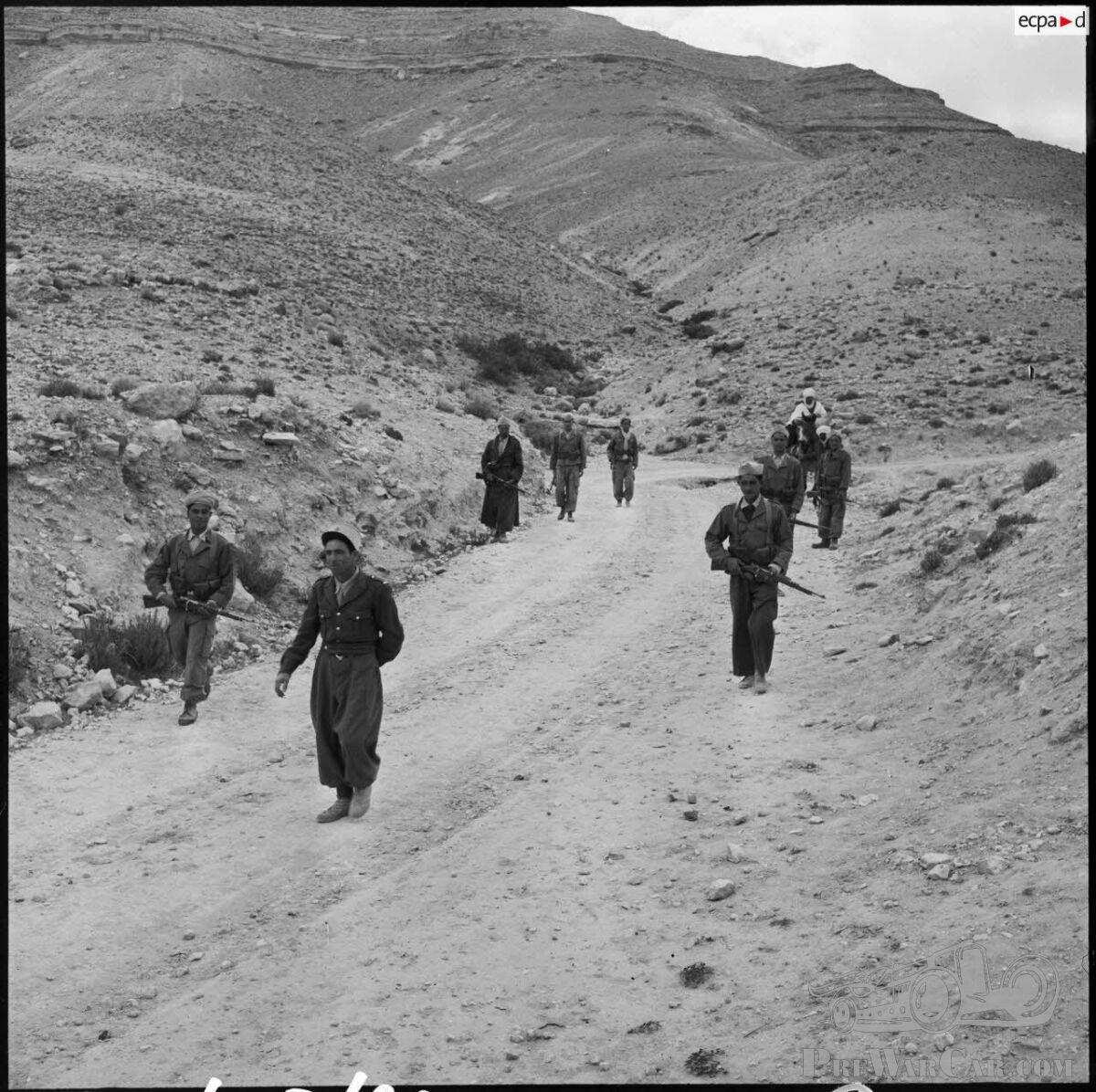
On the afternoon of December 8th, 1928, three army vehicles followed a track in south-eastern Morocco, in the Colomb-Béchar region. They were doing an inspection tour of the territory which was in the process of being ‘pacified’. The first vehicle, a van, reached the summit of the Maghzen Pass and entered a narrow gorge. It came under fire from 16 rebels, hiding behind rocks 15-20 metres above the track. The occupants of the van were instantly killed. Twenty-five minutes later the car carrying Colonel Amédée Clavery, commander of the Aïn-Sefra territory, arrived. He too was mortally wounded by a bullet. Five minutes later, the last vehicle arrived, with the colonel's own son, Marshal René Clavery, who had asked for leave to accompany his father, accompanied by sergeant Schweicher. At first, they thought that the Moroccans surrounding the stopped cars belonged to the escort that was supposed to be waiting for them, but their illusion was short-lived; a volley of bullets proved them wrong. Sergeant Schweicher was wounded, and Marshal Clavery lay down beside his car to defend himself and succeeded to kill his father's assassin as he fled. For four hours he alone withstood the gunfire until the assassins decided to flee. It was now eight o'clock in the evening. At dawn, a small group of friends came to the Marshal’s rescue.
In the end, of the 13 men in the convoy, five were killed and three wounded, while the other five, including René Clavery, escaped the ambush unharmed. The ambush had been made possible by the betrayal by those responsible for securing the crossing.
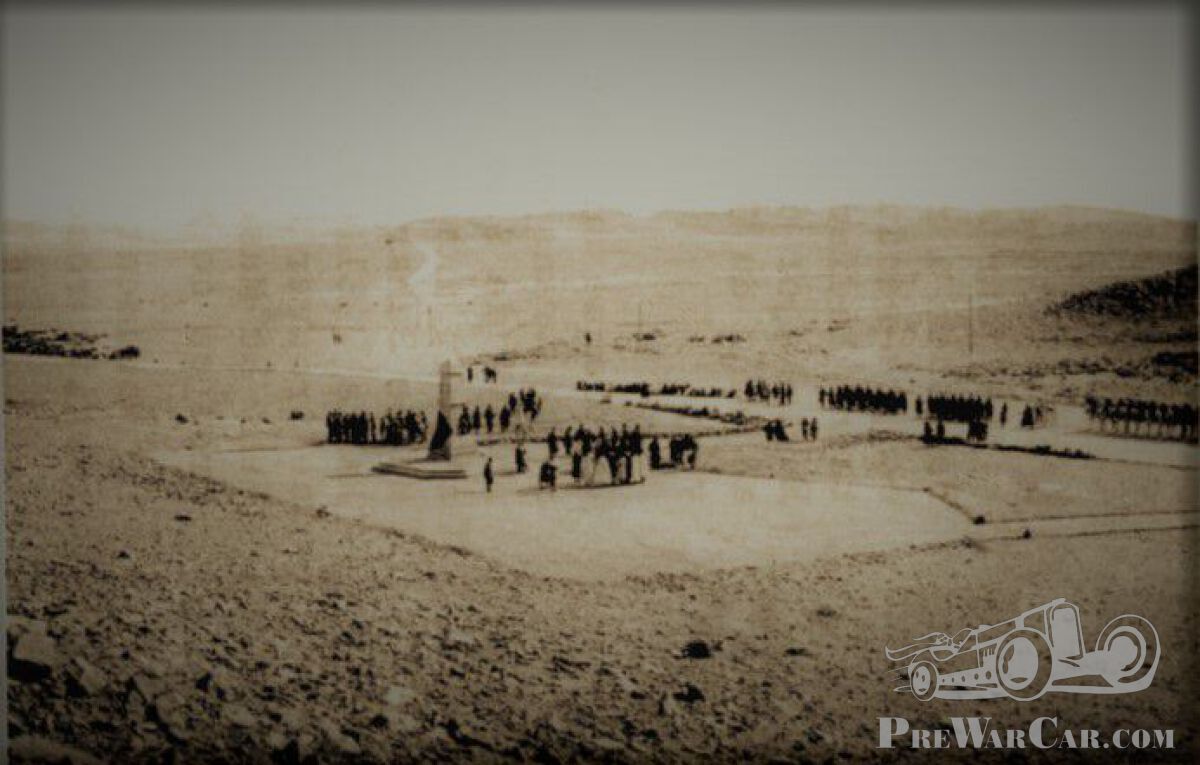
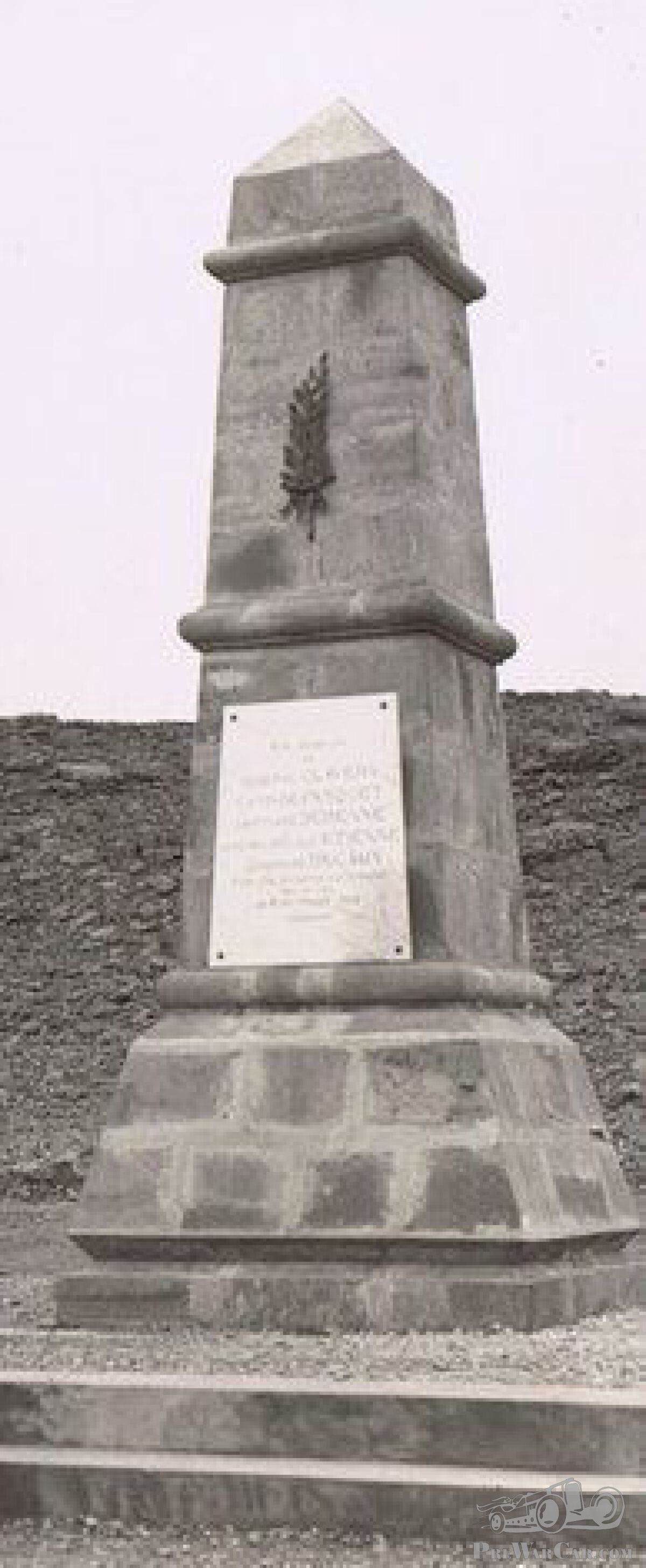
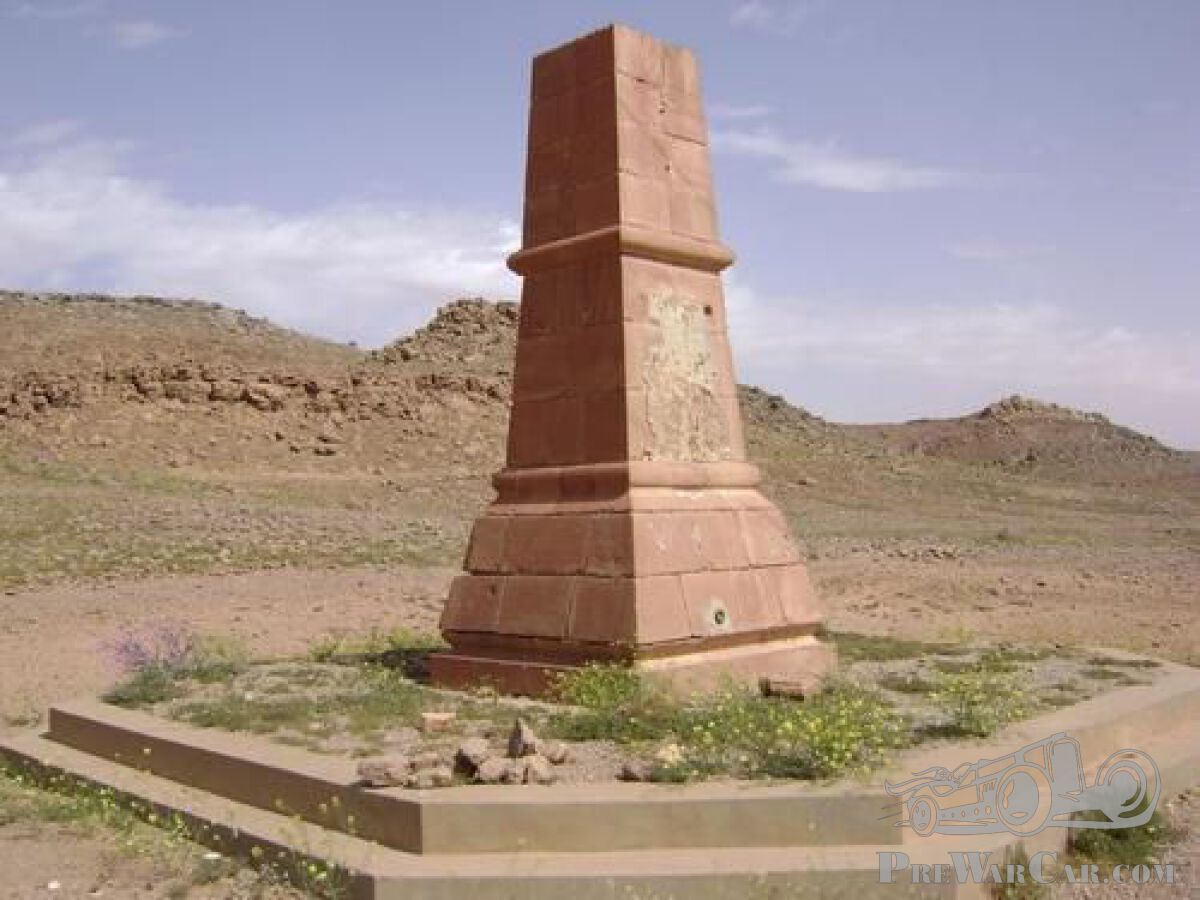
Colonel Clavery died without knowing that the day before he had been promoted to general. Three months later, on the very spot of the ambush, the Minister for the Colonies, Maginot, awarded René Clavery the military medal. A stele was erected on the site of the tragedy in memory of the general and his companions. It was unveiled in January, 1932, in the presence of the victims' families.
It should be remembered that from 1921 to 1926 the Spanish army—as of 1924 joined by the French army—fought the bloody Rif War against the Berber tribes of northern Morocco.
Very likely the photo shown of the Bugatti and the other cars was dated 1930 or later. The Bugatti Type 40 looks very much like that of Colonel Loiseau.
Pictures:
1. Armoured Maghzen patrol at Taberdga
2. Unveiling of the stele in memory of General Clavery in 1932
3. The original stele
4. The stele in 2016, deprived of its plaque, etc.