Das weltweite Magazin und der Marktplatz für Oldtimer-Enthusiasten – von Enthusiasten.
Das weltweite Magazin und der Marktplatz für Oldtimer-Enthusiasten – von Enthusiasten.


Filter
Auswahl treffen
- Autos
-
Marke >>
-
Baujahr >>
-
-
Kategorie >>
-
Länder >>
- Motorräder
- Teile
-
Automarke >>
-
Hersteller >>
-
Kategorie >>
- Fahrräder
-
Baujahr >>
-
Länder



Contrasts at the second Ellis Journey
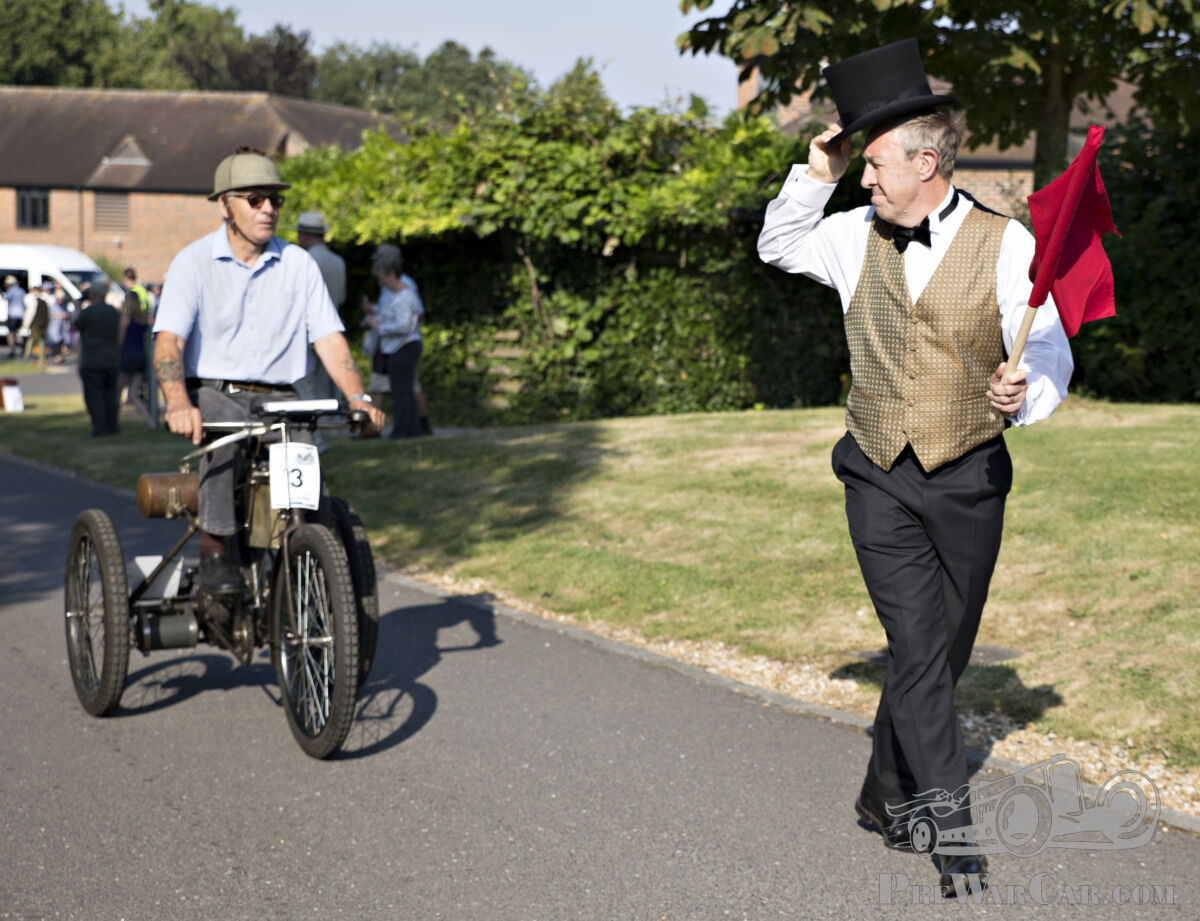


With entry numbers doubled in comparison with the first edition of last year, it seems like the Ellis Journey is really taking off! It is a re-enactment of the first recorded road run in England in 1895, therefore it was good to note that 13 of the 43 entered cars were built in the 19th century!
Three-wheelers, mainly equipped with De Dion Bouton engines, are reliving their youth again, these days. But what a contrast between the pre-1900 three-wheelers and the 1904 Rover trike that Nigel Cornelius rode. This is believed to be the earliest surviving mechanically-propelled vehicle by this make. Not only does it have two front wheels and only one rear, so it can carry a passenger, it also already has double the horsepower (4 hp against about 2 hp for the average DDB-engined machine). Both its inlet and exhaust valve are mechanically-operated, whereas the inlet valve of a DDB-engine still primitively works on the suction of the inlet stroke...
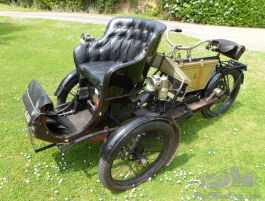
This contrast pictures the massive evolution of the automobile in only a couple of pioneering years!
Of course, there were also four-wheeled cars, six of them being De Dion Bouton vis-à-vis, which was the next step in De Dion Bouton evolution. One of them has an all-ladies crew, another goal that the De Dion Bouton company achieved early on. They made cars that were ready for ladies to drive, and happily promoted this in their advertisements.
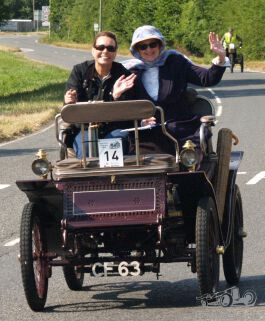
But not only De Dion Bouton cars were present. The above were joined by other rare pioneers from different countries, the 1900 twin-cylinder Georges Richard (French-built), the 1901 Adler (Germany), the 1903 4-cylinder British Daimler from Lord Montagu, the 1904 Rambler (USA) and many more... All show the level of development of the particular car make in a particular country at a specific time. Be it the differences in the complication of engineering or coachwork, the contrasts are much noticeable...
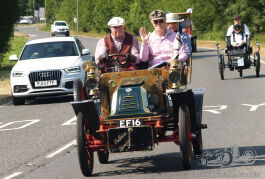
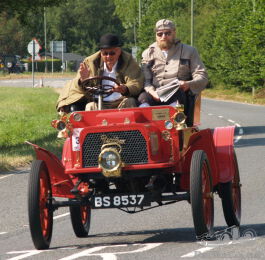
The Ellis Journey is the perfect place to see such a different platform, long may it continue!
Words by Nick Jonckheere. Photographs by Claire Shek and Chris Knap.
Publiziert:
Mittwoch Juli 25th, 2018
Facebook
LinkedIn
Twitter
WhatsApp
Email
Copy