Das weltweite Magazin und der Marktplatz für Oldtimer-Enthusiasten – von Enthusiasten.
Das weltweite Magazin und der Marktplatz für Oldtimer-Enthusiasten – von Enthusiasten.


Filter
Auswahl treffen
- Autos
-
Marke >>
-
Baujahr >>
-
-
Kategorie >>
-
Länder >>
- Motorräder
- Teile
-
Automarke >>
-
Hersteller >>
-
Kategorie >>
- Fahrräder
-
Baujahr >>
-
Länder



Celebrating 100 years of Morris cars (update: oldest?)
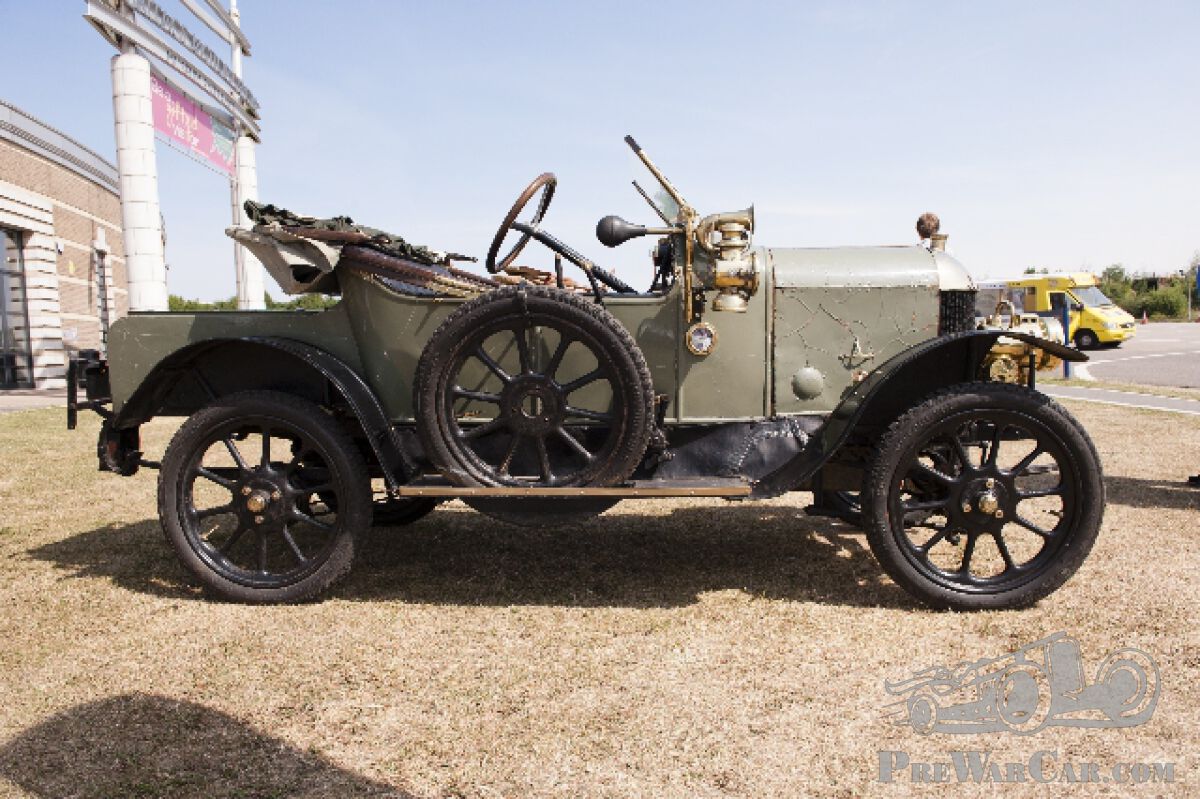
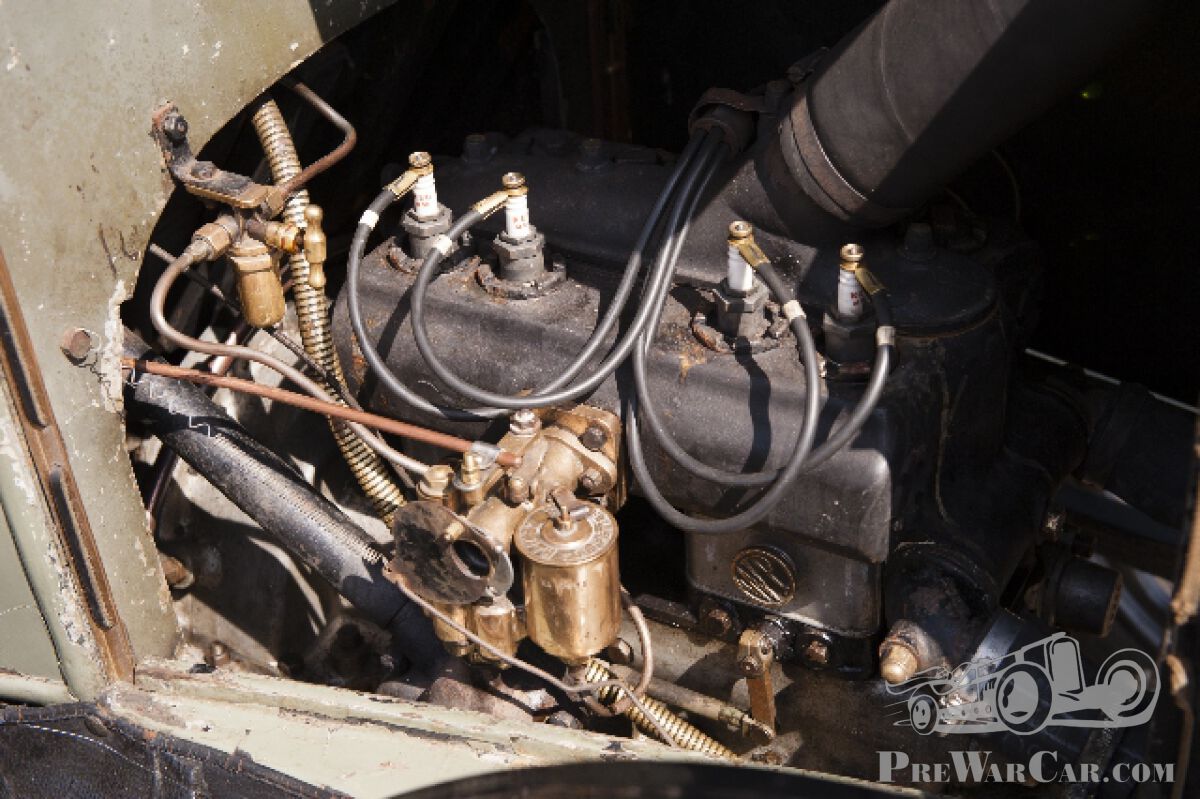


What better way to celebrate the anniversary of a car by driving the earliest survivor of the breed? Whilst many of the oldest examples of cars have been consigned to permanent static display in museums around the world, we are happy to report that the oldest known Morris-Oxford is alive and well in private ownership and is driven, as intended, on a regular basis. This year the car celebrated a particularly important milestone, 2013 marking 100 years since the first 'Bullnose' Morris-Oxfords rolled off the production line at Cowley. This car, owned by Cliff Jowsey of Whitby, was built on 19th April of that year, just under a month into production.
Only around 1500 of these early White & Poppe-engined cars were built and today survivors are rare. Even the most ardent 'Bullnose' fan may be surprised by just how different the 1913 Oxfords are compared to their later, more numerous brethren. Robin Batchelor, hot-air balloonist extraordinaire and arch 'Bullnose' enthusiast, was indeed struck by the subtle difference in character between this early car and his own later examples when he drove it recently for an article in The Automobile magazine – part of a seven page celebration of the Morris marque in its centenary year.
Although there may be more glamourous automotive anniversaries this year (Aston-Martin also celebrates the magic 100 mark in 2013), it would be a shame to overlook the importance of the Morris's creation, for it truly was the car that mobilised Great Britain and bought cheap, reliable motoring to the masses. If it wasn't for William Morris's determination to build his own car his own way, and the great success his vision became, it is safe to say the world would never have known the joys of the Morris Minor or the Mini, both cars cut from the same cloth as the humble 'Bullnose'.
Publiziert:
Montag September 9th, 2013
Facebook
LinkedIn
Twitter
WhatsApp
Email
Copy
Kommentare
Unbekannt
28 September 2013, 21:56
Robin
13 September 2013, 10:50
[quote name="Ace Zenek"]Oldest? What the Automobile article does not explain, is why the chassis in the museum with the lower serial number is not the oldest in existence. ... [/quote]
Ace - You are right. It is logical to assume the rolling chassis in the Haynes Museum ( Car 102) is the oldest known Morris. For the purposes of the article in The Automobile, we chose to celebrate the earliest complete car (Car 106) especially as it has survived in such un-touched condition.
I spoke to the museum curator on the telephone and he promised to send a photograph, but alas it has still not arrived.
You have re-kindled my interest Ace, and I shall do as you suggest and explore the history of 'the oldest Morris'.
Thank you, Robin.
Weiter lesen
Ace - You are right. It is logical to assume the rolling chassis in the Haynes Museum ( Car 102) is the oldest known Morris. For the purposes of the article in The Automobile, we chose to celebrate the earliest complete car (Car 106) especially as it has survived in such un-touched condition.
I spoke to the museum curator on the telephone and he promised to send a photograph, but alas it has still not arrived.
You have re-kindled my interest Ace, and I shall do as you suggest and explore the history of 'the oldest Morris'.
Thank you, Robin.
Unbekannt
11 September 2013, 02:47
Robin - Thank you for your comments. My car came from John Gloyn in Western Australia (see the Autombile Fnds and Discoveries November 1912). I must admit I did forget to let Margaret know, very remiss of me, I shall rectify this straight away. As with the sports, no I have seen photos of your delightfull 1921 Sports, the one I am referring to is the one shown in the 1914 catalog - single seater, as in driver only. It lists it as having disc wheels as apposed to Sankeys, no windscreen, different guards (wings) but still with full lighting.
David Smallacombe
Weiter lesen
David Smallacombe
Ace Zenek
10 September 2013, 18:10
Oldest? What the Automobile article does not explain, is why the chassis in the museum with the lower serial number is not the oldest in existence. Are they splitting hairs? Is it solely the difference between one is complete and running on the streets and the other is just an (in)complete chassis? The article is entirely silent on the issue without explanation.
Please don't get me wrong, I believe that it is fantastic to have this auto running and publicly displayed from time-to-time. But shouldn't we also give credit to a museum, and possibly the person who donated the vehicle to them, for recognizing the historic nature of the chassis they have in their collection?
Which one really is the oldest? If the one with the lowest serial number is not the oldest, why not?
Weiter lesen
Please don't get me wrong, I believe that it is fantastic to have this auto running and publicly displayed from time-to-time. But shouldn't we also give credit to a museum, and possibly the person who donated the vehicle to them, for recognizing the historic nature of the chassis they have in their collection?
Which one really is the oldest? If the one with the lowest serial number is not the oldest, why not?
Unbekannt
10 September 2013, 16:16
David - Cliff's car has a proper dickey seat in his his longer boot and also notice how the bonnet sides lack louvres. All signs of a very early car and very possibly the original Stewart & Arden demonstrator.
As for paint colour, I remember reading various articles in the Bullnose magazine about the exact paint shade.I see you are a member of the club - good Man! - and I'll see if I can find that paint info.
I notice your name is not listed in the 1914 car register page. I know Margaret Goding (Registrar) will be grateful for details of your car so she can update the club records.
As for 'single seater sports' models, I do not remember ever reading about single seaters. Alf Keene built a special one which did 90 mph in 1924. Member Stuart Cooke has built a replica.
I have a 1921 Sports Cowley - perhaps that's what you're thinking of?
Anyway, I'll email you and see if I can help. I'm glad you enjoyed the article - my next will be about the best five Bullnoses I have owned over 40 years!
Robin.
Weiter lesen
As for paint colour, I remember reading various articles in the Bullnose magazine about the exact paint shade.I see you are a member of the club - good Man! - and I'll see if I can find that paint info.
I notice your name is not listed in the 1914 car register page. I know Margaret Goding (Registrar) will be grateful for details of your car so she can update the club records.
As for 'single seater sports' models, I do not remember ever reading about single seaters. Alf Keene built a special one which did 90 mph in 1924. Member Stuart Cooke has built a replica.
I have a 1921 Sports Cowley - perhaps that's what you're thinking of?
Anyway, I'll email you and see if I can help. I'm glad you enjoyed the article - my next will be about the best five Bullnoses I have owned over 40 years!
Robin.
Unbekannt
10 September 2013, 01:54
I am fascinated by the subtle differences in these early Oxfords. The boot on Cliff's car is much longer than on other 1913 cars I have seen.
I am restoring a 1914 Deluxe, I have no body on mine and have been studying many photos of surviving cars and the original sales catalogues. The 1913 and the 1914 cars are different, (wider and longer in 1914). In the sales brochures they list the colours dark green or grey, I am curious to know what the grey is. Do any of the genuine single seater sports that are listed in the brochures survive?
Great article in the Automobile by the way.
David Smallacombe
Weiter lesen
I am restoring a 1914 Deluxe, I have no body on mine and have been studying many photos of surviving cars and the original sales catalogues. The 1913 and the 1914 cars are different, (wider and longer in 1914). In the sales brochures they list the colours dark green or grey, I am curious to know what the grey is. Do any of the genuine single seater sports that are listed in the brochures survive?
Great article in the Automobile by the way.
David Smallacombe
Unbekannt
10 September 2013, 00:19
Good to see these early cars recognised, but I think the term rare is overworked, given that there are perhaps around 40 survivors from a production run of around 1500. Its about time the records of the company which were left by Lord Nuffield in the 'safe keeping' of the Bullnose Morris Club, were publicly available like the Thornycroft records. There is so much the owner could glean from scrutinising these records. Martin Shelley, ex-editor, BNMC
Weiter lesen
I have been trying to track down your email address and note your comment on this article.
Could you send me your email address when you get a chance.
Cheers
Maclolm