Das weltweite Magazin und der Marktplatz für Oldtimer-Enthusiasten – von Enthusiasten.
Das weltweite Magazin und der Marktplatz für Oldtimer-Enthusiasten – von Enthusiasten.


Filter
Auswahl treffen
- Autos
-
Marke >>
-
Baujahr >>
-
-
Kategorie >>
-
Länder >>
- Motorräder
-
Standort >>
- Teile
-
Automarke >>
-
Hersteller >>
-
Kategorie >>
- Fahrräder
-
Baujahr >>
-
Länder



Auf der Suche nach dem verlorenen Anhut Six
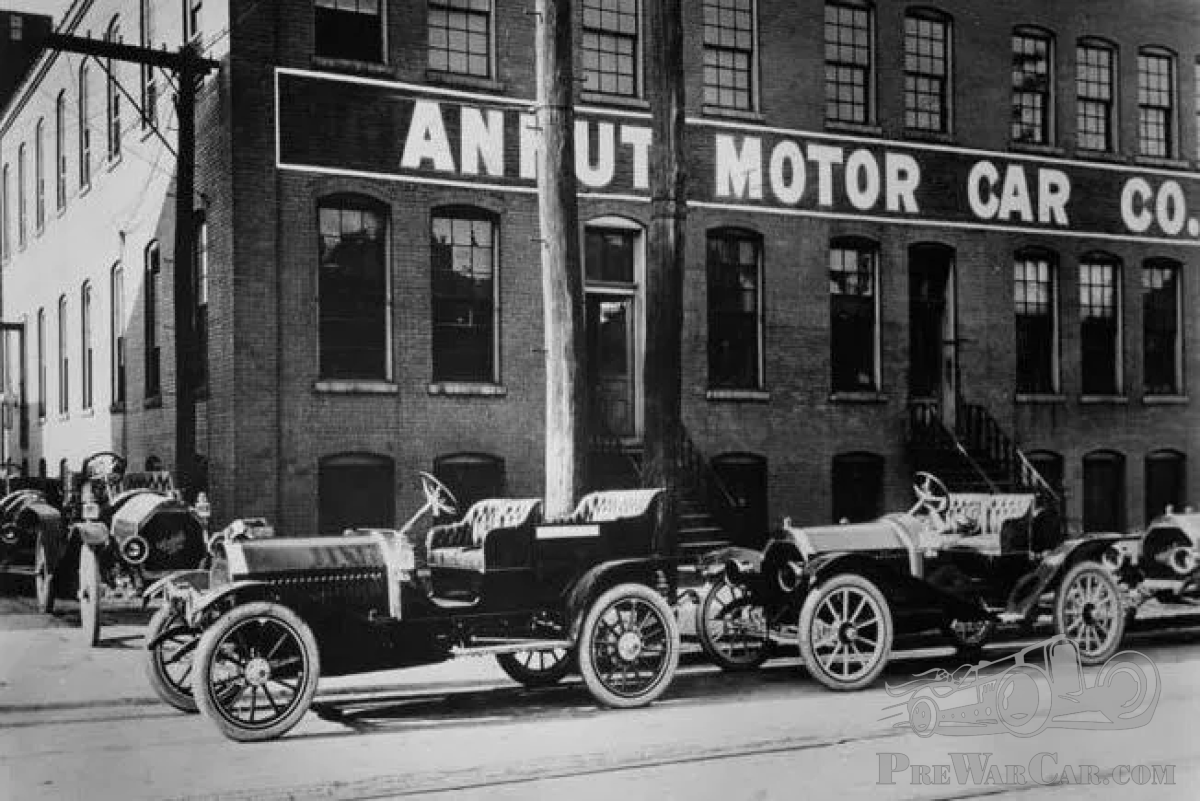
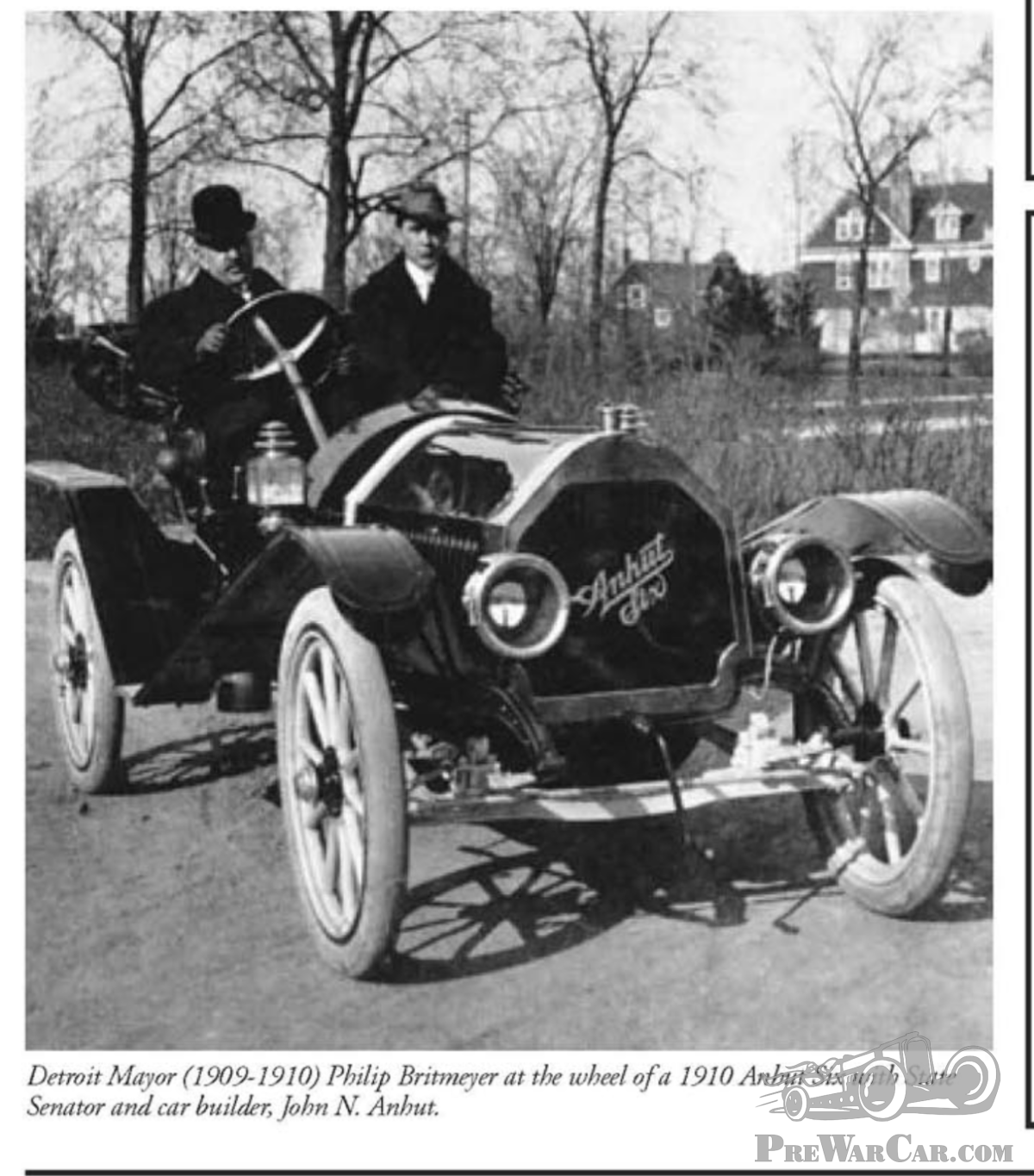


Mein Name ist Colin Anhut, und gemeinsam mit meinem Vater begebe ich mich auf eine Reise, um ein fehlendes Stück unserer Familiengeschichte zu finden: den geheimnisvollen Anhut Six.
Mein Urgroßvater, John N. Anhut, war Senator im Bundesstaat Michigan und – wie viele Menschen im Detroit der frühen 1900er-Jahre – vom aufkommenden Automobilfieber erfasst. Im Jahr 1909 gründete er die Anhut Motor Car Company. Dort entstand ein für seine Zeit außergewöhnliches Fahrzeug: ein 36 PS starker, 3,7-Liter großer Sechszylinder-Tourenwagen mit obenliegender Ventilsteuerung, erhältlich in mehreren eleganten Karosserievarianten.
Trotz guter Anfangsaussichten zog sich John bald zurück, um sich wieder der Politik zu widmen. Die Firma wurde 1910 in die Barnes Motor Car Company umgewandelt und brach kurz darauf zusammen. Die Produktion wurde eingestellt, und die Fabrik – samt Teilen – wurde höchstwahrscheinlich verkauft.
Ich vermute, dass die meisten Teile bei der Liquidation des Unternehmens als Altmetall verkauft wurden. Dennoch hoffe ich, dass irgendwo jemand einen Anhut-Six-Kühler halb vergraben im Garten liegen hat – damit ich meinem Vater ein Stück lebendiger Familiengeschichte zeigen kann.
Falls jemand schon einmal einen Anhut Six gesehen oder davon gehört hat – ganz gleich in welchem Zustand: ob als verrostetes Fahrgestell, als Teil in einer Grabbelkiste auf einem Teilemarkt oder sogar nur auf einem alten Foto – ich würde mich sehr freuen, davon zu hören. Dieses Auto mag längst nicht mehr gebaut werden, aber vergessen ist es nicht.
Jede Reise beginnt mit einem Ziel. Unseres liegt nur unter einem Jahrhundert Staub begraben.
Text und Fotos von Colin Anhut
Publiziert:
Montag April 21st, 2025
Facebook
LinkedIn
Twitter
WhatsApp
Email
Copy
Kommentare
David Grimstead
06 Mai 2025, 13:36
Terry Cockerell
27 April 2025, 10:51
I'm located in Australia and have been reading a book put out by Floyd Clymer in the 1950s called Motor History of America or The Gasoline Age. It is a reprint of a 1937 edition. You should be able to track a copy down via the internet.
It lists all of the more than 1,500 makes of automobiles that were made in the U.S. including the Anhut and Barnes.
The best part for you is on page 134 where it says an entrepreneur by the name of Alfred O. Dunk had bought up more than seven hundred automobile concerns to continue supplying spare parts and information for them.
Eventually he turned everything over free of charge to the National Automobile Chamber of Commerce with the understanding that the Chamber should give needed information to any distressed owner of the various makes free of charge.
I have no idea if that organization still exists; however, it is a lead worth checking out.
Good luck from Down Under.
Weiter lesen
It lists all of the more than 1,500 makes of automobiles that were made in the U.S. including the Anhut and Barnes.
The best part for you is on page 134 where it says an entrepreneur by the name of Alfred O. Dunk had bought up more than seven hundred automobile concerns to continue supplying spare parts and information for them.
Eventually he turned everything over free of charge to the National Automobile Chamber of Commerce with the understanding that the Chamber should give needed information to any distressed owner of the various makes free of charge.
I have no idea if that organization still exists; however, it is a lead worth checking out.
Good luck from Down Under.
David Liepelt
22 April 2025, 04:47
The Swigart Museum in Huntingburg, Pennysylvania, has possibly the largest collection of radiator badges and scripts in the U.S.A. They have them displayed on many flip panels and on boards around the museum, but they also have them well cataloged. If you call and ask about it, they should be able to look it up and tell you if they have one rite away.
Good luck!
Weiter lesen
Good luck!
In October, 1909, he was not one of Anhut’s partners in the $150,000 Anhut Motor Car Company, which included Detroit Mayor Philip Breitmeyer (vice-president), H. H. Thorpe (secretary), Charles Lansby (treasurer), John B. Chaddock, Thomas F. Ahern, H. H. Lonsby and John Gillespie. Anhut was a lawyer and no indication any of the others were engineers, although adverts said: “Made by experienced builders.” Initially they did not expect to start production until the beginning of the new year.
In the specification announced in October, 1909, the car mounted a water-cooled, pair-cast, six-cylinder motor, 26-plate crucible-steel clutch and in-unit three-speed-plus-reverse sliding gearbox, all supplied by the F. A. Brownell Motor Company of Rochester, N.Y. It had a 3½ by 4.0-inch bore and stroke, caged overhead valves, front-mounted flywheel, a Stromberg carburetter and a high-tension Bosch or Splitdorf magneto with a secondary coil and battery ignition system. Brownell claimed its A6 engine produced 28-34 h.p., usually rated at 36 h.p. It had shaft-drive to a trussed, bevel-drive axle with internal expanding and external contracting rear brakes. With a channel-section steel chassis and I-beam front axle with worm and sector steering, the wheelbase was 110 inches, the wheels 34-inch with Goodrich tyres and the bodies were made by the Griswold Motor Body Co. at Commonwealth Ave, Detroit, which also supplied Krit, Wolverine and Chicago Electric. A Roadster weighed 2250lbs. Standard colour was royal blue with light cream striping and its wooden artillery wheels had red spiking. Equipment included oil head, side and tail lamps. The two-seater Roadster model was $1700, a four-seater, side entrance Pony-tonneau $1800 and a Toy-tonneau, which followed, $1800—motoring writers considered them underpriced.
By October, 1909, the company had secured some factory production space at 206-212, Howard Street, stating it planned to make 500 cars for 1909, although this was soon corrected. The Anhut Sales Office started marketing the car from 1256, Michigan Boulevard, Chicago, the address of Fulton and Zinke, soon renamed the Car Makers Selling Company, which brokered and distributed several other makes. Their first adverts aimed at new agents stated that a 10 per cent. deposit had been paid in advance for enough materials from bonded suppliers for 1000 Anhut Sixes, “guaranteeing” 50 cars would be built in December, 1909, and January, 1910, followed by 150 per month through to July, 1910, when orders for 1911 would be taken. It was an ambitious plan and a new factory at 508-514, Howard Street, Detroit was only leased in December, 1909, and with only eighty staff to start, industry experts pointed out that the realistic prospect was at best 750 cars.
As the manufacturing schedule was evidently not being met, experienced production engineer Harry C. Barnes left Overland’s Indianapolis factory, where he had increased output from two cars per month to thirty per day, to join Anhut as “factory manager” in February, 1910, tasked with manufacturing the advertised 1,000 Anhut Sixes for 1909-10. To increase output, in April the directors persuaded investors to double Anhut’s capital to $300,000 to facilitate the purchase of the plant and equipment of the Chatham Motor Company of Chatham, Ontario, where it was planned to make 200 Anhut Sixes by July but no Anhuts were ever made there and its ownership and material value was still in dispute when the company failed.
Although John N. Anhut had just announced an order for 410 cars and options on another 440 for a Toledo agency in May, as the financial state of the business deteriorated and financial arguments arose between him and other the directors, he resigned as company president in June, 1910, to become vice-president and general manager concentrating on sales. William M. Walker became president and Charles E. Hinkle, secretary, while H. C. Barnes remained factory manager. Mounting delivery problems led to the company being sued for $5000 in June, for undelivered cars, by the California agency run by the son of W. C. Durant, head of General Motors. There followed shortly a directors meeting with creditors to agree a credit extension from six to eighteen months, after which Walker hoped the business could be put on a sound footing.
Another distraction was that some Selden motor patent infringements involving Anhut personally and other car manufacturers in the “independents group” came to court that summer, although it would not be resolved until January, 1911.
In August, 1910, when a report implied that only 100 cars had been made by the 80-man production team, the directors had decided to formally reorganise the firm into the Barnes Motor Company, maintaining its stock value at $300,000. Walker announced that for 1911 a $1400 four-cylinder car was to be offered as well as a repriced six at $2250. He also confirmed that John N. Anhut, who spent August in Europe ahead of the coming Senate elections, would have no further active connection with the company, although a dispute with him about his sales remuneration went to the attorneys for resolution in October. That month some creditors did receive payments but with rapidly deteriorating finances, the business expired on November 17th, 1910, when the Barnes Motor Company filed for voluntary bankruptcy after failing to persuade enough unpaid creditors to accept 20 per cent. of what was still owed or investors that their business remained viable.
There was personal tragedy too. As the company now bearing his name went into bankruptcy, Harry C. Barnes, described as superintendent at the Barnes/Anhut factory, aged only 36, died during November, 1910, after a short illness, probably acute poliomyelitis, leaving a wife and two children.
In January, 1911, at the bankruptcy sale of the company’s assets at the factory, Frank Howard of Detroit’s Peninsula Bank, a $34,000 creditor, paid $10,025 for its machinery, six finished and many unfinished cars and enough parts to assemble 300 more. Howard immediately expressed an intention to reorganise and continue production at the factory under another name. He was perhaps the builder of quite a few more Anhut/Barnes-Sixes because some were displayed as late as January, 1912, at a Minneapolis motor dealers’ show. After his efforts ended, any unique unused parts probably went to spares companies and by August, 1911, “the deserted Anhut-Six factory at 504-508 Howard Street, Detroit” had been occupied by the Poss Motor Company, which manufactured friction-drive light delivery trucks.
No help for Colin Anhut to know now that the Autoparts Manufacturing Company of Detroit could have supplied him with an Anhut radiator “guaranteed absolutely new, not a reconstructed one. In stock for immediate shipment” in December, 1913, for $15, with five per cent. discount for cash with order. By 1918, the Puritan Machine Co. of Detroit, later Puritan Autoparts Co., part of Alfred O. Dunk’s Detroiter car empire, stocked or manufactured parts for Anhut/Barnes cars and were listed as carrying “orphan car” parts for Anhut Sixes until at least May, 1927.
But those companies probably were of help to Mr. F. Hillix of Menomonie, Wisconsin, owner of “Anhut-Six Roadster, Model R, chassis No.305”, who wrote to the Automobile Trade Journal in 1914 seeking a source of spares and whose letter confirms that at least 305 Anhuts were made.