Das weltweite Magazin und der Marktplatz für Oldtimer-Enthusiasten – von Enthusiasten.
Das weltweite Magazin und der Marktplatz für Oldtimer-Enthusiasten – von Enthusiasten.


Filter
Auswahl treffen
- Autos
-
Marke >>
-
Baujahr >>
-
-
Kategorie >>
-
Länder >>
- Motorräder
-
Standort >>
- Teile
-
Automarke >>
-
Hersteller >>
-
Kategorie >>
- Fahrräder
-
Baujahr >>
-
Länder



Artcurial presents unrestored rarities at Rétromobile





In addition to the various clubs, dealers and special displays, one of the highlights of Salon Rétromobile 2024 promises to be the Artcurial auction, taking place on Friday, February 2nd. The sale attracts an eclectic mix of cars every year, and this year is no exception. From a lost cyclecar to an elegant Rolls-Royce by a most unlikely coachbuilder, we take a look at some of the highlights.
Unrestored veterans
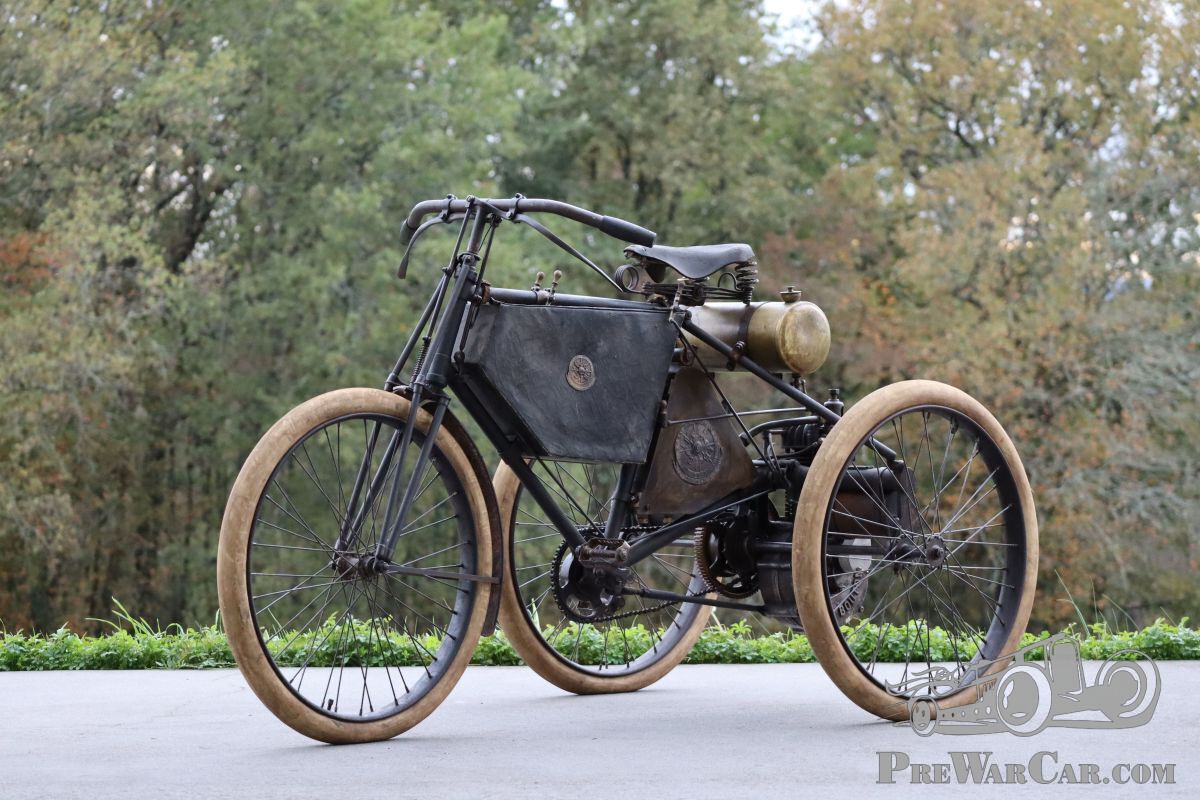
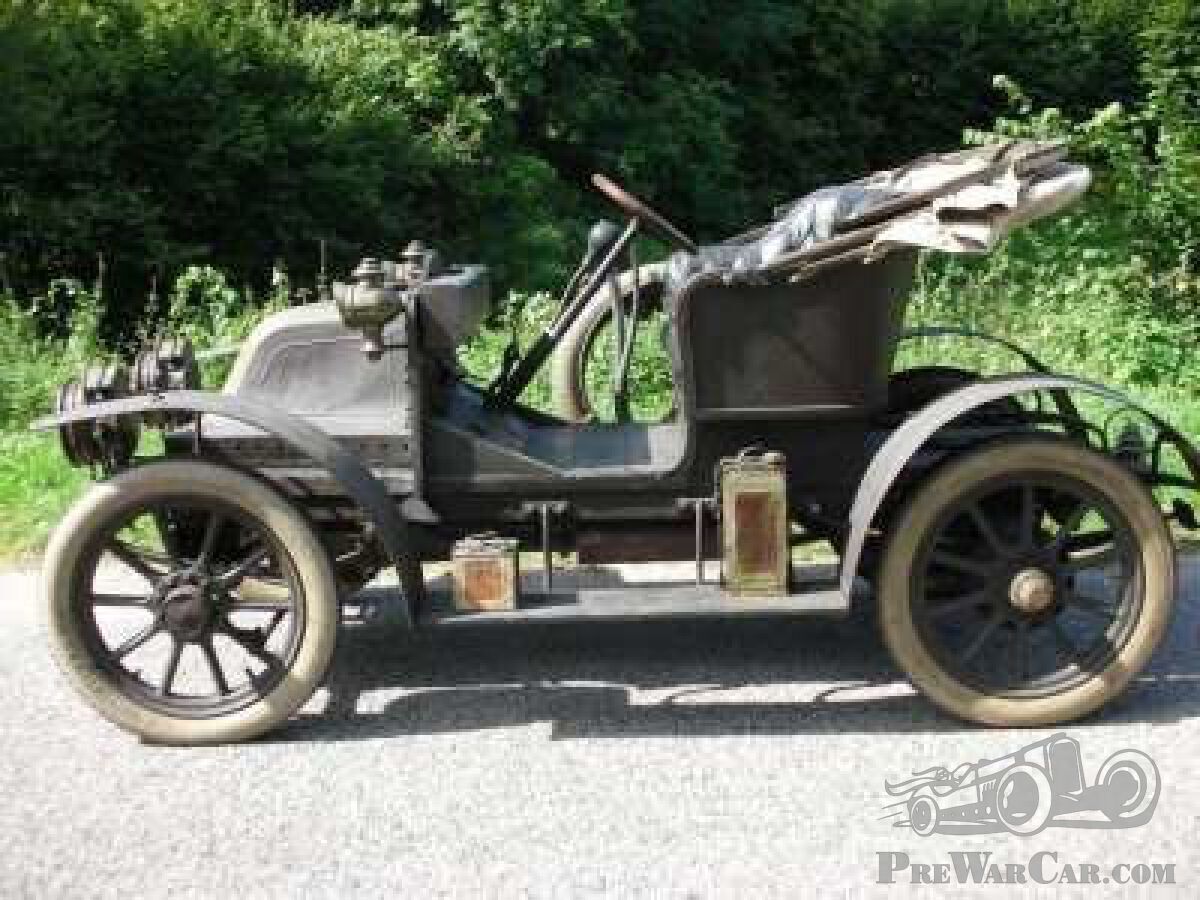
Some of the most exciting lots are a trio of unrestored cars from the veteran and Edwardian eras, the earliest of which is an 1897 De Dion-Bouton tricycle (€50,000-70,000 / £43,000-60,000). Dating from the first year of full-scale tricycle production, though De Dion had built a prototype as early as 1895, the originality of this example is extraordinary. Apart from sporting a beautiful patina, it still retains all the equipment unique to 1897 models. De Dion's tricycle received several updates during its production life, and many of the earliest survivors have been modified or restored with later equipment. That this example remains exactly as it was built 127 years ago makes it something truly exceptional, and possibly unique. It is offered for sale after 40 years in a private family collection.
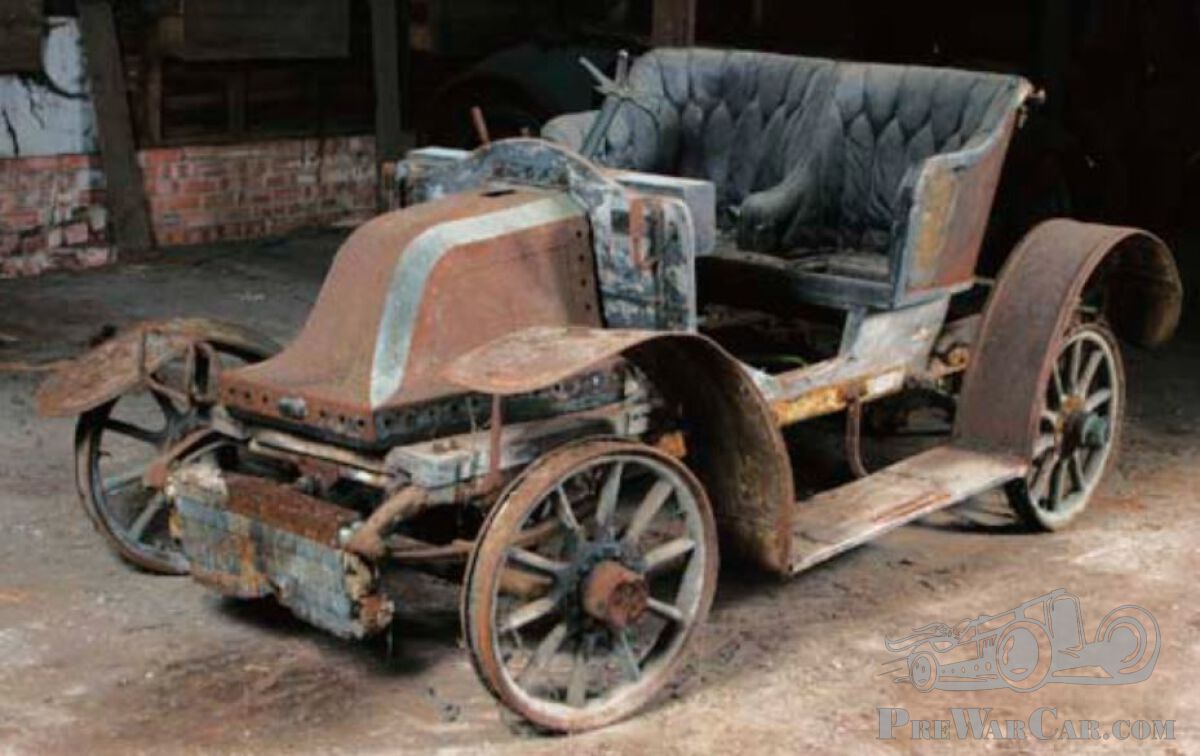
Those with a penchant for the weird and wonderful will delight in the c.1909 Bobrie Torpille (€30,000-50,000 / £26,000-43,000). It is the sole survivor of only about a dozen such cars ever built, and its existence was known to very few people until it was consigned for the Rétromobile sale. Léonce Bobrie, late of Barré, had dreams of producing his own cyclecar at a time when the cyclecar was very much a nascent phenomenon. Working in the garage in Saumur, which he ran with his brother Camille, and helped by foreman Georges Lafon, he produced his first car sometime between 1907 and 1909. With an all-steel tandem two-seater body, the driver occupying the front seat, and the option of six horse-power or eight horse-power Ballot engine, it's easy to see how it might have appealed to the impecunious or adventurous early motorist. The most remarkable thing about this car is that it is the one Bobrie kept for himself, and it has never left his family. While it'll be a little sad for it to leave the nest after all this time, it will be wonderful to see it put back on the road by an enthusiast. Perhaps we'll see it at a future Festival of Slowth?
For the enthusiast who enjoys a spot of grandeur, there can be nothing finer than the c.1912 Delaunay-Belleville Type HB6 coupé chauffeur (€150,000-200,000 / £130,000-170,000). Believed to be the 38th HB6 built, it is thought that it was not sold until after the Kaiser War, hence its 1919-onwards radiator cowl. The body is thought to be the work of Audineau et Cie. This is another car which has been family-owned from new, having been originally purchased by the vendor's grandfather. This continuity of ownership has ensured that the Delaunay survives with a lot of history, including photographs from a wedding in 1923. By the 1930s, it had been retired from use and was put into storage, not being touched again until it was consigned for sale. It has endured the last 90 years exceptionally well and, with a spot of renovation, it could be as sumptuous as it was when new. It is deserving of the most sympathetic oily-rag restoration, and we hope to see it thus restored one day in the future.
Vintage Voisins
The catalogue contains a most impressive selection of vintage and post-vintage cars, among them a Salmson, a Hispano-Suiza and multiple Bugattis, but Voisins are always among the most interesting cars wherever they appear, and we are pleased to see a couple going under the hammer in Paris. The earlier car is a 1929 Voisin C14 Chartreuse (€150,000-250,000 / £130,000-215,000), which looks ever so correct with its 'Cocotte' mascot, prominent luggage boxes, disc wheels and extravagant Art Déco interior. Retaining its original engine and wearing a nicely mellowed older restoration, it really looks a fine example of the marque. It comes with some early history, it having been registered in Haut-Rhin in 1934 and owned by a captain in Mulhouse in 1937.
Its companion is a 1930 C14 Aquitaine (€50,000-70,000 / £43,000-60,000), which comes with history from new having been registered originally in Paris's IIe arrondissement and retained by the same family until the 1990s, when it was bought by a doctor from the Bas-Rhin. He proceeded to treat it to a 15-year, chassis-up restoration, since when it has received little use. Elegantly finished, it could be an ideal car for somebody looking to try a Voisin for the first time.
Thirties curiosities
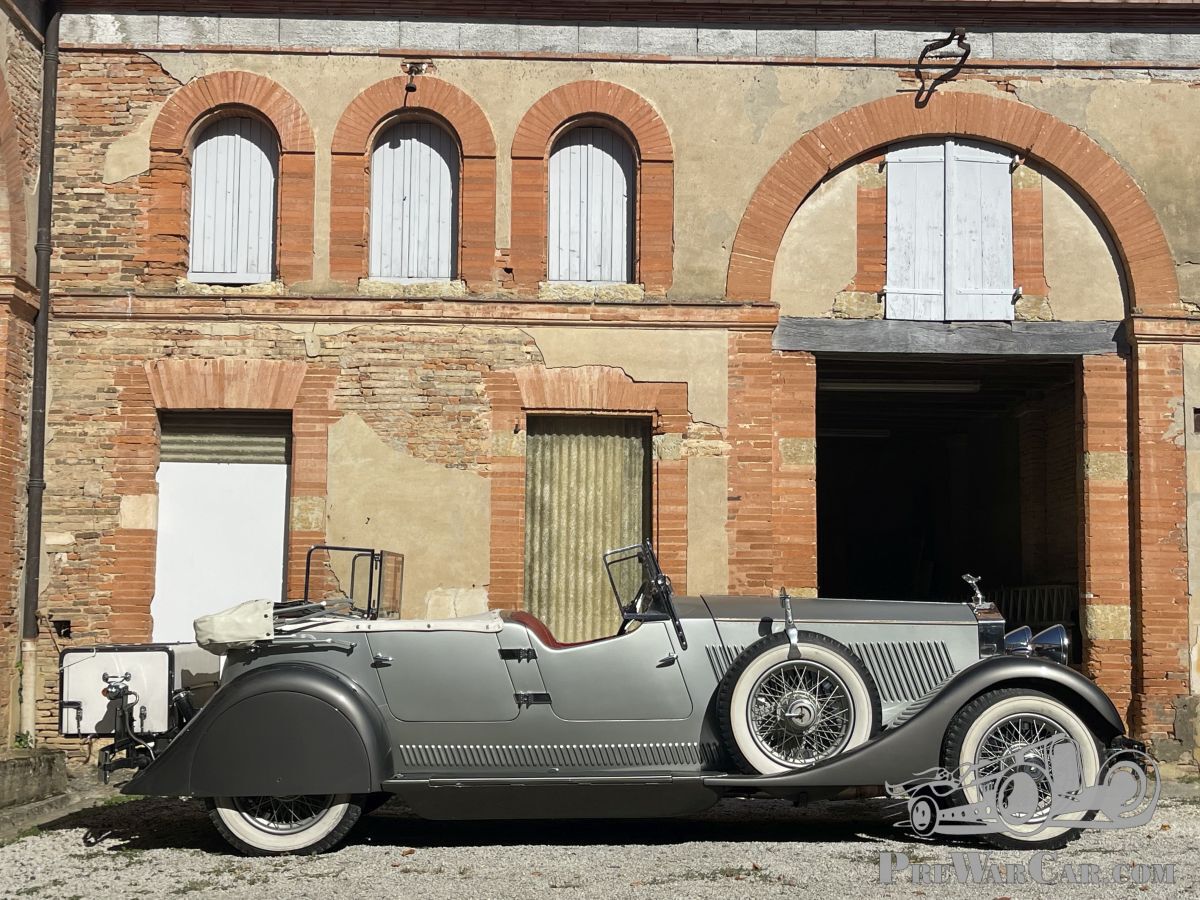
Whittingham & Mitchel was one of the smaller coachbuilding houses of the 1930s and one associated mainly with skimpy sports bodies, especially for the Wolseley Hornet. We had never supposed that its name and that of Rolls-Royce would be uttered in the same breath, but more fool us, for Artcurial is offering a 1930 Rolls-Royce Phantom II dual-cowl sports phæton (€160,000-240,000 / £140,000-205,000) built by the Fulham-based body-builder. It's not a meagre effort, either, but a very elegant, elaborate and somewhat American-looking design. The experimental chassis 25EX was originally despatched to Park Ward to be bodied as a limousine and immediately shipped to America and then to Europe, where it was tested over some 15,000 miles around France and Switzerland. Back in England, 25EX was sold to its first private buyer in March, 1933. J. Eskdale Fishburn was the bon vivant son of an art dealer, who lived in Piccadilly when not gallivanting around the world. It was he who asked Whittingham & Mitchel to make something a little more rakish out of it, and the marvellous result is what appears before you. It was still owned by Fishburn in 1946, but by 1950 it had gone to America. It was reimported into England in 2005 by noted Rolls-Royce dealer Ivor Bleaney, who subjected it to a full restoration. It has had just one French owner since.
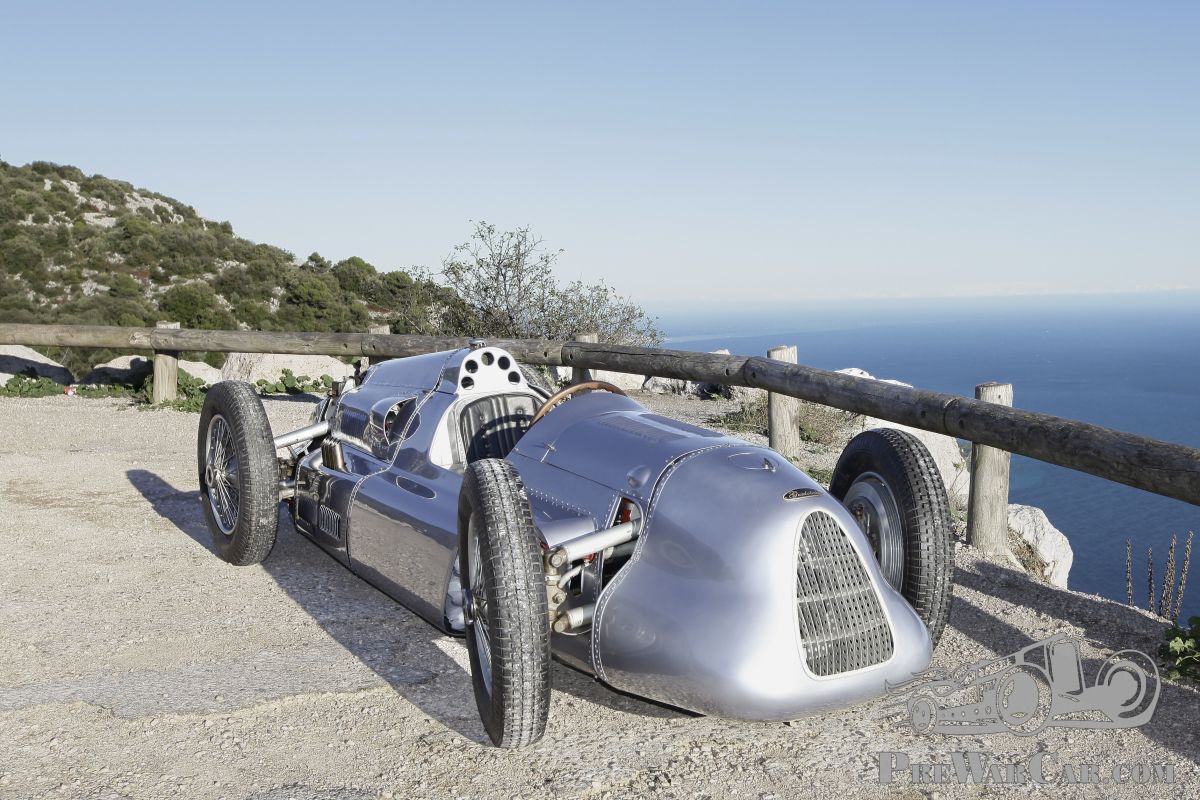
Finally, anyone with an eye for the outright bizarre might fancy a most unusual monoposto special. The 1939 Guidobaldi (€260,000-360,000 / £225,000-310,000), or Guidomobile, was built by François Guidobaldi of Antibes, an engineering enthusiast, serial patenter and, in his youth in the early 1900s, a cycling champion. In 1939, he built a car entirely to his own designs, and what eccentric designs they were. Manufacturing almost every component himself, he developed a kind of pendulum suspension, since he believed handling would be improved if the car's wheels leaned into the corners, and a star-shaped eight-cylinder two-stroke engine. We cannot say whether the Guidobaldi was ever tested on road and track, but its builder continually developed it into the 1950s. He died in 1971 and it was sold out of the family in 1980, shortly thereafter becoming an exhibit at the Mougins Automobile Museum near Cannes and remaining there until its closure in 2009. Apparently never having received any bodywork, its new owner created panels which give it an appearance reminiscent of an Auto Union and in this guise at has been displayed at the Cité de l'Automobile in Mulhouse. Benefitting from a full engine rebuild in 2022, it may be that, although eccentric, the Guidobaldi is an eminently useable car.
That's just a small selection of what Artcurial has to offer. It's a sale not to be missed, so have a look at the full catalogue here.
Publiziert:
Donnerstag Januar 18th, 2024
Facebook
LinkedIn
Twitter
WhatsApp
Email
Copy
Kommentare


Nicolas Van Frausum
18 Januar 2024, 20:37
Cars like these are the stars of the Rétromobile show for me every year. Thank you PreWarCar for continuing to highlight these cars.
-------------------------------------------
Les voitures comme celles-ci sont les vedettes du salon Rétromobile pour moi chaque année. Merci à PreWarCar de continuer à mettre ces voitures en valeur.
See you in Paris in a few weeks!
Nicolas VF
Antwerp Concours d'Elegance
Weiter lesen
-------------------------------------------
Les voitures comme celles-ci sont les vedettes du salon Rétromobile pour moi chaque année. Merci à PreWarCar de continuer à mettre ces voitures en valeur.
See you in Paris in a few weeks!
Nicolas VF
Antwerp Concours d'Elegance
Henri Lalanne
18 Januar 2024, 17:17
Bien sur que vous avez raison ,avec un radiateur en pointe et cette carrosserie nous sommes juste en 1913. D'ailleurs si on a le numero du moteur Ballot on saura l'année de fabrication du moteur (mais on peut toujours dire que le moteur avait été changé).
--------------------------------------------------
Of course you are right, with a pointed radiator and this bodywork we are right in 1913. Besides, if we have the Ballot engine number we will know the year of manufacture of the engine (but we can always say that the engine had been changed).
Weiter lesen
--------------------------------------------------
Of course you are right, with a pointed radiator and this bodywork we are right in 1913. Besides, if we have the Ballot engine number we will know the year of manufacture of the engine (but we can always say that the engine had been changed).
Ariejan Bos
18 Januar 2024, 10:49
The car which drew my attention was the Bobrie. I knew the Bobrie frères only from a Renault-like vehicle that was built by them somewhere before 1910. Several years ago a survivor surfaced, but its whereabouts are unknown to me.
The Bobrie Torpille is of course a completely different vehicle, which however I wouldn't call a cyclecar: Ballot engine and cardan drive would make it a voiturette in my opinion. The body is indeed Spartan with tandem seats, like cyclecars, but this sole fact is insufficient to define it as a cyclecar.
The license plate 523-K8 dates from June, 1914. This together with the homologation report of 1913 and the overall appearance of the car makes me doubt that this car was built in 1909. Maybe the development of this vehicle started at that date, resulting in this car around 1913. But if the facts show otherwise, I will gladly be corrected.
Weiter lesen
The Bobrie Torpille is of course a completely different vehicle, which however I wouldn't call a cyclecar: Ballot engine and cardan drive would make it a voiturette in my opinion. The body is indeed Spartan with tandem seats, like cyclecars, but this sole fact is insufficient to define it as a cyclecar.
The license plate 523-K8 dates from June, 1914. This together with the homologation report of 1913 and the overall appearance of the car makes me doubt that this car was built in 1909. Maybe the development of this vehicle started at that date, resulting in this car around 1913. But if the facts show otherwise, I will gladly be corrected.
The year 1909 which appears on the lighthouse of the Torpille is in no way proof of its year of construction.
The Bobrie voiturette was sold in 2005 by Christie's for £9,165.
It has been restored, but its location is unknown.
Laurent Zoller