Das weltweite Magazin und der Marktplatz für Oldtimer-Enthusiasten – von Enthusiasten.
Das weltweite Magazin und der Marktplatz für Oldtimer-Enthusiasten – von Enthusiasten.


Filter
Auswahl treffen
- Autos
-
Marke >>
-
Baujahr >>
-
-
Kategorie >>
-
Länder >>
- Motorräder
- Teile
-
Automarke >>
-
Hersteller >>
-
Kategorie >>
- Fahrräder
-
Baujahr >>
-
Länder



And so the first Straker Squire 6 arrived in Australia...

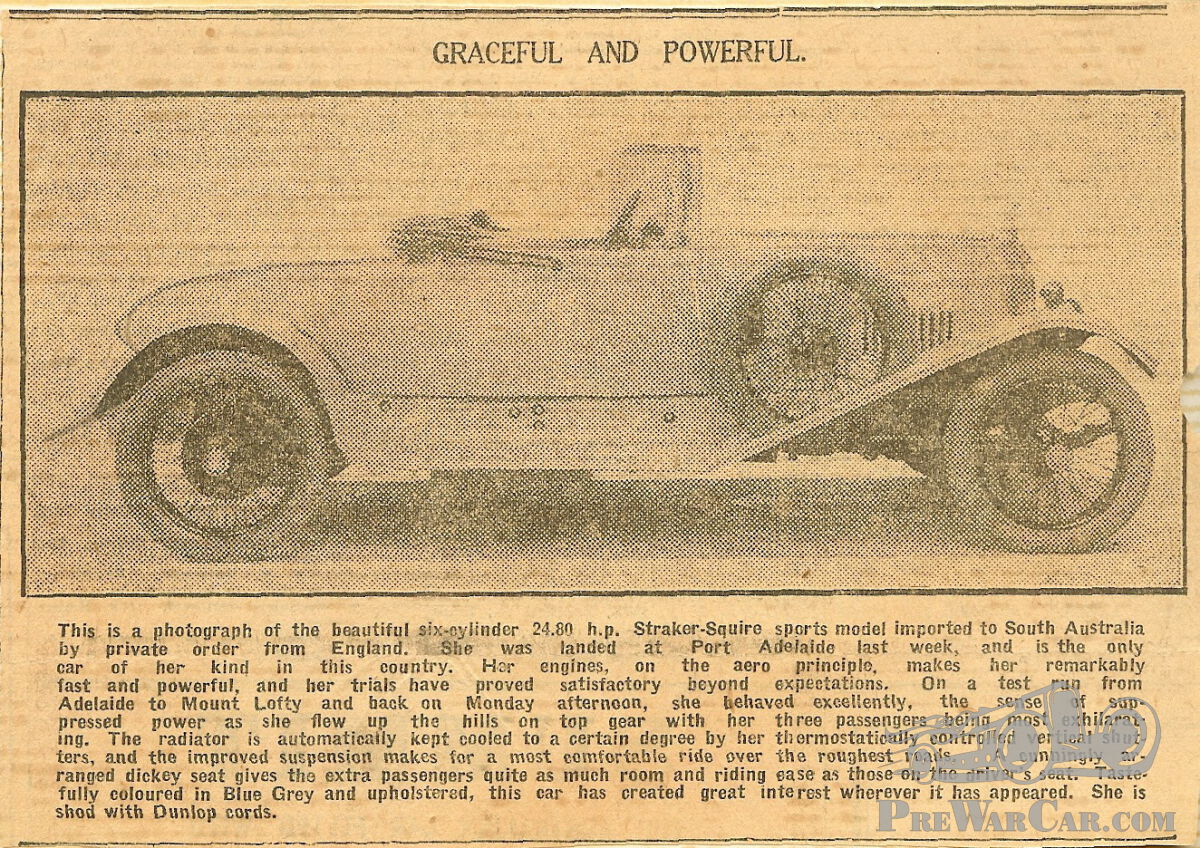


Evan Kyffin Thomas of North Adelaide, South Australia, owned a 1913 15 horsepower Straker Squire, registered 1815. He also owned ‘The Register’ newspaper, which later became ‘The Advertiser’. He was still using the 1913 Straker in 1923 when his diary records on Monday, Feb 12, ‘drop in Straker 6 chassis price £1150 to £850’.
On Friday of that week he went to look at Vauxhalls, and then the diary tells us that on Sunday, March 18 he received a cable from ‘Townsend in the London office of the Register that a Straker 6 would cost £960 on the boat’. On Tuesday, March 28 Mr Kyffin Thomas ordered a new 6 cylinder Straker. After several delays a letter was received on Wednesday 11 July advising further delay because of engine castings, then another on 30 July, this time a delay in gear cutting. Clearly, the cars were made to order. Then there was a dock strike.
Finally, on September 10 a cable advised that the new car was delivered to the London office on The Strand and was tested at 75 mph, and then loaded the next day onto ‘SS Moreton Bay’. The ship arrived in Adelaide on Tuesday 16 October at 12.20 pm and the two days later the car was in ‘The Register’s’ garage. And so the first Straker 6 arrived in Australia.
The 1913 four cylinder Straker was sold locally, but not before the registration number was transferred to the new car. ‘The Register’ offices were on Grenfell Street Adelaide (Register Lane marks the spot), and opposite was the premises of Steve Delmont, a lithographer who serviced ‘The Register’. Delmont saw the Straker arrive daily and park opposite, and before long he ordered one. So in 1926 another arrived in Adelaide, as far as we know, the only two exported from England. That is the ‘George Brooks car’, now in the National Motor Museum, Birdwood.
The Kyffin Thomas Six did at least one trip to Melbourne, but by the condition of its pedals, brake linkage etc, it did not do a lot of hard work in their ownership. After Mr Kyffin Thomas’ demise, Mrs Kyffin Thomas sold the car to a Port Pirie builder named Norton, who was looking for a powerful chassis to make a light truck. This he did. By then George Brooks owned the Delmont Straker 6. Hearing that the Port Pirie utility was available, George negotiated to buy it, and on August 1, 1952, he did, for the sum of £120, a considerable price for an old car at the time. It was towed back to Adelaide behind George’s Straker 6.
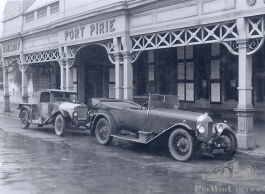
The Kyffin Thomas car remained with George until 10 January 1987 when it was sold to me after I rebuilt the engine of his Straker. I didn’t realise that I was being assessed as a future owner of the other car.
After replacing bearings in the cam drive I started the engine, but as the gearbox had been dismantled it was not driven. Having learned the lesson of not dismantling things until everything is in place for a continuous rebuild, the car was not touched until 2006, when the gearbox was rebuilt, fitted, and the car drove a short distance.
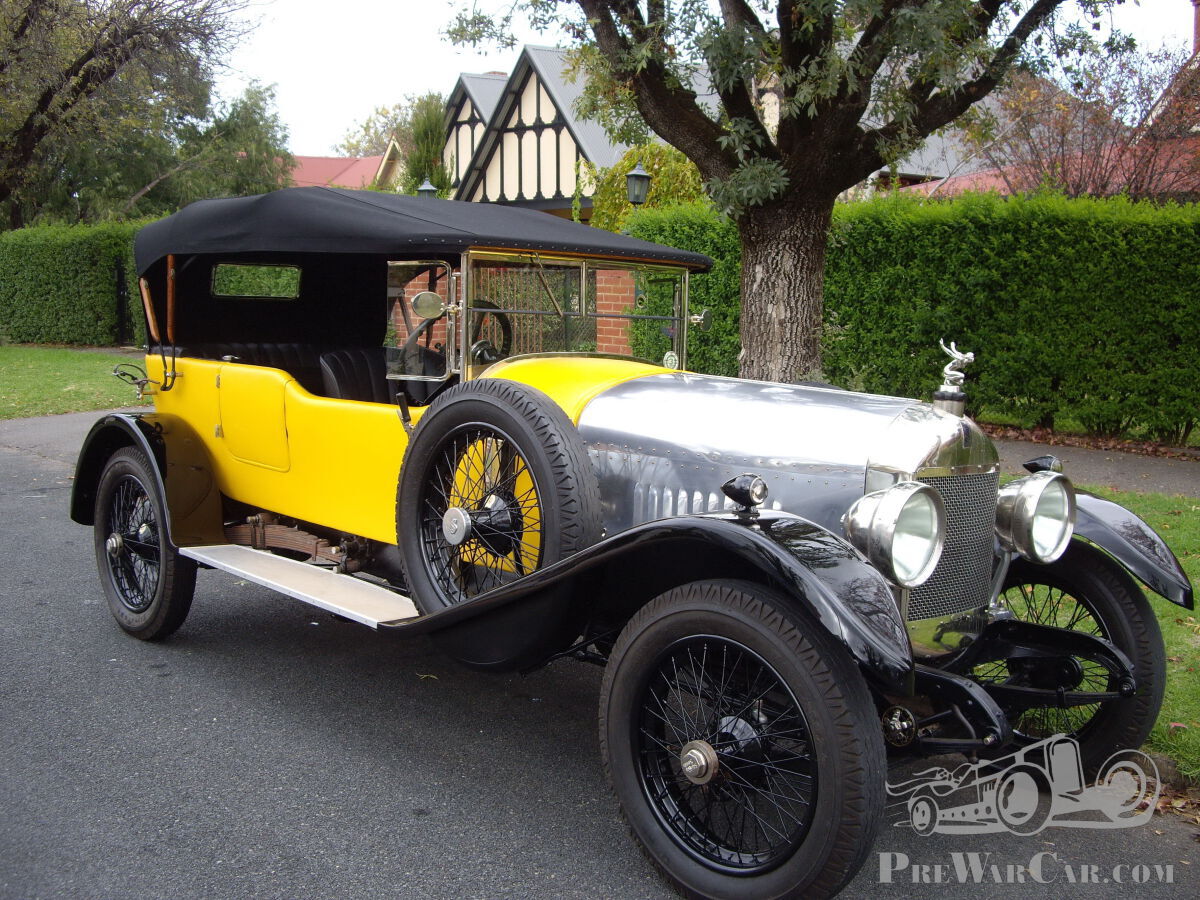
A new body frame of the Van den Plas type (one of the options) was built that year, and conveniently the chassis dimensions are identical to a 4 ½ litre Bentley. Bertie Kensington-Moir, W.O.’s nephew, raced the experimental Straker in 1918, and it is not surprising that there are similarities. During 2007 the chassis was stripped and rebuilt. The motor required only a .020” bore (it’s first) and the crank needed only a .010” grind. These things attest to the theory that the only hard work done by the car was for a brief time at Port Pirie, and the shackles showed evidence of that.
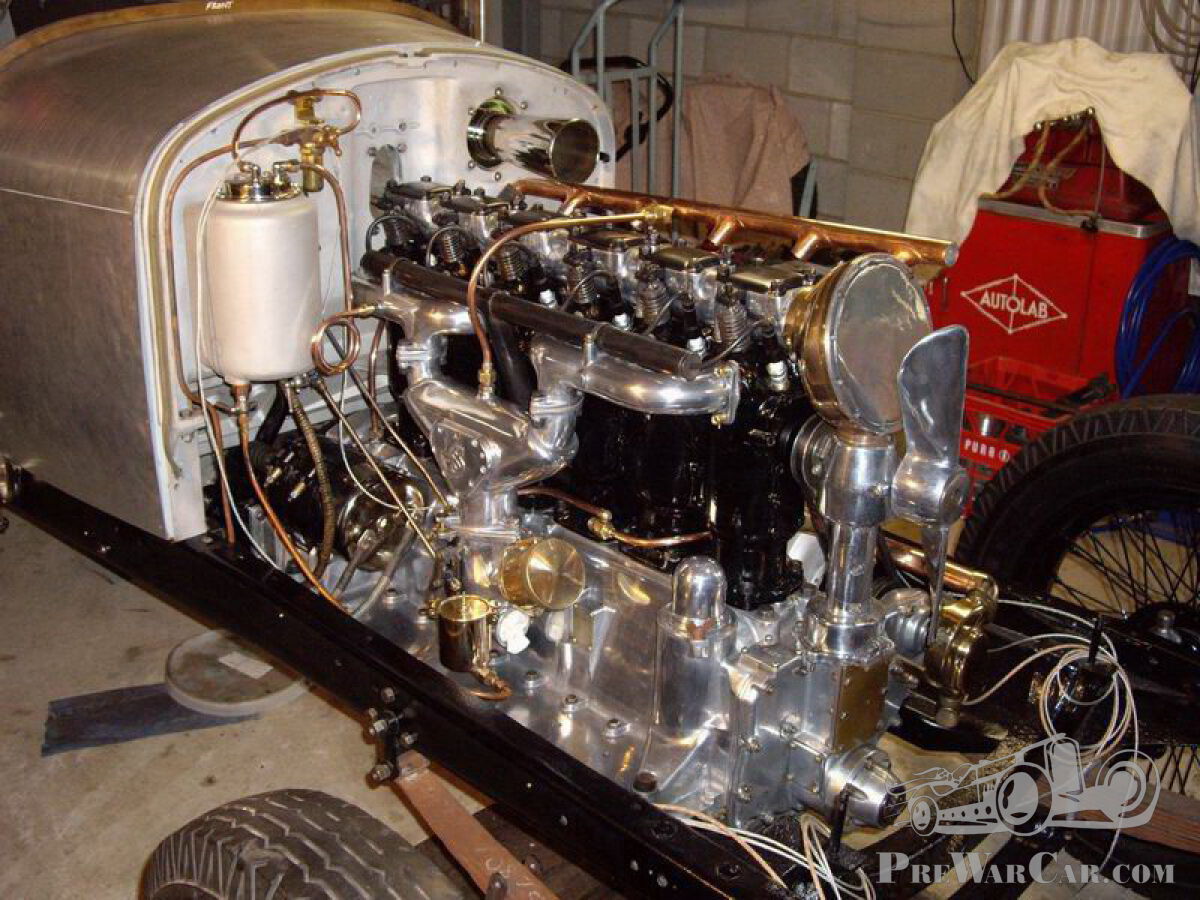
The rebuilt engine was first started in December 2007 and the car again driven a short distance. Then, over Christmas a hood frame was fabricated, again using a local VdP original as a reference. The rebuilt engine was fitted in November 2007, after the extensive job of drilling out most of the 120 ¼” BSF countersunk screws which fasten the water jacket side plates to the cylinder castings. These were helicoiled with Loctite and the new stainless screws inserted with a hydraulic sealant. New phosphor bronze valve guides were made and new valves and pistons fitted.
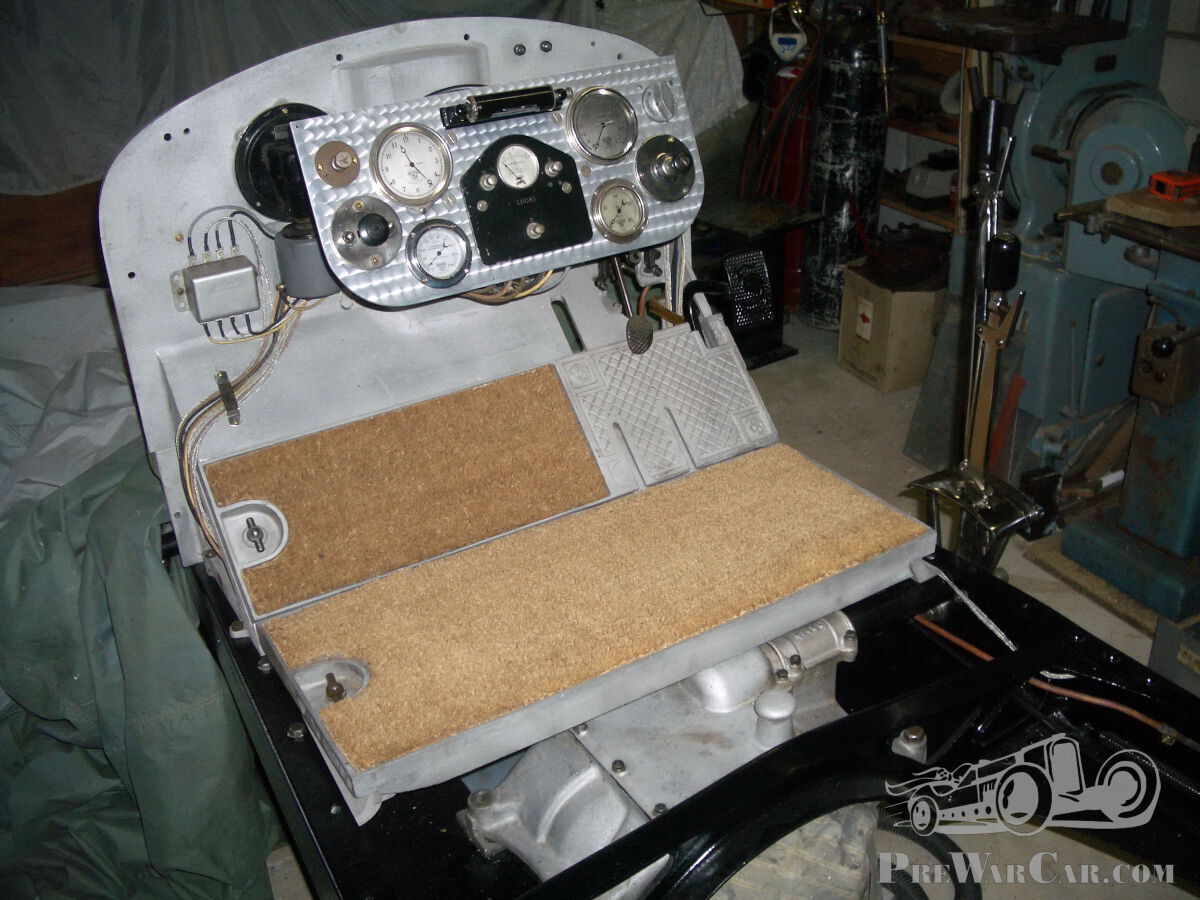
The Straker 6, designed by Sir Roy Fedden, has many interesting features. The OHC engine with separate cylinders is taken from the Rolls aero engine made in numbers by Straker Squire through the war. In 1918, and in new well-equipped ordnance facilities taken over by Straker at war’s end, Fedden produced the engine. The first series have a worm and wheel top drive, like the Napier, and the factory monoposto racer ‘X2’ which now lives in Argentina, is so equipped. Before long the conventional bevel a ’la Bentley was adopted, and at about the same time, as their first was in 1919. The cast aluminium firewall, light disc clutch plate with linings on the driving members, torque tube drive and cantilever rear suspension are all a bit different. The dash panel is mounted to the firewall by a very aero-looking casting, keeping it independent from the body. The front floor panels are also cast alloy, recessed to take coir mats.
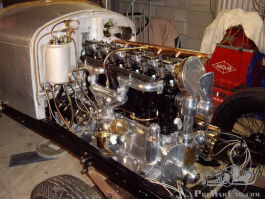
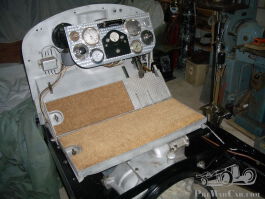
Of the 60 Straker 6 built, there are the two in Australia, one in Argentina and one in the U.K. The running gear of the Granville Grenfell special, built from new factory spares after it closed, was also brought to Australia by Brooks in 1952. They have returned to the UK and are being built into a replica racer.
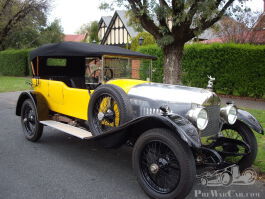
1923 Straker Squire PA
Words and photographs by Terry Parker.
Publiziert:
Mittwoch März 24th, 2021
Facebook
LinkedIn
Twitter
WhatsApp
Email
Copy
Kommentare
Richard Fayter
25 März 2021, 17:49
duncan hutchinson
24 März 2021, 23:40
PS: 'our' Straker-Squire looks very much like the yellow 1923 example in your photo. Same one perhaps?
Weiter lesen
duncan hutchinson
24 März 2021, 23:37
We restored a Straker-Squire sometime around 1980-ish at Barry Simpson Engineering near Newton Abbot in Devon, UK. I understood it to be just post WW1, although that could be mistaken. The engine was one half of a Roll-Royce Eagle aero engine. I was only responsible for a few electrical bits and bobs. Apparently its owner had good contacts in the mechanical engineering industry, and I seem to recall had a one-off crown wheel and pinion manufactured for it. We successfully 'grew' the worn out pistons by several thou using a glass bead blasting cabinet. The button leather was completely replaced, which was a bit of a challenge even for our fastidious trimmer Ernie Patrick. My foreman Mike McElligott manufactured a new hood frame for it in solid steel, all joints brass bushed, a beautiful bit of work, having first modelled it small scale in wood to get the right geometry. The one thing we didn't consider was that once it was completed with double duck fabric the whole darned thing was so heavy that raising the hood was a 2-man lift! Should've used aluminium! As the car left us, I recall the bonnet was bare polished alum, and the body proper in maroon. I have one or two photos I took at the time in one of our family photo albums, hopefully showing its registration number. I can post these here or to FB if anyone expresses an interest and drops me an email. It would be interesting to know where that car is now. At the time we were aware that there was at least one other example in Australia
Weiter lesen
Ian Kenny
06 Februar 2019, 23:52
What an interesting story, I had no idea that these cars were so special. The engine is a real jewel and is a testament to the designer as well as the man who rebuilt it . Well done.
Weiter lesen
My Straker Squire prior to Bernard Harding was owned by Philip Mann, concurrently with his ownership of the mechanically similar SS 'dazzle racer', and concurrently with his ownership of the Lautenschlager driven winning 1914 Mercedes 1914 Grand Prix racer, to which the Straker Squire 6 bares striking resemblance, albeit the Mercedes is a 4.5 litre OHC four. The SS engine is extremely refined, but 'purposeful', and the chassis and mechanics were optimised for strength and lightness. Interestingly, Mercedes supercharged (by Dr Porsche) one of their 1914 French GP cars, and driven by Caracciola it made FTD in 1926 over the 10 kilometres Semmering Hill Climb. I have maintained the mechanical originality of my Straker Squire, but am sometimes tempted to supercharge it, as clearly the shared 'gene pool' would liberate a lot more horse power!