Das weltweite Magazin und der Marktplatz für Oldtimer-Enthusiasten – von Enthusiasten.





Der Markt; alle Pre-War fahrzeuge zu verkaufen
Überblick ähnlicher Anzeigen Frazernash Kit
-

1929 Ford Model A Roadster | Estate of Mark Smith Auction | Gooding & Company | April 7, 2023
1927 marked a new and exciting chapter for Ford with the introduction of the Model A. An improvement in both design and performance over the Model T, it was offered in a wide variety of body styles and utilized standard controls more in line with other automakers. The new model surpassed its predecessor in every way, resonating with the buying p.. -
1923 Brewster Model 91 Town Brougham | Estate of Mark Smith Auction | Gooding & Company | April 7, 2023
Brewster & Co., the most trusted name in American custom coachbuilding during the horse-and-buggy days, made a successful transition into the horseless carriage era. Based in New York City and boasting a peerless reputation for its build quality and elegant designs, this renowned firm produced custom automobile bodies for an elite clientel.. -
1928 Lincoln Model L Club Roadster | Estate of Mark Smith Auction | Gooding & Company | April 7, 2023
Following his purchase of Henry Leland’s Lincoln Motor Company in 1922, Henry Ford entrusted the new flagship of his automotive empire to his only son, Edsel. Almost immediately, Edsel’s eye for design led him to turn away from the bland Leland-era bodies and hire prestigious coachbuilding firms to design an array of attractive custom and semi-c.. -
1929 Stutz Series M Cabriolet | Estate of Mark Smith Auction | Gooding & Company | April 7, 2023
From its debut at the inaugural running of the Indianapolis 500 in 1911, Stutz cultivated an obsession with speed. Following its 1927 Stevens Trophy Cup and AAA Stock Car Champion wins, along with its epic 1928 Le Mans battle, the Indianapolis firm introduced its improved Series M in 1929. The enlarged Vertical Eight engine provided more power, .. -
1924 Ford Model T Speedster | Estate of Mark Smith Auction | Gooding & Company | April 7, 2023
In 1915, Louis Chevrolet, race car driver Joe Boyer, Indianapolis car dealer William Small, and Zenith Carburetor president Victor Heftler established the Frontenac Motor Corporation with the expressed purpose of engineering, building, and racing high-performance automobiles. Frontenac cars went on to capture back-to-back wins at the Indianapoli.. -
1923 Packard Model EC Fire Engine | Estate of Mark Smith Auction | Gooding & Company | April 7, 2023
This beautifully preserved 1923 Packard Model EC Fire Engine is based on a Packard commercial truck chassis, examples of which were built from 1918 to 1923. These trucks were powered by four-cylinder engines displacing 432 cubic inches and producing either 32 or 40 hp, depending on the model. This Packard is outfitted with firefighting a.. -
1922 Mercer Series 5 Sporting | Estate of Mark Smith Auction | Gooding & Company | April 7, 2023
Founded in 1909 in Trenton, New Jersey by the Roebling family, the Mercer Company produced some of the most celebrated high-performance automobiles of the early 20th century. Their early success in racing, and the engineering and production of the one of the first American sports cars, the Raceabout, which debuted in 1910, earned Mercer a respec.. -
1922 Dodge Custom Roadster | Estate of Mark Smith Auction | Gooding & Company | April 7, 2023
Established in 1845 by Henry Holmes Babcock, the Babcock Buggy Company of Watertown, New York was a regional carriage builder that successfully transitioned into the burgeoning automobile business, producing cars of its own design from 1909 to 1913. Around the time that Babcock wound down its automobile production, it returned to the co.. -
1925 Locomobile Model 48 Sedan | Estate of Mark Smith Auction | Gooding & Company | April 7, 2023
Established in Watertown, Massachusetts, Locomobile was the early motoring choice for many of America’s elite enthusiasts. Renowned for its fast and luxurious automobiles, Locomobile’s reputation was heightened by victory in the 1908 Vanderbilt Cup – the first for an American marque. The mighty six-cylinder Model 48, introduced in 1911, went on .. -
1929 Studebaker President Eight Roadster | Estate of Mark Smith Auction | Gooding & Company | April 7, 2023
During the 1920s, Studebaker President Albert Russel Erskine pursued his dream of transforming this South Bend, Indiana, manufacturer into a giant of the American automobile industry. He spared no expense in making his latest models the finest on the road and named them after potentates: Dictator, Commander, and President. The President,..





Ausgewählt

1934 Frazer-Nash Shelsley
Fahrgestell 2141. Zulassung BMP848. Es ist eines der sieben hergestellten Shelsley-Fahrgestelle und wird von einem der acht SOHC-Gough-Motoren ange..
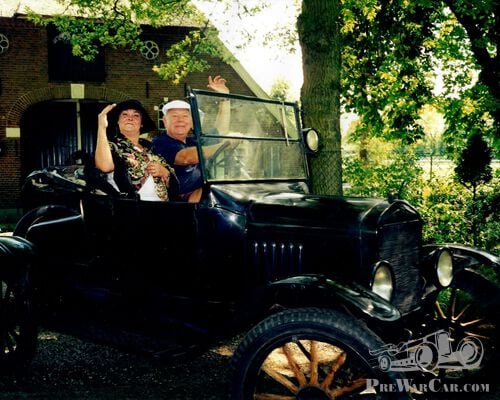
Zeer originele Ford Model T runabout
2 zits cabrio, motor is los, niet gerestaureerd, volledig orgineel, ingevoerd uit california in 1998, van de 2e eigenaar (m'n Oom) die hem van zn b..
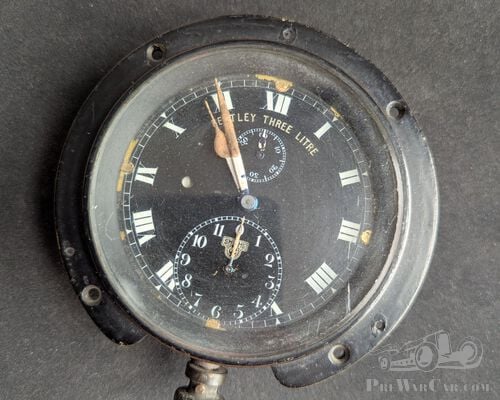
A scarce Bentley 3 litre 'time of trip' chronometer by Smiths, 1920s
Black dial with Roman numerals, subsidiary seconds dial at 12 o'clock and time-of-trip dial at 6 o'clock, three position control knob/winder, persp..