Das weltweite Magazin und der Marktplatz für Oldtimer-Enthusiasten – von Enthusiasten.
Das weltweite Magazin und der Marktplatz für Oldtimer-Enthusiasten – von Enthusiasten.


Filter
Auswahl treffen
- Autos
-
Marke >>
-
Baujahr >>
-
-
Kategorie >>
-
Länder >>
- Motorräder
- Teile
-
Automarke >>
-
Hersteller >>
-
Kategorie >>
- Fahrräder
-
Baujahr >>
-
Länder


Ab Jenkins: Iron man of the salt


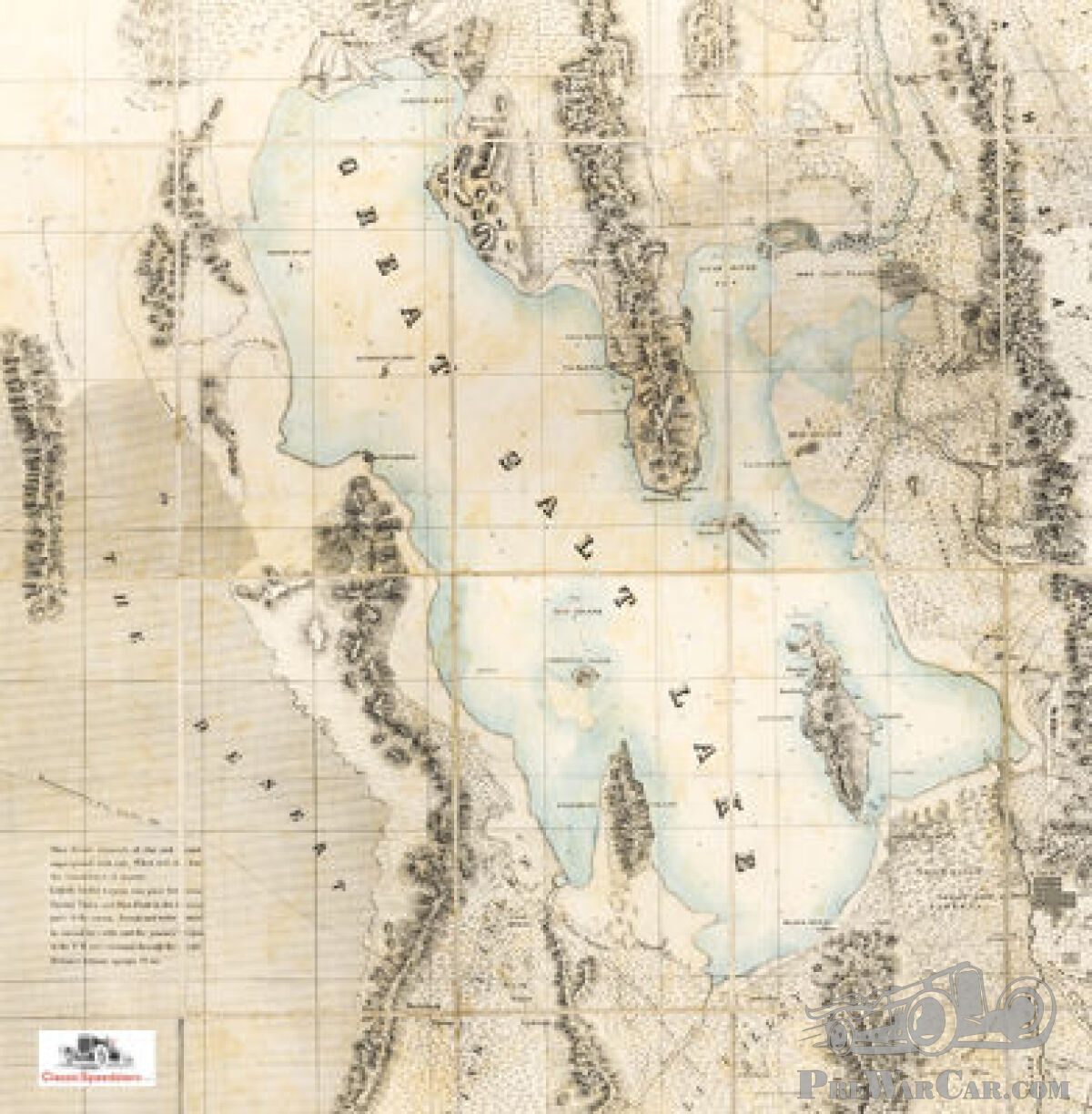


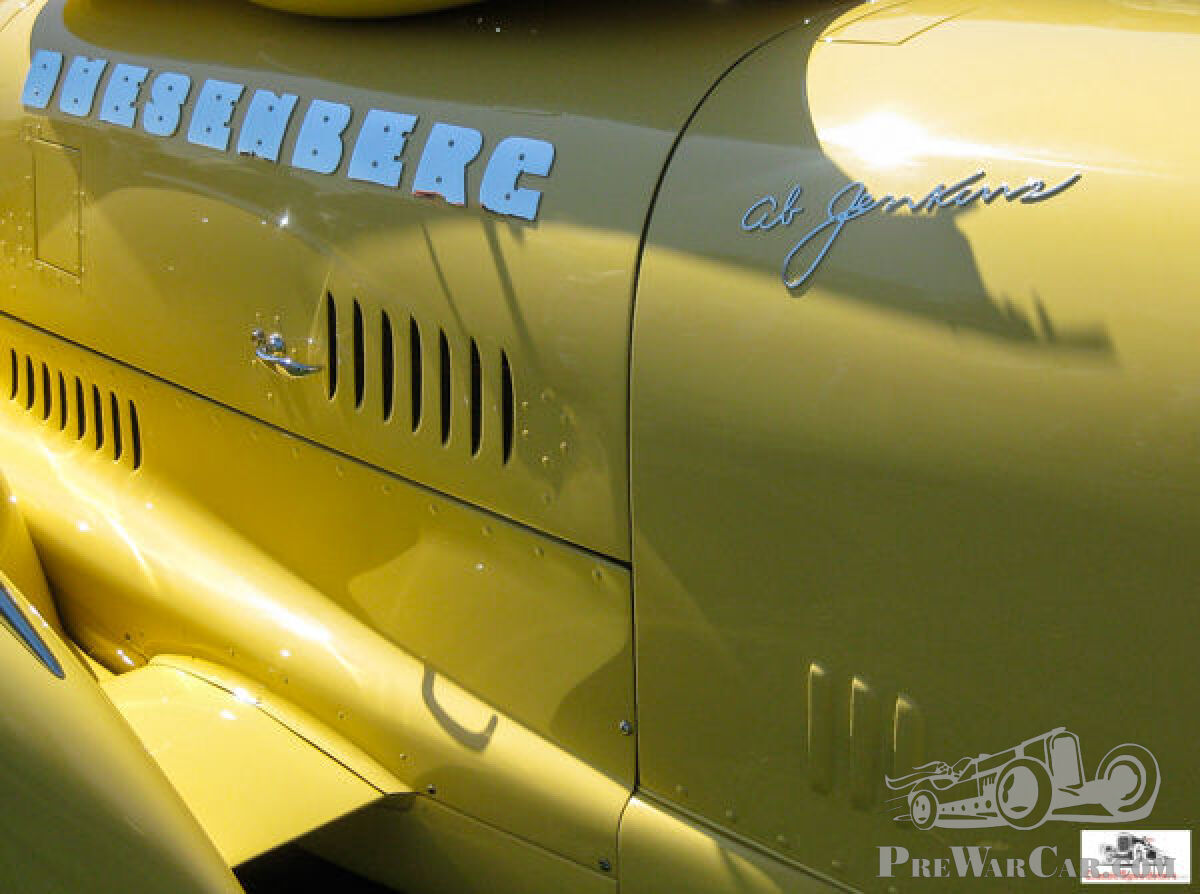


David “Ab” Jenkins might well be one of the greatest names in pre-war race history. He was born in Spanish Fork, Utah before he moved with his parents to Salt Lake City, on which Salt Lakes he, in later years, campaigned his famous speedster known as The Mormon Meteor (I, II, and III) but first he would build up his reputation driving in promotional endurance events for various automobile companies out to prove just how trouble-free their cars were.
In the late 1920s Studebaker, Hudson, Stutz, and Auburn were all competing for stock car speed and endurance honors. Jenkins had raced motorcycles successfully and on August 9, 1923 he would pilot a Studebaker to promote the brand and set a speed-endurance record from Salt Lake City to the mountain town of Fish Lake, a feat that he would repeat in 1926 with a run from Los Angeles to Salt lake City.
In the same year, Jenkins established a coast-to-coast record from New York to San Francisco of 86 hours and 20 minutes in a Studebaker Sheriff, which brought him recognition in newspapers and on radio variety shows.
Although Jenkins was involved in board track racing in the 1920s and endurance events for Studebaker up through 1931, it was his high-speed record-making on the Bonneville Salt Flats that would establish Jenkins’ national fame. In addition to this, Jenkins’ persistent promotion of the flats would eventually put Bonneville on the map as the go-to place for land speed records.
The backstory of Bonneville
Prior to Bonneville’s rise, Ormond Beach in Daytona, Florida had been the primary place to go for land speed record attempts in the United States. Others had foreseen the usefulness of a large, flat, open area for going fast that was not shifting sand bounded by a restless ocean.
In 1896, motoring pioneer W.D. Rishel had scouted the salt flats as he surveyed a course for a coast-to-coast bicycle race. Rishel would later try his hand at speeding on the salt, and it was Rishel who was the first promoter of the flats west of Salt Lake City for land speed racing.
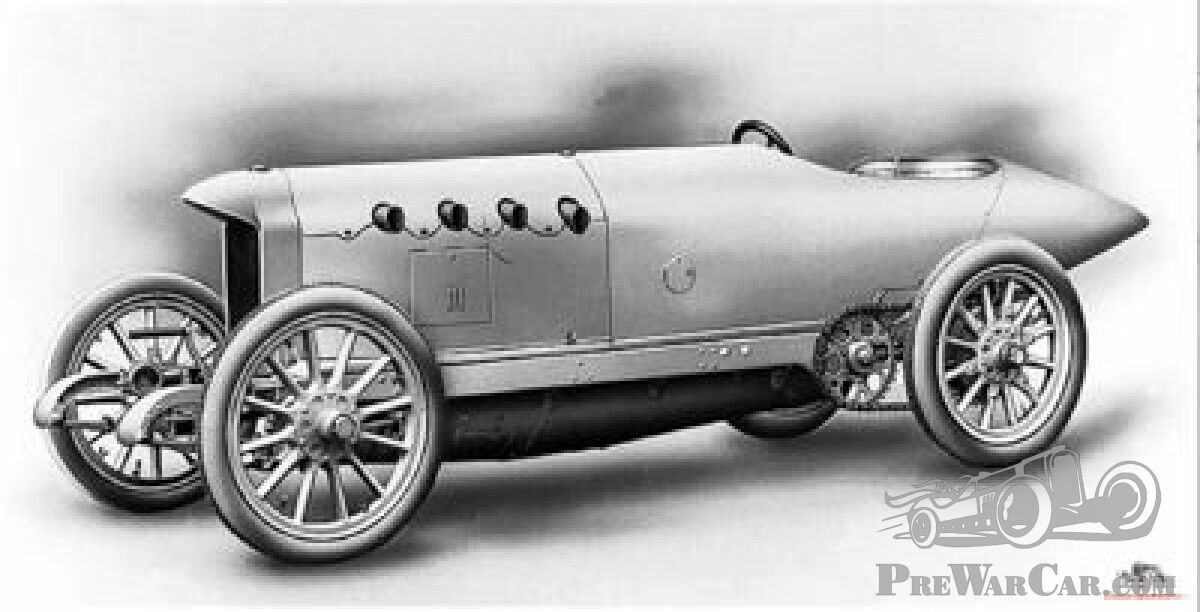
In 1914, Rishel convinced “Terrible Teddy” Tetzlaff, to attempt a high speed run on the salt. He came with a thoroughbred to Bonneville in 1914: a four-cylinder, 21.5-liter(!), 200 hp racecar known as the “Blitzen Benz”.
Like many of his kind at this time in the early 20th century, Tetzlaff was all about adventure, and the untested salt flats seemed to be ideal for serious high-speed runs. Although Tetzlaff’s actual speed attempt in 1914 was not sanctioned by the AAA, he flew through the traps at 142.8 mph, thus setting a new unofficial world land speed record.
Jenkins conquers the Salt
Jenkins had already established Studebaker as a reliable and sturdy car through several records that he had achieved. When Studebaker purchased Pierce-Arrow in 1928, Jenkins was tasked to improve the Pierce image as he had done with Studebaker.
Pierce had been experiencing trouble getting their new V-12 engine to perform better than their current inline-eight. Invited to their Buffalo plant, Ab was able to tinker and tune the engine with its designer, Karl Wise, and together they increased its output to 175 hp. This gave Jenkins an idea: use the Pierce for an endurance run on the salt flats to both promote the new V-12 and Bonneville at the same time.
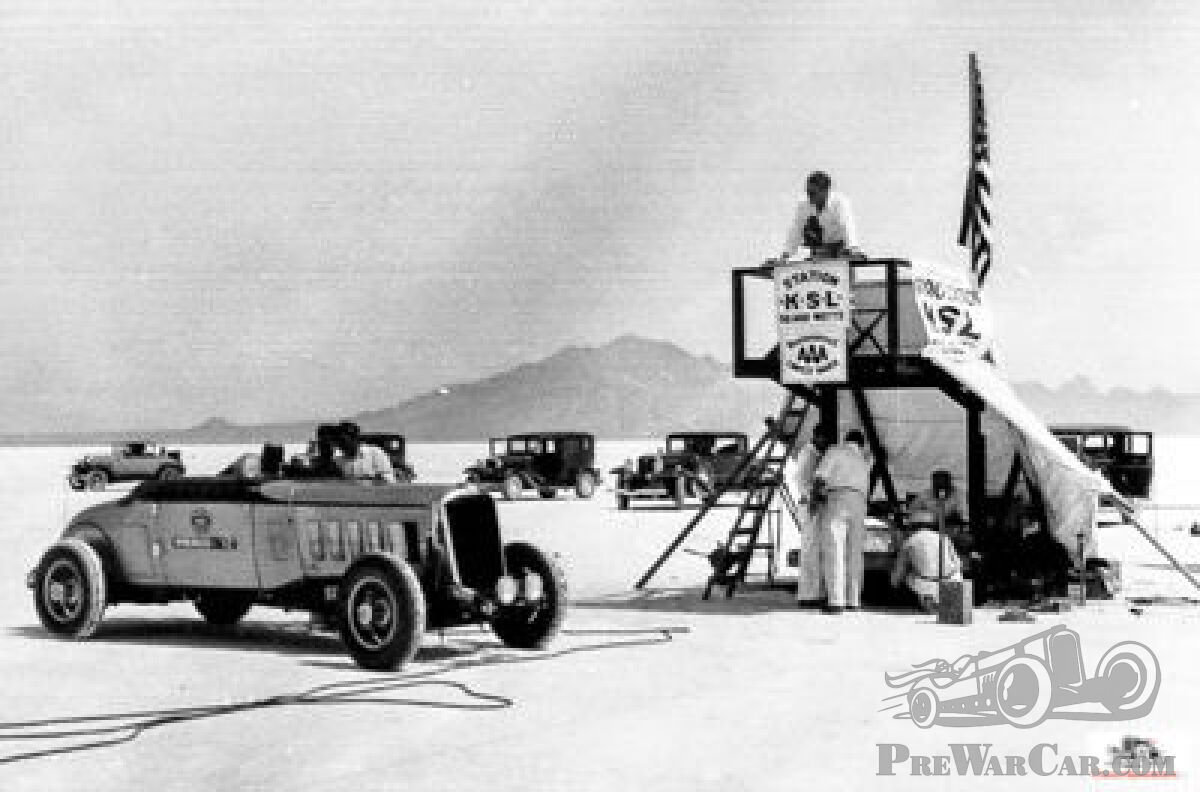
In 1932, Jenkins arrived at Bonneville with a loaned Pierce V-12 Roadster and six extra tires. Despite an AAA Contest Board suspension, Jenkins had decided to make the record run. His results would be considered unofficial, but Jenkins and a group of friends set up a circular course of 10 miles circumference. They stripped the Pierce-Arrow of fenders and windshield. Pitting every 200 miles for gas and tires, Jenkins soldiered on for 24 hours and exceeded even his own predictions, travelling 2710 miles at an average speed of 112.960 mph. This was fuel enough for his supporters to sponsor another run the following year.
In 1933 his AAA suspension was lifted and Jenkins returned to Bonneville for an internationally-sanctioned speed run. High winds and rain threatened the attempt, but Jenkins sped on to break 14 international speed and endurance records in his Pierce roadster and set a 24-hour record of 117.77 mph.
Anticipating that the finish line would be a Kodak moment for car and driver, Jenkins had packed a razor and a tube of shaving cream in his cockpit. He scraped the stubble off of his face while racing at over 125 mph, emerging clean-shaven for the cameras at the end of his record run!
Jenkins and Duesenberg Dominance
Despite the Depression years, 1933 was the beginning of fierce competition in ultimate speed. Ab Jenkins finally convinced his British contemporaries, Sir Malcolm Campbell, John Cobb, and Captain George Eyston, to consider Bonneville over Daytona, which was limited by its geography.
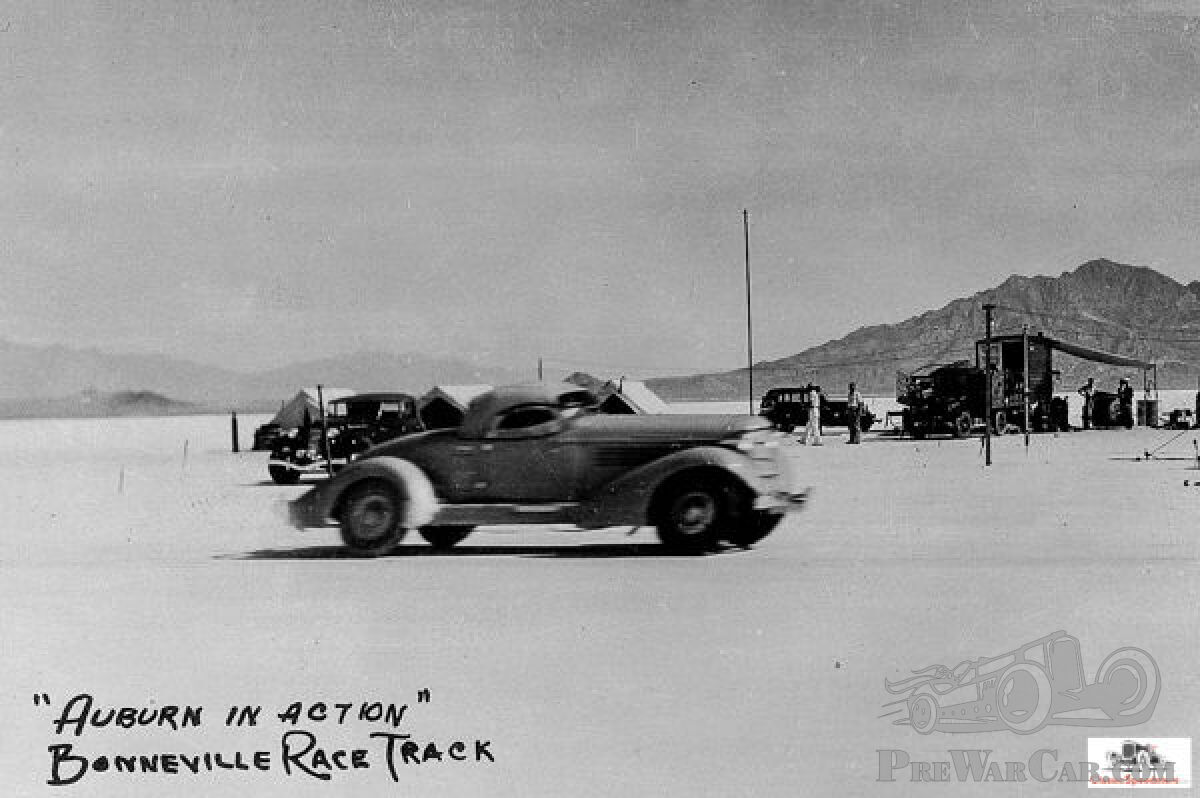
Jenkins, who was now a test driver for Auburn, had set a speed record for stock cars (Class B) and an endurance record at Bonneville in a 1935 Auburn 851 Speedster. Shortly after this event, Auburn president Roy Faulkner offered a Duesenberg chassis and the services of Augie Duesenberg’s race shop to contest a Duesenberg in Class B on the salt flats.
The Duesenberg 142.5” SJ frame was cloaked with an elongated speedster body, and Augie, along with cam specialist Ed Winfield, worked their magic on the supercharged SJ engine to ensure that it developed every bit of 400 hp at 5000 rpm.
On the second attempt, the crankcase split. Swapping engines, Jenkins enlisted Tony Gulotta, an Indy 500 racer and friend, as his relief driver for a third try. Despite a fire in the cockpit luck, held and the Duesenberg Special established a new series of records for Class B, including a 24-hour endurance record covering 3,253 miles at an average speed of 135.470 mph.
Only days later, on September 3, 1935, the absolute speed record fell to Sir Malcolm Campbell, who set a new world’s record of 301.337 mph in the Bluebird, his custom land speed racer. A short time after that, Captain Eyston bested Jenkins’ new record by setting a new 24-hour record of 140.520 mph in Class B with his Rolls-Royce Speed of the Wind.
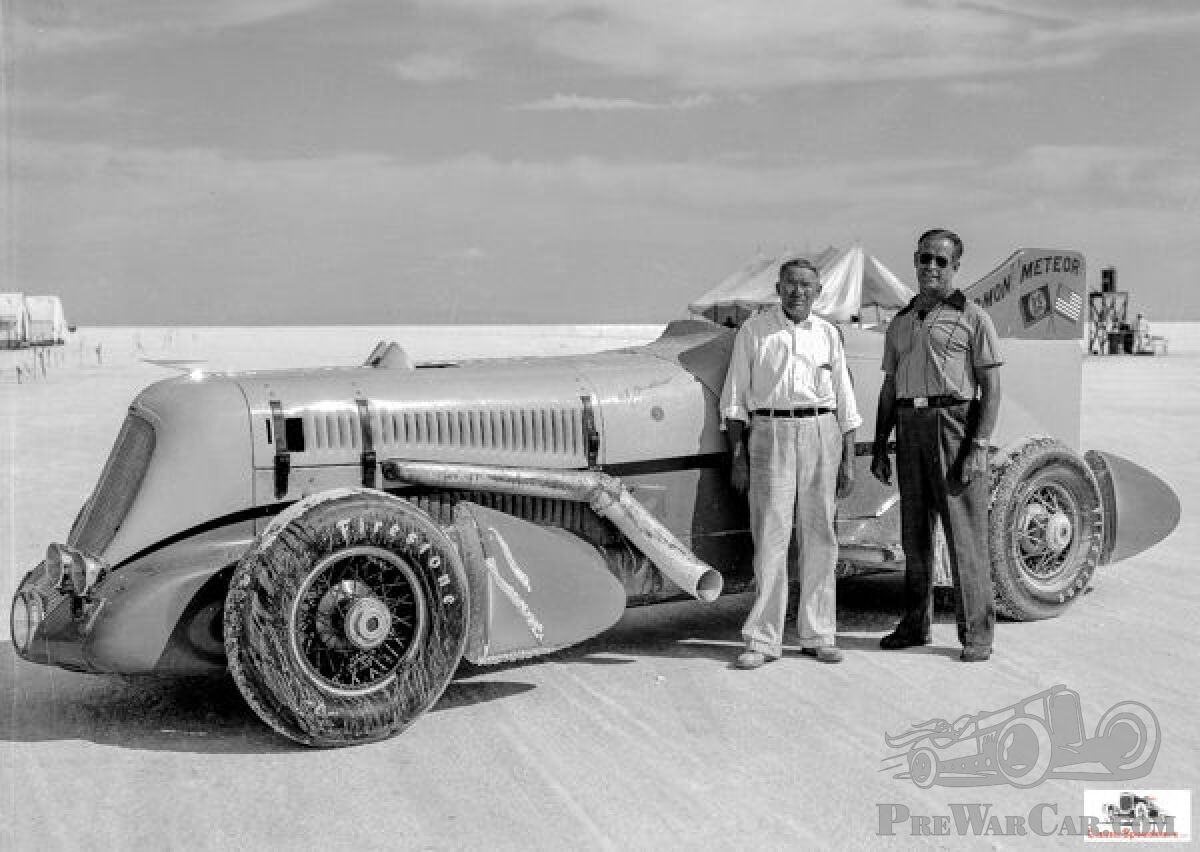
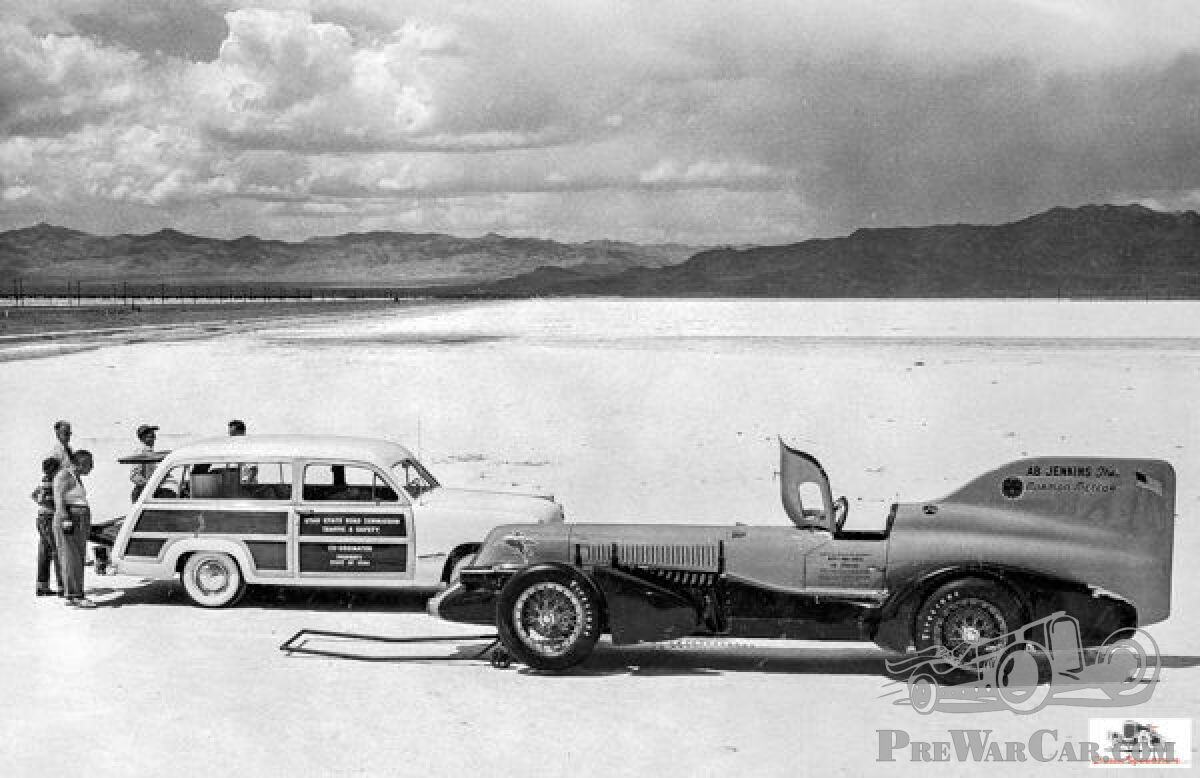
Swapping speed records between these individuals would continue for some time. In 1936 Jenkins returned to the salt flats with his Duesenberg speedster which he had since purchased from Auburn, and a naming contest sponsored by the Deseret Daily News had rebadged the speedster to be known thenceforth as The Mormon Meteor. Into the Duesenberg chassis Augie had stuffed a 1750 cubic inch Lycoming-made Curtiss V-12 that produced 750 hp, and this, along with other changes, resulted in the designation Mormon Meteor II. Relying on Indy 500 veteran Babe Stapp, the pair set new International Class B records. Despite all of the competition, the end of the season saw the Mormon Meteor II still the best of the salt flats.
After a bad weather season had shortened the 1938 racing schedule on the salt, and after handling issues that were caused by the big Curtiss engine came to light, Augie Duesenberg realized that the existing Duesenberg chassis was past its limit. He then designed a longer and stronger custom chassis that also had room for two engines, but the rest of 1938 turned out to be a washout on the flats, so it was not run.
In 1939 Jenkins returned to Bonneville with the Mormon Meteor III. Jenkins hired Hollywood stuntman and Indy 500 driver Cliff Bergere, himself a Duesenberg SJ Speedster owner, and the two competed against the best that the British could offer until World War II in Europe curtailed British involvement.
Just before hostilities shut down the salt flats in 1941 for the war’s duration, Jenkins and Bergere set new records in American Class A and World Unlimited category from 50 km to 24 hours. After the war, the Mormon Meteor III would continue to set speed records until its retirement in 1950, becoming one of the most significant American land speed racers to ever cross the salt.
Jenkins’ vision for the salt flats, as well as the speed records that he and others obtained there, put Bonneville on the map as the place to go for world class speed. Bonneville maintains that distinction to this day.
Fade to black
Jenkins, Utah born-and-bred, was so popular in his home county that he was drafted to be mayor of Salt Lake City in 1940 without even making a speech or spending a cent on campaigning. After serving one term, Jenkins retired to volunteer in public service roles, especially as an advocate for road and driver safety.
In 1956, at the age of 72, Jenkins came out of retirement to partner with his son Marvin Jenkins and once more set speed records on the salt, but this time in a Pontiac coupe, achieving a stock car record average of 118.375 mph for 24 hours.
Soon after this event, Jenkins died of a heart attack on August 9. Harley Earl, chief designer for GM, had designated the new Pontiac for 1957 to be The Bonneville. Ironically, this would honor Jenkins’ last record-setting feat, a fitting tribute to a go-fast speedster fanatic!
Words by Ronald Sieber. For more stories about speedsters, go check out ClassicSpeedsters.com. Sieber is also publishing a book on the topic, due out later this year.
Publiziert:
Mittwoch April 21st, 2021
Facebook
LinkedIn
Twitter
WhatsApp
Email
Copy
Kommentare
Larry A. Lewis
21 April 2021, 16:05
I was at the Meadowbrook classic car show about 15 years ago where the featured car were Duesenbergs; there were about 16 of them there. My friends and I were sitting next to where they drove by the judging stand. We all got an exhaust blast in the face from the Mormon Meteor!
Weiter lesen