Das weltweite Magazin und der Marktplatz für Oldtimer-Enthusiasten – von Enthusiasten.
Das weltweite Magazin und der Marktplatz für Oldtimer-Enthusiasten – von Enthusiasten.


Filter
Auswahl treffen
- Autos
-
Marke >>
-
Baujahr >>
-
-
Kategorie >>
-
Länder >>
- Motorräder
-
Standort >>
- Teile
-
Automarke >>
-
Hersteller >>
-
Kategorie >>
- Fahrräder
-
Baujahr >>
-
Länder



A streamlined Stude for shooting
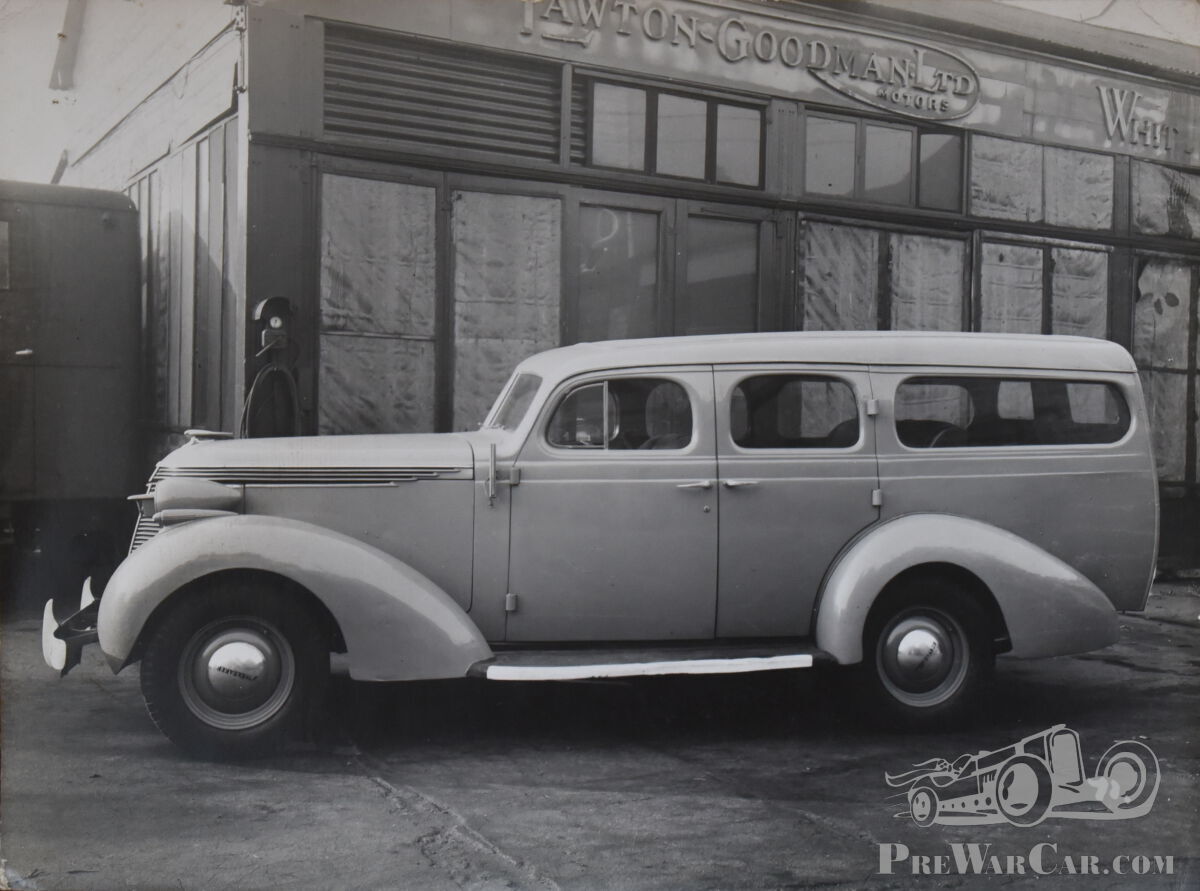

We like a good shooting brake here at PreWarCar.com. Firstly, we like the idea of a pre-war car which is specifically designed for transporting lots of people in comfort, plus a dog or two and whatever provisions might be required. Secondly, we greatly admire the look and the craftsmanship of the beautiful wooden bodies.
We don't see any exposed wood on this car, though. Indeed, it's not really like any other pre-war brake we've seen. With its smooth sides, low roofline and subtle taper of the rear window, it looks to be a thoroughly modern shooting brake built for a client who knew what they wanted and wasn't afraid to break with tradition.
It's a 1937 Studebaker, which was a very attractive car in the first place with its streamlined Art Déco styling cues. If anyone was going to turn it into a brake, it would only be right for them to try to continue the dynamic styling all the way through to the rear doors, and we'd say the builders of this one got it spot-on.
It seems to be the work of Lawton-Goodman Ltd. of Cricklewood, north-west London, a specialist in light commercial vehicle bodies. The company history is particularly interesting because it ties in with an obscure early car called the Whitlock. Indeed, Georgano tells us that Whitlocks were built from 1903 to 1906 and c.1914 to 1932, first by the Whitlock Automobile Co. and then by Lawton-Goodman Ltd.
A varied career in cars and commercials
The original London-based company, of Holland Gate in Kensington, was an offshoot of the old-established coachbuilding firm of Henry Whitlock & Co., but production only lasted for three years. The marque was resurrected just before the war when the Liverpool branch of Henry Whitlock was taken over by J. A. Lawton-Goodman. The cars were launched under the Lawton name, but were renamed Whitlock for 1914.
From 1922, all production took place at Lawton-Goodman's Cricklewood premises, while Lawton-Goodman also constructed bodies on other chassis. Production of Whitlocks ended in the early 1930s, which is probably when Lawton-Goodman changed its specialism to commercial bodies. Post-war, at least, it seems to have concentrated on two particular fields. A quick rummage through our magazine library found an advertisement in a 1957 edition of The Autocar advertising ambulance and mobile food van bodies by Lawton-Goodman.
We don't know exactly when Lawton-Goodman stopped trading, but it sounds like it had a very varied and interesting life, and this Studebaker stands out as a particular nice example of the small coachbuilder's art.
We wonder if there are any other Lawton-Goodman-bodied cars surviving? What about Whitlocks?
Words: Zack Stiling; photograph: Stiling Collection
Publiziert:
Montag November 27th, 2023
Facebook
LinkedIn
Twitter
WhatsApp
Email
Copy
Kommentare
Tim Hewitt
28 November 2023, 23:08
Further to my last comment, on closer inspection it would appear that the workshop windows have "blackout blinds" of some sort fitted, pointing to WW2 era. Also interesting is the very military looking vehicle to the left of the picture. It looks like some sort of "office" bodied truck. I personally have a Bedford QL office bodied truck, one of only 30 bodied by Marshalls of Cambridge during the latter part of WW2. Marshalls still exist, and I believe only three of my office-bodied vehicles are still around. The one in the picture has elements which are very similar to the US workshop bodied GMC 2½-ton six-wheeled truck, single rear door and rounded body corners, which would point to post 1942. However, the shooting-brake has a lovely line to its styling, which shows a great appreciation for the aesthetics of form, beautiful piece of coachwork.
Weiter lesen
Tim Hewitt
28 November 2023, 22:47
In addition to the blackout headlamp covers, the front over-riders and side running boards are also painted white. This was done during WW2 to aid visibility. So verifying a WW2 period photo.
Weiter lesen
Steve Diggins
28 November 2023, 20:26
That is one fine looking automobile and let's hope it is still around. No doubt it is RHD and was produced at the Studebaker factory in Walkerville, Ontario. In 1910 Studebaker took over EMF and started making their own RHD cars which were sold in British Empire countries around the world.
Weiter lesen
Larry Lewis
27 November 2023, 16:40
I notice that is has what looks like blackout headlamp covers so the photo must have been taken during wartime.
Weiter lesen