Das weltweite Magazin und der Marktplatz für Oldtimer-Enthusiasten – von Enthusiasten.
Das weltweite Magazin und der Marktplatz für Oldtimer-Enthusiasten – von Enthusiasten.


Auswahl treffen
- Autos
-
Marke >>
-
Baujahr >>
-
-
Kategorie >>
-
Länder >>


1913 Peugeot 6HP Bebe Type BP1 | Donington Auctions | 17 Oktober 2026
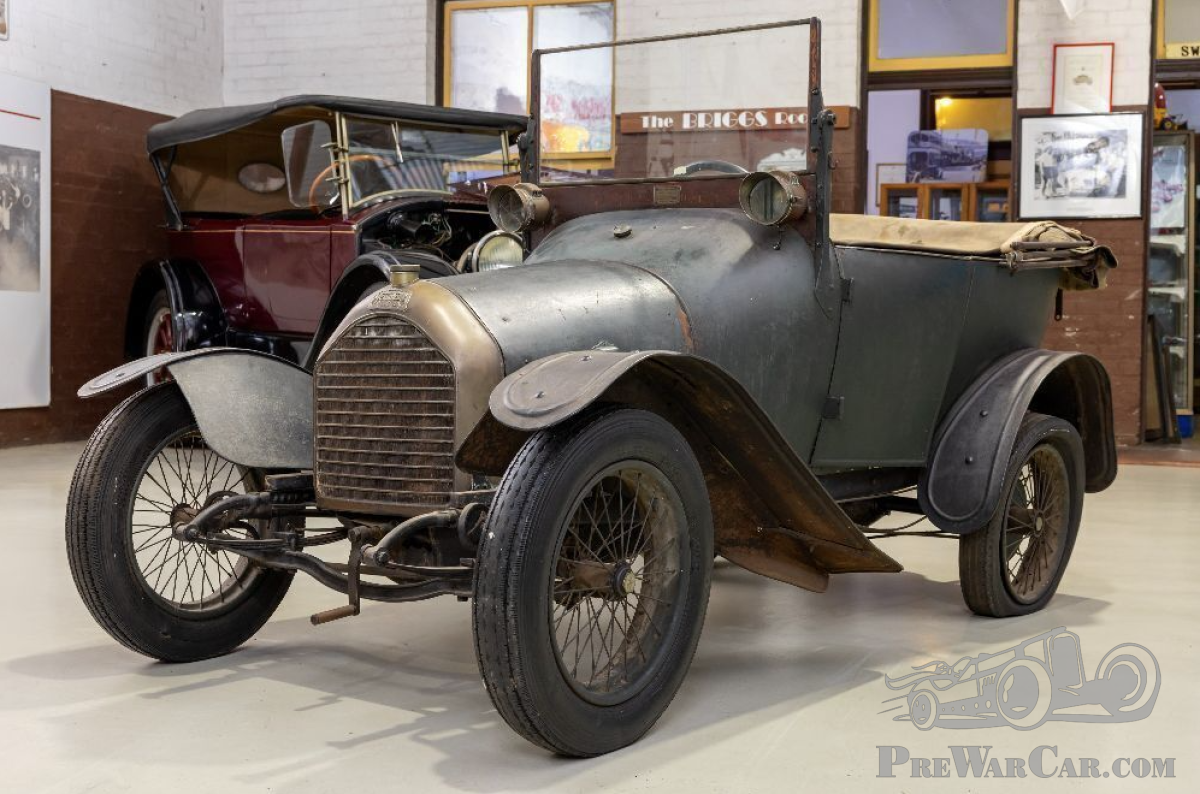

1913 Peugeot 6HP Bebe Type BP1 | Donington Auctions | 17 Oktober 2026
- Totally original & unrestored
- Ettore Bugatti designed
- Used by the French Army in WW1
- 43 years in the York Museum
MODEL HISTORY:
Peugeot Bebe (Baby) was a small car made by the French manufacturer from 1905 to 1916.
Just two models were ultimately produced under the ‘Bebe’ nameplate, the Type 69 which was sold from 1905 to 1912, and the Type BP1 – for Bugatti-Peugeot 1 – which debuted at the Paris Motor Show in 1912, and was manufactured between 1913 and 1916.
Significantly, the Type BP1 Bébé was designed by Ettore Bugatti, originally for the German marque Wanderer, but also built under license by Peugeot for the French market. Bugatti had given the design an official Type number, Type 16.
Production began in 1913 following discontinuation of the Type 69. Wanderer built its car with Bugatti's own four-speed transmission, but in order to keep production costs down for the French version, Peugeot fitted a two-speed gearbox initially, which was then replaced by its own three-speed.
The engine was also Peugeot's own, a tiny T-head 855cc four-cylinder engine that produced 10 horsepower at 2000 rpm, which gave the small car a top speed of 60 km/h (37 mph). Weight was again below 350 kilograms (770 lb.).
Diminutive in size, with a track wide enough for two to sit abreast, the Bebe looks very much like a half-scale open-topped tourer, it is also said to have inspired the Austin Seven.
The Bebe enjoyed some racing success among small car classes, notably at Mont Ventoux in 1913, where it won in its class.
With a total of 3095 examples made, the Bugatti designed Bebe became the first production Peugeot to surpass 3000 units.
VEHICLE HISTORY:
- Chassis number: 11134
- Engine number: 15097
Totally unrestored and very original, this 1913 Peugeot Bebe was purchased out of France in 1983, and has been part of the Briggs Collection ever since.
Peter Briggs bought the Bebe for his York Motor Museum in Western Australia on 14 November 1983, obtaining it from M. Pierre Delliere, who operated the famous Musée Automobile de Provence in Orgon, France.
This example is probably the most original intact Bebe in existence, having never been restored and been on display in Provence or in Western Australia for the last 58 years.
M. Delliere wrote to Mr. Briggs at the time and related the story of his purchase of the Bebe.
“The person who sold me the car about 15 years ago (told me that he) had bought it through Army Surplus after the war of 1914,” he said.
“So it is practically in its original state, except for the wheels which have been changed. Missing is the acetylene generator which is (normally) located inside on the edge of the floor, where the support remains, as well as the spare wheel which is very difficult to find. I have never driven the car.”
Today, this Peugeot Bebe is presented in faded Grey paintwork that looks to be original, along with an equally original light Tan coloured folding Tourer roof which has some tears at the front and back.
We also noted that the lens on the right-hand cowl-mounted headlight is cracked and the radiator shell has been dented.
Inside, a newer Brown leather seat base contrasts with what looks to be the original Black upholstered backrest, which matches the doorcards. There’s also a rear-mounted luggage rack.
Since the catalogue photography was completed on this car, the deteriorated tyres have been changed to enable the Peugeot Bebe to roll.
An amazing time capsule, this must surely be the only 1913 Peugeot Bebe in the world in such original condition.
This 1913 Peugeot Bebe Type BP1 is being sold here unregistered and at No Reserve.
Weitere Angebote in dieser Auktion
 1923 Bentley 3-4.5 Litre Vanden Plas Style Tourer | Donington Auctions | 17 Oktober 2026
Mehr Angebote dieses Händlers
Ähnliche Angebote Peugeot 6HP Bebe Type BP1 1913 zu verkaufen
 1909 ROLLS-ROYCE 40/50hp SILVER GHOST 7.4 LITRE 4 SPEED BALLOON CAR
 1905/6 Orient Buckboard
 1920 Rolls-Royce Silver Ghost Brougham de Ville
 Peugeot Type 91 Electric 1907
Nutzer:
Datum:
17-10-2026
Standort:
Melbourne, Australien
Teilen:
Facebook
LinkedIn
Twitter
WhatsApp
Email
Copy
Details Peugeot 6HP Bebe Type BP1 1913 zu verkaufen
Baujahr:
Marke:
Typ:
6HP Bebe Type BP1
Preis:
Schätzung A$ 40.000,- - A$ 45.000,-
Anzeige-Nr.:
915935
Mehr Info:





- Alba
- Alcyon
- Amilcar
- Amédée Bollée
- Ariès
- Aster
- Augé
- Avions-Voisin
- BNC
- Ballot
- Barré
- Benjamin
- Benova
- Berliet
- Bignan
- Boyer
- Brasier
- Brouhot
- Bucciali
- Buchet
- Bugatti
- Bédélia
- C.G.V./ Charron
- Chenard Walcker
- Citroën
- Clement-Bayard
- Clément-Talbot
- Corre La Licorne
- Cottereau
- Cottin-Desgouttes
- D'Yrsan
- DB
- DFP - Doriot-Flandrin-Parant
- Darmont
- Darracq
- De Dion-Bouton
- Decauville
- Delage
- Delahaye
- Delaunay-Belleville
- Derby
- Donnet/ Donnet-Zédel
- Elfe
- Fisson
- G.A.R.
- Gendron & Michelot
- Georges Irat
- Georges Richard
- Georges Roy
- Gladiator
- Grégoire
- Guy
- Guyot Speciale
- Hotchkiss
- Hurtu
- La Buire
- La Nef
- Lafitte
- Laurin & Klement
- Le Zèbre
- Lion Peugeot
- Lombard
- Lorraine Dietrich
- Léon Bollee
- M.A.S.E.
- Marlborough
- Marot Gardon
- Matford
- Montier
- Mors
- Motobloc
- Niclausse
- O.P.
- Otto
- Panhard et Levassor
- Peugeot
- Phebus
- Philos
- Pilain
- Rally
- Rebour
- Renault
- Rochet-Schneider
- Rolland-Pilain
- Rosengart
- Salmson
- Schaudel Motobloc
- Schneider
- Senechal
- Sigma
- Sima-Violet
- Simca
- Simmons Laclede
- Sizaire Berwick
- Sizaire Freres
- Sizaire Naudin
- Sultane
- Talbot
- Turcat-Méry
- Unic
- Vermorel
- Vinot
- Voiturette Bertrand
- Wacheux
- Wills Sainte Claire
- Zedel
Sonstiges Französisch Zum Verkauf stehende Autos
Auto Peugeot 6HP Bebe Type BP1 1913 zu verkaufen

Nachricht senden